


17 Sep IITM Pune’s Mega Beach Cleanup for World Ozone Day 2026: SSSS 5.0 Initiative
✎ The Swachh Sagar, Surakshit Sagar campaign integrates coastal cleanliness with ozone conservation, aligning national environmental initiatives with global commitments under the Montreal Protocol and the UN Sustainable Development…
Subject Relevance — Where This Topic Fits
- GS Paper II — International Treaties and Agreements (Montreal Protocol) | GS Paper III — Environment and Ecology (Marine Pollution, Ozone Layer Depletion, Solid Waste Management) | GS Paper III — Science and Technology (Climate Change and Environmental Monitoring)
- Prelims: Swachh Sagar Surakshit Sagar, World Ozone Day, Montreal Protocol, Marine Litter, Plastic Waste Management, Indian Institute of Tropical Meteorology (IITM), Earth System Science Organization (ESSO), Coastal Ecosystem Conservation
- Essay: Environmental stewardship and community participation in sustainable development, Balancing economic growth with ecological integrity: The case of marine conservation
Quick Revision: The Swachh Sagar, Surakshit Sagar campaign integrates coastal cleanliness with ozone conservation, aligning national environmental initiatives with global commitments under the Montreal Protocol and the UN Sustainable Development Goals.
Why is this in the news?
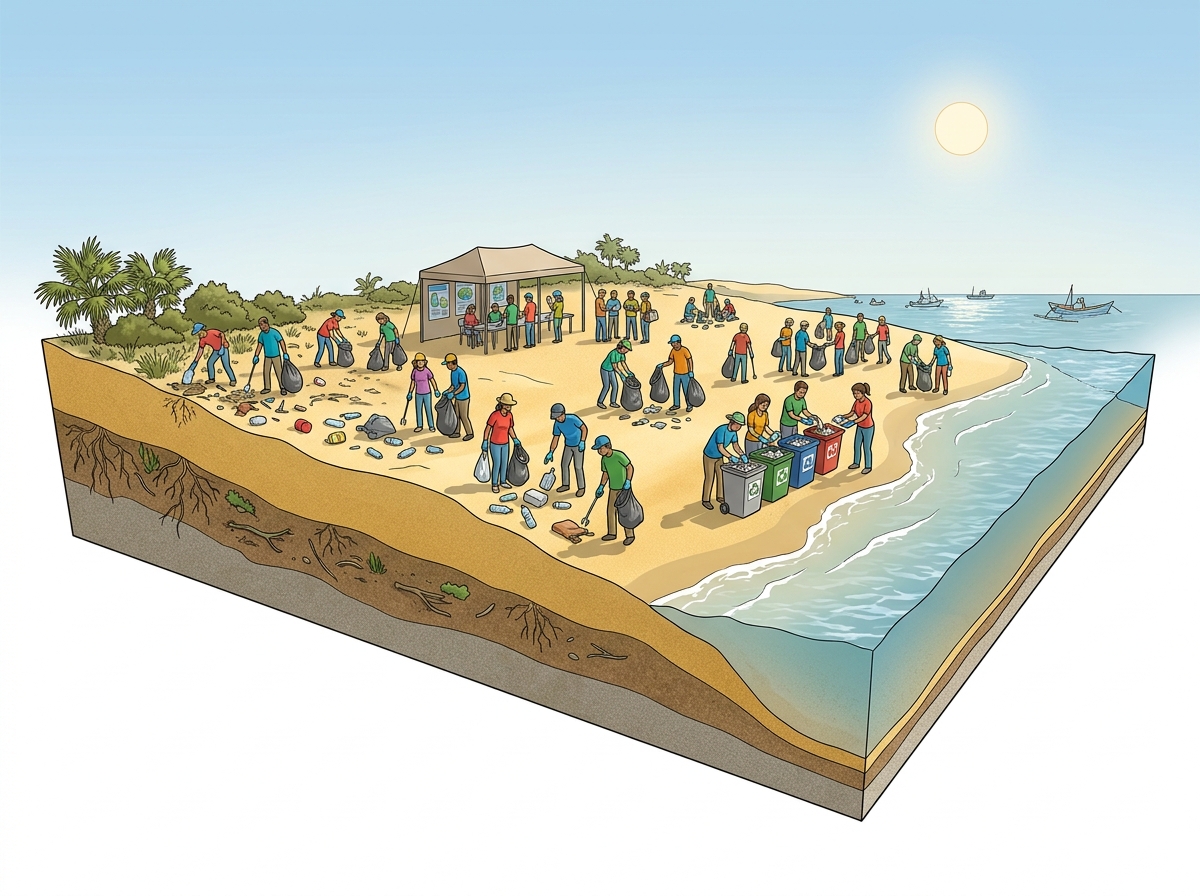
The Indian Institute of Tropical Meteorology (IITM), Pune, under the aegis of the Ministry of Earth Sciences, conducted a mega beach cleaning and plastic waste collection campaign at Nagaon Beach, Mumbai, on 16 September 2026, to commemorate World Ozone Day 2026. This initiative was aligned with the nationwide ‘Swachh Sagar, Surakshit Sagar 5.0’ campaign, emphasizing collective action for marine ecosystem protection and responsible waste management. The event underscores the integration of ozone conservation with coastal cleanliness, highlighting India’s commitment to global environmental agreements and local community engagement in sustainable practices.
Background
- The Montreal Protocol on Substances that Deplete the Ozone Layer (1987) is a landmark international treaty aimed at phasing out the production and consumption of ozone-depleting substances (ODS) such as chlorofluorocarbons (CFCs), halons, and other related compounds.
- India ratified the Montreal Protocol in 1992 and has since implemented stringent measures to comply with its obligations, including the phase-out of ODS in various industrial and consumer sectors.
- The United Nations declared 16 September as the International Day for the Preservation of the Ozone Layer (World Ozone Day) to commemorate the signing of the Montreal Protocol and to raise awareness about ozone layer protection.
- The ‘Swachh Sagar, Surakshit Sagar’ (SSSS) campaign is a nationwide initiative launched by the Ministry of Earth Sciences, aimed at promoting cleanliness and safety along India’s coastlines through community-driven cleanliness drives and awareness campaigns.
- The campaign is aligned with the International Coastal Cleanup Day, observed annually on the third Saturday of September, to mobilize global action against marine litter and plastic pollution.
- The Indian Institute of Tropical Meteorology (IITM), Pune, is an autonomous institution under the Ministry of Earth Sciences, engaged in research on atmospheric and oceanic sciences, climate change, and environmental monitoring.
What is the Swachh Sagar, Surakshit Sagar 5.0 campaign?
- A nationwide coastal cleanliness and safety initiative launched by the Ministry of Earth Sciences, with the objective of reducing marine litter, promoting responsible waste management, and protecting fragile coastal and marine ecosystems.
- The campaign is conducted annually from 12 to 19 September, culminating on the International Coastal Cleanup Day, to mobilize community participation in beach cleanliness drives and waste segregation.
- The 5.0 edition in 2026 focuses on integrating ozone conservation awareness with coastal cleanliness, recognizing the interlinkages between ozone layer protection and marine ecosystem health.
- The campaign involves multi-stakeholder participation, including government agencies, local communities, educational institutions, and non-governmental organizations, to foster a sense of shared responsibility for environmental stewardship.
- Key activities include beach cleanliness drives, plastic waste collection and segregation, awareness workshops on sustainable waste management, and community pledges to reduce single-use plastics and promote recycling.
- The campaign aligns with India’s commitments under international environmental agreements, such as the Montreal Protocol and the United Nations Sustainable Development Goals (SDGs), particularly SDG 14 (Life Below Water).
- The initiative also serves as a platform for scientific outreach, where institutions like IITM conduct educational programs to sensitize participants about the impacts of marine pollution and the importance of ozone layer protection.
- The campaign emphasizes the role of local governance in waste management, with collected waste being systematically handed over to municipal authorities and authorized recycling agencies for safe disposal and recycling.
Key Features
| Feature | Significance |
|---|---|
| Community-driven beach clean-up | Engages local stakeholders, including students and elected representatives, in a participatory model of environmental governance, fostering long-term stewardship of coastal ecosystems. |
| Plastic waste segregation and recycling | Ensures systematic handling of non-biodegradable waste, reducing marine pollution and supporting circular economy principles in coastal regions. |
| Collaboration with municipal authorities | Demonstrates multi-stakeholder coordination between scientific institutions, local governance, and waste management agencies for sustainable coastal management. |
| Scientific outreach by IITM Pune | Leverages institutional expertise in environmental science to raise awareness and integrate research-based solutions into community practices. |
| Alignment with Swachh Sagar, Surakshit Sagar 5.0 | Demonstrates national-scale policy integration, where local actions contribute to broader environmental goals under a structured campaign framework. |
Why it Matters
Environmental Conservation
- Directly addresses the degradation of coastal ecosystems by reducing marine litter, particularly plastic pollution, which threatens biodiversity and marine life.
- Supports India’s commitments under international agreements such as the United Nations Sustainable Development Goals (SDG 14: Life Below Water) and the Basel Convention on plastic waste.
- Contributes to the protection of the ozone layer by mitigating secondary pollutants generated from marine plastic degradation, aligning with the theme of World Ozone Day 2026.
Policy and Governance
- Illustrates the implementation of the Swachh Sagar, Surakshit Sagar 5.0 campaign, a national initiative under the Ministry of Earth Sciences, demonstrating vertical integration of environmental policies.
- Highlights the role of scientific institutions (IITM Pune) in translating research into community action, reinforcing the importance of institutional support for environmental governance.
- Showcases the effectiveness of participatory governance models where local communities, institutions, and municipal bodies collaborate for tangible environmental outcomes.
Societal and Educational Impact
- Promotes environmental literacy among students and local communities through hands-on engagement, fostering a culture of sustainability and civic responsibility.
- Encourages behavioral change by demonstrating the tangible impact of collective action, reinforcing the principle of ‘think globally, act locally’ in environmental conservation.
- Strengthens the link between scientific research and public policy, emphasizing the role of institutions in bridging knowledge gaps for societal benefit.
Economic Dimensions
- Supports the circular economy by ensuring the segregation and recycling of plastic waste, reducing the economic burden of waste management and creating potential livelihood opportunities in recycling sectors.
- Enhances the aesthetic and recreational value of coastal areas, which can boost tourism and local economies dependent on clean and safe beaches.
Challenges
1. Plastic Pollution and Marine Litter
- India generates approximately 3.3 million tonnes of plastic waste annually, with a significant portion entering marine ecosystems due to inadequate waste management infrastructure.
- Plastic waste persists in the environment for centuries, accumulating in coastal zones and posing long-term threats to marine biodiversity and human health.
- Limited public awareness and behavioral resistance to adopting sustainable practices hinder large-scale behavioral change.
UPSC Link: GS3: Environmental Pollution & Degradation
2. Waste Management Infrastructure
- Inadequate segregation facilities and recycling capacity in coastal regions lead to improper disposal of waste, exacerbating marine pollution.
- Lack of standardized waste collection and processing systems in rural and semi-urban coastal areas complicates efforts to manage plastic waste effectively.
UPSC Link: GS2: Governance Issues
3. Community Participation and Behavioral Change
- Sustaining long-term community engagement in environmental initiatives remains a challenge, particularly in areas with competing socio-economic priorities.
- Cultural and socio-economic factors influence waste disposal habits, requiring tailored awareness campaigns to drive behavioral change.
UPSC Link: GS4: Ethics & Human Values
4. Institutional Coordination
- Effective coordination between scientific institutions, local governance bodies, and waste management agencies is essential but often hindered by bureaucratic silos and resource constraints.
- Ensuring accountability and transparency in waste management processes requires robust monitoring and evaluation mechanisms.
UPSC Link: GS2: Federalism & Cooperative Governance
5. Climate Change and Coastal Vulnerability
- Rising sea levels and increased frequency of extreme weather events exacerbate coastal erosion and pollution, complicating conservation efforts.
- Climate-induced changes in ocean currents may increase the accumulation of marine litter along coastlines, necessitating adaptive strategies.
UPSC Link: GS3: Climate Change & Disaster Management
Challenges — UPSC Perspective
| Issue | Concern |
|---|---|
| Plastic waste accumulation | Long-term environmental degradation and threats to marine biodiversity. |
| Inadequate waste segregation infrastructure | Inefficient recycling and increased pollution in coastal zones. |
| Low public awareness | Persistent littering and resistance to sustainable practices. |
| Limited institutional coordination | Fragmented efforts and inefficiencies in waste management. |
| Climate change impacts | Increased coastal vulnerability and exacerbation of pollution challenges. |
Government Initiatives — Must-Memorise for Prelims
- Swachh Sagar, Surakshit Sagar 5.0 (Ministry of Earth Sciences)
- UN Sustainable Development Goal 14 (Life Below Water)
Way Forward
- Strengthen local waste management infrastructure with investment in segregation facilities and recycling units in coastal regions.
- Expand community engagement programs through school curricula and public awareness campaigns to foster long-term behavioral change.
- Enhance institutional coordination by establishing dedicated task forces for coastal waste management, involving scientific institutions, local bodies, and NGOs.
- Promote research on innovative waste-to-wealth solutions, such as upcycling plastic waste into construction materials or energy generation.
- Integrate climate resilience into coastal conservation strategies, accounting for projected sea-level rise and extreme weather events.
- Develop standardized monitoring and evaluation frameworks to assess the impact of clean-up initiatives and track progress toward pollution reduction targets.
- Encourage public-private partnerships to fund and scale up coastal clean-up initiatives, leveraging corporate social responsibility (CSR) funds.
- Leverage digital platforms for real-time tracking of waste collection and disposal, ensuring transparency and accountability in waste management processes.
UPSC Value Addition
Keywords for Mains Answer-Writing
Swachh Sagar Surakshit Sagar 5.0 · coastal ecosystem conservation · Ozone Layer Protection · community-driven environmental initiatives · marine litter management · plastic waste recycling · Indian Institute of Tropical Meteorology (IITM) · Ministry of Earth Sciences · International Coastal Cleanup Day · sustainable waste management practices · ecosystem-based approaches · public participation in environmental governance
Concept Flow
Anthropogenic plastic waste generation → Marine pollution and ecosystem degradation → Community-led clean-up initiatives → Institutional support (IITM Pune, Ministry of Earth Sciences) → Policy integration (Swachh Sagar, Surakshit Sagar 5.0) → Long-term environmental conservation and sustainable coastal management.
Prelims Practice Questions
Q1. Consider the following statements regarding the ‘Swachh Sagar Surakshit Sagar’ (SSSS) initiative:
1. The SSSS campaign is a nationwide initiative launched by the Ministry of Earth Sciences to promote ocean conservation and reduce marine litter.
2. The campaign aligns with the International Coastal Cleanup Day, which is observed annually on the third Saturday of September.
3. The initiative focuses exclusively on the removal of plastic waste from coastal areas without addressing other forms of marine debris.
How many of the above statements are correct?
- Only one
- Only two
- All
- None
Answer: Only two — Statement 1 is correct as SSSS is a Ministry of Earth Sciences initiative. Statement 2 is correct as International Coastal Cleanup Day is observed on the third Saturday of September. Statement 3 is incorrect because the initiative addresses all forms of marine debris, not just plastic waste.
Q2. Assertion (A): The Indian Institute of Tropical Meteorology (IITM), Pune, is primarily an academic institution with no direct role in environmental governance.
Reason (R): The IITM conducts research on atmospheric and oceanic sciences but does not engage in community-driven environmental initiatives like coastal cleanliness drives.
- Both A and R are true, and R is the correct explanation of A
- Both A and R are true, but R is not the correct explanation of A
- A is true, but R is false
- A is false, but R is true
Answer: A is false, but R is true — Assertion (A) is false because IITM, while academic, actively participates in environmental governance through initiatives like SSSS. Reason (R) is also false as IITM has been directly involved in community-driven environmental initiatives.
Mains Practice Question
✍ The Ministry of Earth Sciences’ ‘Swachh Sagar Surakshit Sagar 5.0’ campaign represents a paradigm shift in India’s approach to coastal ecosystem conservation by integrating community participation, scientific outreach, and sustainable waste management practices. Critically examine the significance of such initiatives in achieving India’s commitments under international environmental conventions like the United Nations Sustainable Development Goal 14 (Life Below Water). (15 Marks)
Approach: MODEL-ANSWER SKELETON:
1. **Context and Objectives of SSSS 5.0**:
– Brief on the campaign’s alignment with International Coastal Cleanup Day and World Ozone Day.
– Objectives: reduction of marine litter, promotion of responsible waste management, and protection of coastal ecosystems.
2. **Integration of Community Participation**:
– Role of local communities, students, and NGOs in the campaign (as seen in Nagav Beach cleanup).
– Importance of grassroots involvement in achieving long-term environmental goals.
3. **Scientific and Institutional Framework**:
– Involvement of IITM Pune and Ministry of Earth Sciences in providing scientific backing and institutional support.
– Link to India’s broader environmental governance mechanisms (e.g., National Centre for Coastal Research, Coastal Regulation Zone notifications).
4. **Alignment with SDG 14 (Life Below Water)**:
– Targets under SDG 14.1 (reduce marine pollution) and 14.2 (sustainable management of marine ecosystems).
– How SSSS 5.0 addresses these targets through actionable measures like waste segregation, recycling, and ecosystem restoration.
5. **Challenges and Limitations**:
– Scalability of community-driven initiatives across India’s diverse coastal regions.
– Need for stronger policy enforcement, waste management infrastructure, and inter-state coordination.
6. **Comparative Perspective**:
– Contrast with global models (e.g., EU’s Marine Strategy Framework Directive, Japan’s Coastal Cleanup initiatives).
– Lessons for India from international best practices.
7. **Conclusion**:
– SSSS 5.0 as a model for India’s commitment to SDG 14 and a step toward achieving ‘Blue Economy’ goals.
– Emphasize the need for sustained funding, public awareness, and multi-stakeholder partnerships.
Source: PIB (Press Information Bureau)
Maharashtra PCS (MPSC) — State PCS Practice
Prelims: Which of the following initiatives was recently organized by IITM Pune under ‘Swachh Sagar, Surakshit Sagar 5.0’ to commemorate World Ozone Day 2026?
- A. Mega beach cleaning campaign at Nagaon beach
- B. Tree plantation drive in the Western Ghats
- C. Solar energy awareness program in Mumbai
- D. Plastic waste recycling workshop in Nagpur
Answer: A. Mega beach cleaning campaign at Nagaon beach — IITM Pune organized a mega beach cleaning campaign at Nagaon beach under ‘Swachh Sagar, Surakshit Sagar 5.0’ to mark World Ozone Day 2026.
Mains: Discuss the significance of coastal cleanliness initiatives like ‘Swachh Sagar, Surakshit Sagar 5.0’ in the context of Maharashtra’s environmental sustainability and tourism development. Provide a critical analysis of their impact on local communities and marine ecosystems.
Generated by AanyaAi for educational purpose.
Related guides on our sites
- Anthropology VS PSIR
- Best PSIR optional coaching
- Best PSIR optional coaching online
- Best PSIR optional teacher

- KWML’s Feasibility Reports for Water Metro in 18 Cities: UPSC & PCS Insights - October 3, 2026
- ओडिशा में वन्यजीव अनुसंधान अनुदान कार्यक्रम शुरू, सिमिलिपाल में 300 कैमरे और बढ़ेंगे - October 3, 2026
- India Summons Pakistan High Commission Official Over Violation - October 3, 2026

No Comments