


24 Aug Allahabad HC Slams Police Encounters: CBI Probe Ordered in UP Case
✎ Police encounters in India are regulated by the Supreme Court’s 2014 guidelines, which mandate immediate reporting, independent investigation, and judicial scrutiny to prevent extra-judicial killings and uphold constitutional…
Subject Relevance — Where This Topic Fits
- GS Paper II — Polity and Governance — Role of Judiciary, Police Reforms, and Constitutional Safeguards | GS Paper III — Security — Police Operations, Use of Force, and Accountability
- Prelims: Encounter killings, Judicial review of police actions, Protection of Human Rights Act, 1993, Supreme Court guidelines on police encounters (2014), Powers of CBI under DSPE Act, 1946, POCSO Act, 2012, Right to Fair Trial (Article 21), Judicial activism
- Essay: The balance between security imperatives and constitutional rights in policing, Judicial oversight as a bulwark against executive excesses
Quick Revision: Police encounters in India are regulated by the Supreme Court’s 2014 guidelines, which mandate immediate reporting, independent investigation, and judicial scrutiny to prevent extra-judicial killings and uphold constitutional safeguards.
Why is this in the news?
The Allahabad High Court’s August 13, 2026 order directing a CBI probe into a May 2025 encounter in Shravasti district, Uttar Pradesh, underscores systemic concerns regarding the legality, transparency, and accountability of police operations. The court’s observations on procedural irregularities, such as the implausibility of police narratives, the absence of injuries to officers, and the disproportionate use of force, highlight the need for stringent adherence to constitutional and statutory safeguards in encounters. This case also intersects with broader debates on judicial scrutiny of executive actions and the protection of accused persons’ rights under the Constitution.
Background
- Police encounters in India have historically been a subject of intense debate due to allegations of extra-judicial killings, misuse of power, and lack of accountability.
- The Supreme Court of India, in *People’s Union for Civil Liberties v. State of Maharashtra* (2014), laid down comprehensive guidelines to regulate police encounters, emphasizing the necessity of prior judicial or administrative approval, immediate reporting, and independent investigation.
- The Protection of Human Rights Act, 1993, empowers the National Human Rights Commission (NHRC) and State Human Rights Commissions to investigate complaints of human rights violations, including police excesses.
- The Uttar Pradesh Police has been under scrutiny for a high frequency of encounters, with reports suggesting an average of five encounters per day under the current state government, raising questions about the proportionality and necessity of such operations.
- The Protection of Children from Sexual Offences (POCSO) Act, 2012, mandates stringent punishment for offences against minors, including life imprisonment, and has been invoked in the case under discussion.
- The Allahabad High Court’s order reflects a growing judicial trend of intervening in cases where police narratives are inconsistent, procedural lapses are evident, or fundamental rights appear compromised.
What are Police Encounters and How Are They Regulated?
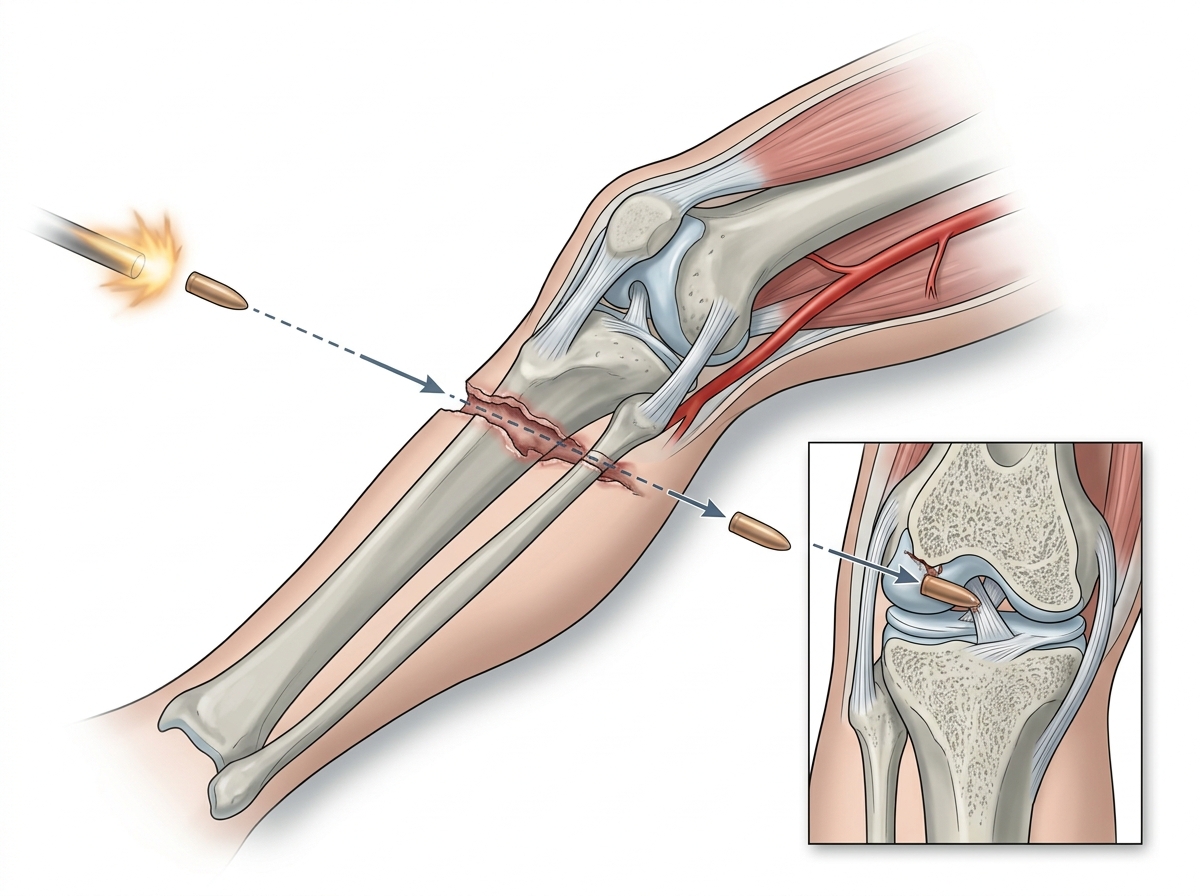
- A police encounter refers to an operation where law enforcement officers use lethal force against individuals suspected of committing serious crimes, often resulting in death or injury.
- Encounters are justified under Indian law only when they are a last resort in self-defence or to prevent the escape of a dangerous suspect, as per Section 46 of the Code of Criminal Procedure (CrPC), 1973, and the Indian Penal Code (IPC), 1860.
- The guidelines also require that the police submit a detailed report on the encounter, including the identity of the officers involved, the nature of the operation, and the circumstances leading to the use of force.
- The NHRC has the power to recommend compensation to victims or their families in cases of proven human rights violations, though its recommendations are not binding on the state.
- State Human Rights Commissions and the CBI play a critical role in investigating encounters where procedural irregularities or prima facie violations of human rights are alleged.
- The Protection of Human Rights Act, 1993, empowers these bodies to summon witnesses, examine documents, and recommend remedial measures, including disciplinary action against erring officials.
- Judicial review of encounters is essential to ensure that the use of force is proportionate, necessary, and in compliance with constitutional principles, particularly the right to life and personal liberty under Article 21 of the Constitution.
Key Features
| Feature | Significance |
|---|---|
| Judicial scrutiny of police encounters | Highlights the judiciary’s role in ensuring accountability in law enforcement actions, particularly in cases involving alleged extra-judicial killings. |
| CBI probe directive | Demonstrates the judiciary’s power to order investigations by central agencies to ensure impartiality and transparency in sensitive cases. |
| Legal aid provisions | Reinforces the constitutional guarantee of legal assistance to accused persons, ensuring fair trial rights under Article 21. |
| Procedural loopholes in FIR narratives | Exposes inconsistencies in police accounts of encounters, raising questions about the veracity of such claims. |
| Judicial skepticism of police narratives | Shows the judiciary’s evolving stance on treating police versions with caution, especially in cases involving vulnerable victims. |
Why it Matters
Legal & Judicial
- Reaffirms the principle that no individual, including accused persons, is beyond judicial scrutiny, even in cases of alleged heinous crimes.
- Strengthens the doctrine of fair trial by questioning the credibility of police narratives in encounter cases.
- Sets a precedent for higher courts to intervene in cases where lower courts find procedural irregularities in police investigations.
Governance & Accountability
- Underscores the need for robust mechanisms to monitor police conduct, particularly in states with high encounter rates.
- Highlights the tension between swift justice for victims of sexual offenses and adherence to due process in law enforcement actions.
- Raises questions about the efficacy of state-level police reforms in ensuring accountability and transparency.
Human Rights & Victim Protection
- Emphasizes the state’s obligation to protect victims of sexual violence while ensuring that accused persons are not subjected to arbitrary violence.
- Draws attention to the plight of minors as victims in sexual offenses, underscoring the urgency of POCSO Act implementation.
- Reinforces the judiciary’s role in safeguarding the rights of accused persons against potential state excesses.
Challenges
1. Police Accountability in Encounter Cases
- Perceived prevalence of extra-judicial killings in certain states, raising concerns about due process and rule of law.
- Lack of independent oversight mechanisms to verify police narratives in encounter cases.
- Potential erosion of public trust in law enforcement agencies due to allegations of misuse of power.
UPSC Link: GS2: Role of Judiciary in ensuring accountability of executive
2. Balancing Victim Justice with Due Process
- Ensuring swift justice for victims of sexual offenses while adhering to constitutional guarantees of fair trial for accused persons.
- Addressing the psychological trauma of victims, particularly minors, without compromising legal safeguards.
- Preventing vigilante justice or extra-judicial actions that undermine the justice delivery system.
UPSC Link: GS2: Fundamental Rights (Articles 14, 21, 22)
3. Judicial Scrutiny vs. Executive Autonomy
- Tension between judicial activism in reviewing police actions and the executive’s operational autonomy in law enforcement.
- Need for standardized protocols to assess the credibility of police narratives in encounter cases.
- Ensuring that judicial interventions do not lead to delays in justice delivery for victims.
UPSC Link: GS2: Separation of Powers (Judicial Review)
4. State-Specific Policing Challenges
- High encounter rates in certain states, necessitating systemic reforms in police training and accountability.
- Addressing systemic biases in policing that may disproportionately target marginalized communities.
- Ensuring that police reforms are not merely cosmetic but lead to tangible improvements in governance.
UPSC Link: GS2: State Police Reforms (Prakash Singh Case)
Challenges — UPSC Perspective
| Issue | Concern |
|---|---|
| Police Narratives in Encounters | Frequent inconsistencies in FIRs and lack of corroborating evidence raise doubts about the veracity of police claims. |
| Victim Protection vs. Accused Rights | Balancing the need for swift justice for victims with the constitutional rights of accused persons. |
| Judicial Overreach vs. Executive Autonomy | Ensuring that judicial interventions do not undermine the operational independence of law enforcement agencies. |
| State-Level Policing Reforms | Addressing systemic issues in policing that lead to high encounter rates and lack of accountability. |
| Legal Aid Infrastructure | Ensuring adequate legal assistance to accused persons, particularly in cases involving serious offenses. |
Way Forward
- Strengthen independent oversight mechanisms, such as State Human Rights Commissions, to monitor police actions in encounter cases.
- Implement standardized protocols for investigating encounters, including mandatory forensic analysis and third-party verification.
- Enhance training for police personnel on de-escalation techniques and adherence to due process in high-risk operations.
- Ensure timely and effective implementation of the POCSO Act to protect minors from sexual offenses and expedite justice delivery.
- Promote transparency in police investigations by mandating the recording of all encounters and publishing findings in public domain.
- Encourage inter-agency coordination between state police and central agencies (CBI, NIA) in cases involving serious crimes or systemic failures.
- Conduct periodic audits of police encounters to identify patterns of misuse and recommend corrective measures.
UPSC Value Addition
Keywords for Mains Answer-Writing
Encounter killings · Custodial violence · Right to a fair trial · Judicial review of police actions · Supreme Court guidelines on encounters · CBI probe · Policing standards in India · Constitutional remedies against police excesses · Due process of law · Judicial activism in criminal justice · POCSO Act · Rule of law · Accountability of law enforcement agencies · Judicial scrutiny of executive actions
Constitutional & Policy Linkages
- [‘Article 21: Right to Life and Personal Liberty’, ‘Ensures fair trial and protection from arbitrary state action.’]
- [‘Article 14: Right to Equality’, ‘Mandates equal protection under law for all individuals, including accused persons.’]
- [‘Article 22: Protection against Arrest and Detention’, ‘Guarantees procedural safeguards for accused persons during arrest and trial.’]
Concept Flow
Alleged encounter involving a rape accused in Uttar Pradesh → Police version of the encounter: accused fired first, sustained leg injuries → Judicial scrutiny by Allahabad High Court: inconsistencies in FIR and procedural loopholes identified → High Court orders CBI probe and directs trial court to reconsider discharge application with legal aid → Broader implications: judicial skepticism of police narratives in encounter cases, calls for systemic reforms in policing
Prelims Practice Questions
Q1. Consider the following statements regarding encounter killings in India:
1. The Supreme Court of India has laid down guidelines to regulate police encounters in the case of People’s Union for Civil Liberties (PUCL) v. State of Maharashtra (2014).
2. The Allahabad High Court, in its recent order, directed a CBI probe into an encounter where the accused was shot in both legs.
3. The Code of Criminal Procedure, 1973, explicitly authorizes police to use lethal force in all situations where an accused resists arrest.
4. The Protection of Children from Sexual Offences (POCSO) Act, 2012, mandates stringent punishment for offences against minors, including encounters.
How many of the above statements are correct?
- Only one
- Only two
- Only three
- All four
Answer: Only three — Statements 1 and 2 are correct. The Supreme Court laid down guidelines in PUCL v. State of Maharashtra (2014) to regulate police encounters. The Allahabad High Court’s recent order reflects judicial scrutiny of encounter killings. Statements 3 and 4 are incorrect: CrPC does not authorize lethal force in all resistance cases, and POCSO does not mandate encounters.
Q2. Assertion (A): The Allahabad High Court’s recent order directing a CBI probe into an encounter reflects the judiciary’s role in ensuring accountability of law enforcement agencies.
Reason (R): The judiciary in India has the power of judicial review over executive actions, including those of the police, under Article 226 of the Constitution.
In the context of the above two statements, which one of the following is correct?
- Both A and R are true, and R is the correct explanation of A.
- Both A and R are true, but R is not the correct explanation of A.
- A is true, but R is false.
- A is false, but R is true.
Answer: Both A and R are true, but R is not the correct explanation of A. — Both the assertion and reason are true. The Allahabad High Court’s order reflects judicial review under Article 226, ensuring accountability of police actions. The reason correctly explains the assertion.
Q3. Match the following pairs related to police encounters and judicial oversight in India:
Column I
A. PUCL v. State of Maharashtra
B. Article 226 of the Constitution
C. CBI probe
D. POCSO Act
Column II
1. Empowers High Courts to issue writs for enforcement of fundamental rights
2. Regulates police encounters
3. Mandates protection of children from sexual offences
4. Ordered by courts to investigate alleged police excesses
Select the correct match:
- A-2, B-1, C-4, D-3
- A-1, B-2, C-3, D-4
- A-4, B-3, C-2, D-1
- A-3, B-4, C-1, D-2
Answer: A-2, B-1, C-4, D-3 — A matches with 2 (PUCL v. State of Maharashtra regulates police encounters). B matches with 1 (Article 226 empowers High Courts to issue writs). C matches with 4 (CBI probe is ordered by courts to investigate police excesses). D matches with 3 (POCSO Act mandates protection of children from sexual offences).
Mains Practice Question
✍ The judiciary’s intervention in cases of alleged extra-judicial killings reflects a critical balance between the rule of law and the exigencies of law enforcement. Critically examine this statement with reference to the Allahabad High Court’s recent order directing a CBI probe into an encounter. Also, discuss the constitutional and statutory framework governing police encounters in India. (15 Marks)
Approach: MODEL-ANSWER SKELETON:
1. **Introduction (1 mark)**
– Define extra-judicial killings and their implications for the rule of law.
– Contextualise the Allahabad High Court’s order as an instance of judicial scrutiny over police actions.
2. **Judicial Intervention in Encounter Killings (4 marks)**
– **Supreme Court Guidelines**: Reference *People’s Union for Civil Liberties (PUCL) v. State of Maharashtra (2014)* (NHRC guidelines on encounters, necessity of independent probes).
– **Judicial Review**: Role of Article 226 (High Courts) and Article 32 (Supreme Court) in ensuring accountability.
– **Recent Allahabad High Court Order**: Key observations (e.g., questioning police narratives, directing CBI probe, ensuring legal aid).
– **Judicial Activism vs. Separation of Powers**: Debate on judicial overreach vs. safeguarding constitutional rights.
3. **Constitutional and Statutory Framework (5 marks)**
– **Constitutional Provisions**:
– Article 21 (Right to life and personal liberty).
– Article 22 (Protection against arrest and detention).
– Article 20(3) (Protection against self-incrimination).
– **Statutory Provisions**:
– Section 46 of the Code of Criminal Procedure, 1973 (Use of force by police).
– Section 197 of CrPC (Prosecution of public servants).
– Protection of Human Rights Act, 1993 (Role of NHRC).
– **Supreme Court Precedents**:
– *Vijay Madanlal Choudhary v. Union of India (2022)* (on money laundering but relevant for judicial scrutiny of executive actions).
– *Arnesh Kumar v. State of Bihar (2014)* (on arrest procedures to prevent misuse).
4. **Challenges and Way Forward (3 marks)**
– **Challenges**: Lack of uniform standards in encounters, delayed probes, political interference, and public perception.
– **Reforms**: Need for mandatory magisterial inquiries, body cameras, and independent oversight bodies.
– **Balancing Act**: Ensuring police efficacy while protecting civil liberties.
5. **Conclusion (2 marks)**
– Reiterate the judiciary’s role as a sentinel on the qui vive.
– Emphasise the need for systemic reforms to align policing with constitutional values.
Source: The Indian Express
Uttar Pradesh PCS (UPPSC) — State PCS Practice
Prelims: Recently, the Allahabad High Court raised concerns over the frequent use of disproportionate force by police in Uttar Pradesh, particularly instances where accused individuals are shot in the knee or below. Which constitutional provision does this practice primarily violate?
- Article 21 (Right to Life and Personal Liberty)
- Article 19 (Right to Freedom)
- Article 14 (Right to Equality)
- Article 22 (Protection against Arrest and Detention)
Answer: Article 21 (Right to Life and Personal Liberty) — The practice of shooting accused individuals in non-lethal areas like the knee violates Article 21, which guarantees the right to life and personal liberty with dignity, as it amounts to excessive and unjustified use of force by state authorities.
Mains: Critically examine the role of Uttar Pradesh Police in maintaining law and order while ensuring adherence to constitutional principles. Suggest measures to balance effective policing with the protection of fundamental rights, with special reference to recent judicial observations by the Allahabad High Court.
Generated by AanyaAi for educational purpose.
Related guides on our sites
- Anthropology VS PSIR
- Best PSIR optional coaching
- Best PSIR optional coaching online
- Best PSIR optional teacher

- Indian Parliamentary Delegation at 153rd IPU Assembly: Key Highlights - October 10, 2026
- केरल उच्च न्यायालय के आदेश ने न्यायिक प्रक्रिया पर उठाया बड़ा सवाल, जानिए क्या है प्राकृतिक न्याय का सिद्धांत - October 10, 2026
- RBI to Auction ₹23,000 Crore Treasury Bills: Key Details for UPSC & State PCS - October 10, 2026

No Comments