


08 Aug Badrinath Highway Collapse: All-Weather Road Project Fails in First Monsoon Test
✎ The Himalayan region’s unique geological fragility, marked by high seismic activity and recurrent landslides, necessitates rigorous geotechnical assessments and adaptive engineering solutions for infrastructure projects to ensure…
Subject Relevance — Where This Topic Fits
- GS Paper III — Infrastructure: Energy, Ports, Roads, Airports, Railways | GS Paper III — Environmental Pollution and Degradation | GS Paper III — Disaster and Disaster Management
- Prelims: All-Weather Road Project, NHIDCL, Geotechnical instability, Landslides in Uttarakhand, Himalayan ecosystem fragility, Slope stabilisation techniques
- Essay: The Himalayas: A fragile ecosystem under the weight of development, Balancing infrastructure development with environmental sustainability
Quick Revision: The Himalayan region’s unique geological fragility, marked by high seismic activity and recurrent landslides, necessitates rigorous geotechnical assessments and adaptive engineering solutions for infrastructure projects to ensure long-term stability and safety.
Why is this in the news?
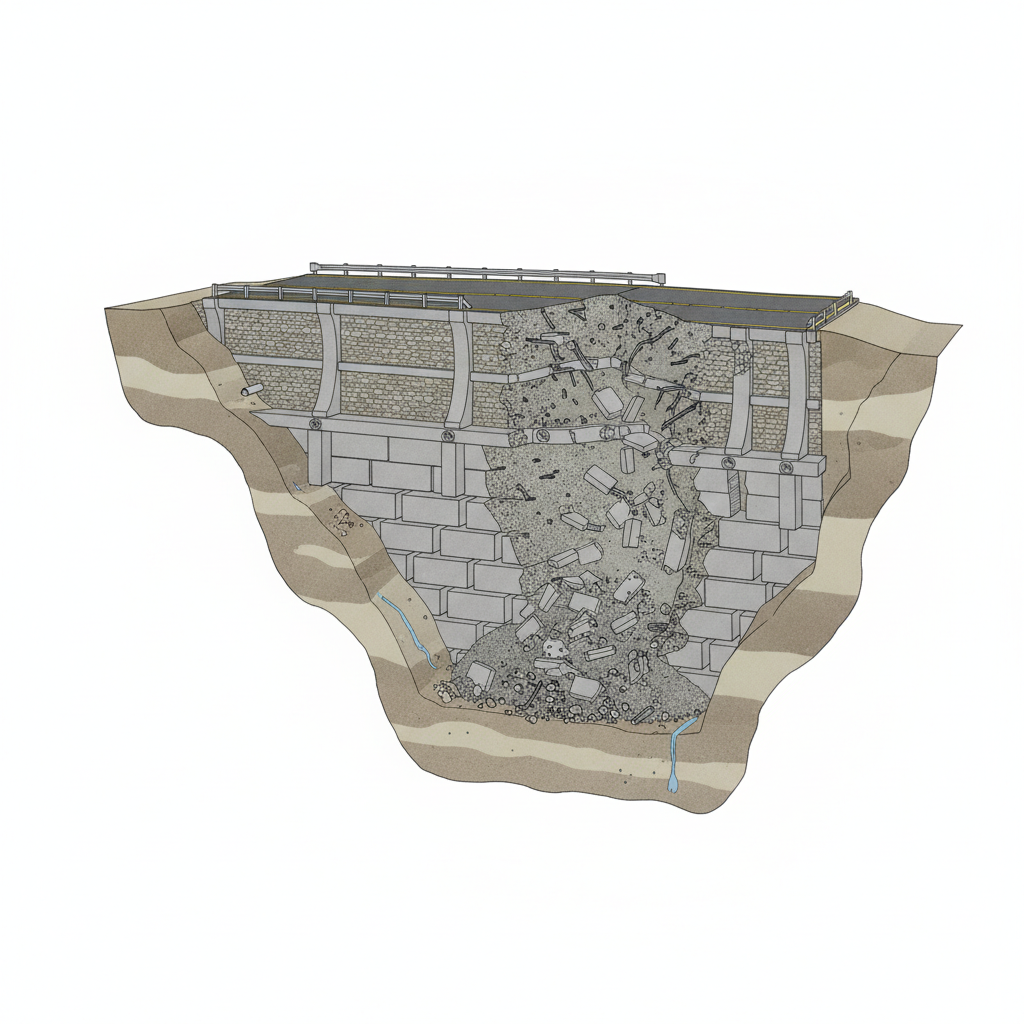
The partial collapse of a newly constructed retaining wall along the Badrinath Highway under the All-Weather Road Project within weeks of its completion underscores systemic failures in geotechnical assessment, construction quality, and post-construction monitoring in ecologically fragile Himalayan terrain. This incident, occurring after a single monsoon spell, raises critical questions about the viability of large-scale infrastructure projects in seismically active and landslide-prone regions, particularly in Uttarakhand.
Background
- The Badrinath All-Weather Road Project is a flagship initiative under the Ministry of Road Transport and Highways (MoRTH) aimed at providing year-round connectivity to the Char Dham pilgrimage sites, including Badrinath, by upgrading the existing highway to withstand extreme weather conditions.
- Uttarakhand lies in the Central Himalayan Seismic Gap, a region prone to high-intensity earthquakes and recurrent landslides, exacerbated by fragile geological formations such as the Siwalik and Lesser Himalayan sequences.
- The project is executed by the National Highways and Infrastructure Development Corporation Limited (NHIDCL), a public sector undertaking under MoRTH, which has been tasked with developing strategic road networks in difficult terrains.
- The region has witnessed repeated instances of landslides and road failures, such as the 2013 Kedarnath floods and the 2021 Chamoli glacial outburst flood, highlighting the inherent risks of infrastructure development in such zones.
- The use of conventional engineering solutions, including retaining walls and slope stabilisation measures, has often proven inadequate in the Himalayas due to unanticipated geological complexities and the dynamic nature of slope movements.
- The incident occurs against the backdrop of India’s ambitious infrastructure push under the National Infrastructure Pipeline (NIP) and the Gati Shakti National Master Plan, which prioritise connectivity but often overlook ecological and geotechnical constraints.
What is the Badrinath All-Weather Road Project and why is it significant?
- The Badrinath All-Weather Road Project is a strategic highway development initiative to ensure year-round vehicular access to the Badrinath Dham, a major pilgrimage site in Uttarakhand, by upgrading the existing 230 km route from Rishikesh to Badrinath to withstand extreme weather conditions, including heavy snowfall and monsoon rains.
- The project is part of the broader Char Dham All-Weather Road Connectivity Scheme, which aims to provide all-weather access to the four pilgrimage sites of Uttarakhand: Yamunotri, Gangotri, Kedarnath, and Badrinath, thereby enhancing religious tourism and socio-economic development in the region.
- The project is executed by NHIDCL, which employs modern engineering techniques such as rock bolting, shotcrete, and geosynthetic reinforcement to stabilise slopes and mitigate landslide risks, though these measures are often challenged by the region’s geological unpredictability.
- The project is situated in a tectonically active zone, where the Indian Plate’s collision with the Eurasian Plate has created a complex geological setting characterised by steep slopes, weak rock formations, and high seismic activity, making slope stability a critical concern.
- The project’s success is pivotal for reducing the socio-economic isolation of the region, particularly during the winter months when the highway is often closed due to heavy snowfall, disrupting pilgrimage and local livelihoods.
- The recent failure of the retaining wall in the Kamera area and the development of cracks in the retaining structure near Pipalkoti exemplify the challenges of balancing rapid infrastructure development with the need for sustainable and resilient engineering solutions in fragile ecosystems.
Key Features
| Feature | Significance |
|---|---|
| Badrinath Dham All-weather Road Project | A strategic infrastructure initiative aimed at providing year-round connectivity to the Badrinath shrine, enhancing pilgrimage infrastructure and regional accessibility. |
| Safety Wall Collapse in Comeda | A 15-metre segment of the newly constructed retaining wall collapsed due to subsidence, exposing critical flaws in construction quality and geological stability. |
| Cracking in Belakuchi Retaining Wall | Large fissures observed in a recently built safety wall, indicating structural instability in a high-risk landslide zone. |
| NHIDCL’s Response Mechanism | The National Highways and Infrastructure Development Corporation Limited (NHIDCL) is conducting technical assessments to identify causes and implement permanent mitigation measures. |
| Geological Vulnerability of Uttarakhand Himalayas | The region’s young Himalayan terrain, high seismic activity, and intense monsoon precipitation make it inherently prone to landslides and structural failures. |
Why it Matters
Strategic and Religious Connectivity
- The Badrinath Dham All-weather Road Project is pivotal for uninterrupted pilgrimage access to the Char Dham shrine, ensuring socio-religious continuity and economic sustenance for the region.
- Year-round connectivity reduces seasonal disruptions, thereby supporting tourism, local businesses, and the livelihoods of communities dependent on pilgrimage-related activities.
Infrastructure Resilience in Himalayan Terrain
- The failure of the safety walls within a single monsoon season underscores the critical need for climate-resilient infrastructure design in ecologically fragile Himalayan zones.
- Demonstrates the limitations of conventional engineering approaches in high-altitude regions with dynamic geological conditions.
Public Expenditure and Accountability
- The incident raises concerns about the efficacy of public expenditure on infrastructure projects in ecologically sensitive areas, necessitating rigorous pre-construction geological assessments.
- Highlights the importance of post-construction monitoring and maintenance protocols to ensure long-term structural integrity.
Environmental and Geological Stability
- The collapse of retaining walls in Comeda and Belakuchi zones accentuates the risks posed by unchecked anthropogenic activities in landslide-prone areas.
- Emphasizes the need for integrated land-use planning and disaster risk reduction strategies in Himalayan states.
Challenges
1. Geological Instability in Himalayan Regions
- The young Himalayan terrain is inherently unstable due to tectonic activity, steep slopes, and high precipitation, making it highly susceptible to landslides and structural failures.
- Frequent seismic events and cloudbursts exacerbate the fragility of the region’s geological formations.
UPSC Link: GS-I: Geographical features and their impact
2. Climate-Resilient Infrastructure Design
- Conventional engineering designs often fail to account for the extreme weather variability and geological dynamism of the Himalayas.
- Lack of adaptive engineering solutions tailored to high-altitude, landslide-prone zones leads to premature structural failures.
UPSC Link: GS-III: Infrastructure and Disaster Management
3. Regulatory and Compliance Gaps
- Inadequate enforcement of environmental impact assessments (EIAs) and geological surveys prior to construction may result in suboptimal project planning.
- Post-construction monitoring and maintenance protocols are often neglected, leading to long-term structural vulnerabilities.
UPSC Link: GS-II: Government policies and interventions
4. Resource Allocation and Cost Overruns
- Public expenditure on infrastructure projects in ecologically sensitive areas may face cost overruns due to unforeseen geological challenges.
- Inefficient resource allocation can divert funds from other critical developmental priorities in the region.
UPSC Link: GS-III: Infrastructure financing and challenges
5. Community and Stakeholder Engagement
- Local communities often bear the brunt of infrastructure failures, yet their knowledge of local geology and risks is frequently overlooked in project planning.
- Inadequate consultation with geologists, environmentalists, and local stakeholders can lead to flawed project designs.
UPSC Link: GS-II: Role of civil society and local governance
Challenges — UPSC Perspective
| Issue | Concern |
|---|---|
| Premature Structural Failure | Retaining walls and safety structures collapsing within a single monsoon season, indicating poor construction quality or inadequate geological assessment. |
| Geological Dynamism | High susceptibility to landslides due to tectonic activity, steep slopes, and intense precipitation in the Himalayan region. |
| Regulatory Gaps | Inadequate enforcement of environmental and geological assessments prior to and during construction projects. |
| Climate Resilience Deficit | Conventional engineering designs failing to account for the extreme weather variability and geological instability of the Himalayas. |
| Resource Misallocation | High public expenditure on infrastructure projects with limited long-term benefits due to premature failures. |
| Stakeholder Exclusion | Lack of engagement with local communities and experts in project planning and risk assessment. |
Way Forward
- Conduct comprehensive geological and geotechnical surveys prior to and during the construction of infrastructure projects in Himalayan regions to identify high-risk zones.
- Implement climate-resilient engineering designs, including flexible retaining structures, drainage systems, and slope stabilization techniques tailored to the Himalayas.
- Enforce strict compliance with environmental impact assessments (EIAs) and post-construction monitoring protocols to ensure structural integrity and ecological sustainability.
- Establish a dedicated disaster risk reduction fund for Himalayan states to address geological vulnerabilities and fund adaptive infrastructure projects.
- Promote interdisciplinary collaboration between engineers, geologists, environmentalists, and local communities to enhance project planning and risk assessment.
- Strengthen regulatory oversight by mandating independent audits of infrastructure projects in ecologically sensitive areas to ensure adherence to safety and quality standards.
- Invest in capacity-building programs for local authorities and engineers to enhance their understanding of Himalayan geology and climate-resilient construction practices.
UPSC Value Addition
Keywords for Mains Answer-Writing
Badrinath Dham All-Weather Road Project · National Highways and Infrastructure Development Corporation Limited (NHIDCL) · Geotechnical stability of hill roads · Landslide mitigation measures · Himalayan ecosystem vulnerability · Environmental Impact Assessment (EIA) for infrastructure projects · Slope stability engineering · Disaster resilience in road construction · Himalayan region infrastructure challenges · Geological Survey of India (GSI) protocols · Hill road construction standards · Climate change and infrastructure durability
Constitutional & Policy Linkages
- [‘Article 21: Right to Life and Personal Liberty’, ‘Guarantees protection against environmental hazards and structural failures affecting public safety.’]
- [‘Article 48A: Directive Principle of State Policy’, ‘Mandates state efforts to protect and improve the environment and safeguard forests and wildlife.’]
- [‘Seventh Schedule, State List, Entry 18’, ‘Empowers state governments to legislate on land, land improvement, and colonization of land, including disaster management.’]
Concept Flow
Monsoon precipitation and geological instability in Uttarakhand Himalayas → → Construction of retaining walls and safety structures under Badrinath Dham All-weather Road Project → → Premature failure of structures within a single monsoon season due to inadequate geological assessments → → Collapse of retaining walls in Comeda and cracking in Belakuchi, exposing structural vulnerabilities → → Public expenditure concerns and regulatory gaps in infrastructure development → → Need for climate-resilient engineering, stricter compliance, and interdisciplinary collaboration → → Long-term implications for regional connectivity, disaster risk reduction, and sustainable development.
Prelims Practice Questions
Q1. Consider the following statements regarding the Badrinath Dham All-Weather Road Project:
1. The project is being executed by the National Highways and Infrastructure Development Corporation Limited (NHIDCL).
2. The project aims to provide all-weather connectivity to the Badrinath Dham.
3. The recent failure of the project is attributed solely to inadequate rainfall.
How many of the above statements are correct?
- Only one
- Only two
- All
- None
Answer: Only two — Statements 1 and 2 are correct. Statement 3 is incorrect as the failure is attributed to geotechnical instability and inadequate mitigation measures, not solely rainfall.
Q2. Assertion (A): The Himalayan region is inherently prone to landslides due to its fragile geological structure.
Reason (R): The construction of roads in the Himalayas requires adherence to stringent geotechnical stability norms to mitigate landslide risks.
Options:
A. Both A and R are true, and R is the correct explanation of A.
B. Both A and R are true, but R is not the correct explanation of A.
C. A is true, but R is false.
D. A is false, but R is true.
- A
- B
- C
- D
Answer: A — Both A and R are true. The Himalayan region’s geological fragility makes it prone to landslides, and stringent geotechnical norms are essential to mitigate risks during road construction.
Mains Practice Question
✍ The failure of the Badrinath Dham All-Weather Road Project to withstand even a single spell of rainfall underscores systemic deficiencies in geotechnical stability and project execution in the Himalayan region. Critically examine the factors responsible for such failures and suggest measures to enhance the resilience of hill road infrastructure in ecologically fragile zones. (15 Marks)
Approach: MODEL-ANSWER SKELETON:
1. Geological and Geotechnical Factors:
– High seismic activity and fragile rock formations in the Himalayas.
– Steep slopes, weak soil strata, and high susceptibility to landslides.
– Reference to the role of the Geological Survey of India (GSI) and National Disaster Management Authority (NDMA) guidelines.
2. Project Execution and Oversight Issues:
– Inadequate geotechnical investigations prior to construction.
– Poor adherence to slope stability norms and retaining wall design standards.
– Role of NHIDCL and contractual lapses in quality control.
3. Environmental and Regulatory Gaps:
– Lack of comprehensive Environmental Impact Assessments (EIA) for hill roads.
– Non-compliance with the National Green Tribunal (NGT) directives on eco-sensitive zones.
– Climate change exacerbating rainfall intensity and slope instability.
4. Mitigation and Resilience Measures:
– Adoption of advanced slope stabilization techniques (e.g., rock bolting, soil nailing, gabion walls).
– Integration of real-time monitoring systems (e.g., IoT-based sensors for landslide detection).
– Strict enforcement of the ‘Cutting and Filling’ norms under the National Highways Authority of India (NHAI) guidelines.
– Community-based early warning systems and capacity building for local stakeholders.
5. Policy and Institutional Reforms:
– Strengthening the role of the Border Roads Organisation (BRO) in technical oversight.
– Mandatory third-party audits for all hill road projects.
– Alignment with the Sendai Framework for Disaster Risk Reduction (2015-2030).
Balance of Views:
– Contrast between developmental imperatives and environmental sustainability.
– Debate on the efficacy of ‘all-weather’ infrastructure in ecologically fragile zones.
Source: amarujala.com
Generated by AanyaAi for educational purpose.

- Gujarat HC orders FIR in ITS officer’s 2023 custodial death - October 3, 2026
- डीआरआई ने मुंबई एयरपोर्ट पर सोने-हीरे की तस्करी गिरोह का किया पर्दाफाश, 8 गिरफ्तार - October 3, 2026
- Chhattisgarh CM Rural Bus Scheme: 850 Villages Connected in 1 Year - October 3, 2026

No Comments