


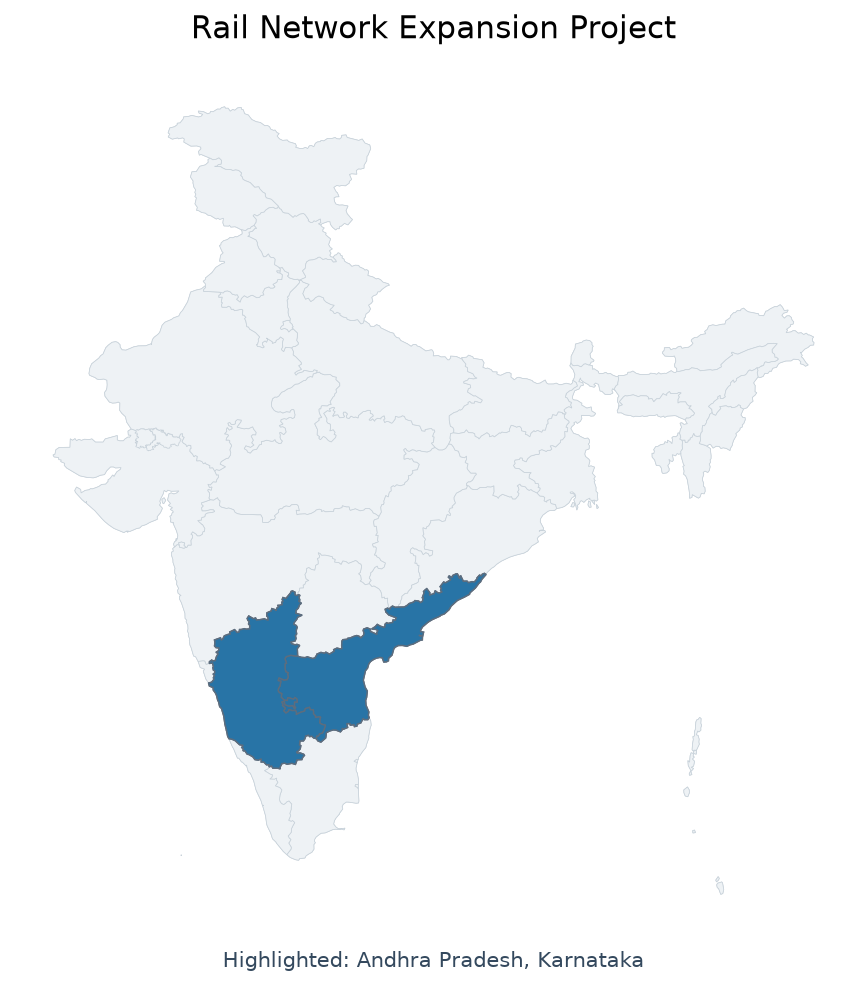
24 Jul Cabinet Approves Multi-Tracking Rail Project in Karnataka & AP
Subject Relevance — Where This Topic Fits
- GS Paper III — Infrastructure: Energy, Ports, Roads, Airports, Railways etc. | GS Paper III — Investment Models | GS Paper III — Environmental Pollution and Degradation
- Prelims: Multi-tracking rail projects, Cabinet Committee on Economic Affairs (CCEA), PM Gati Shakti National Master Plan, Logistics sector development, Sustainable transportation, Indian Railways network expansion
- Essay: Infrastructure as a catalyst for economic growth and regional development, The role of sustainable transportation in achieving India’s climate goals
Quick Revision: The multi-tracking rail project in Karnataka and Andhra Pradesh, approved by the CCEA, aims to enhance rail network capacity, improve logistics, and contribute to sustainable development under the PM Gati Shakti National Master Plan.
Why is this in the news?
The Cabinet Committee on Economic Affairs (CCEA), chaired by the Prime Minister, has approved a multi-tracking project for the Ballari–Guntakal rail section in Karnataka and Andhra Pradesh. This initiative involves laying third and fourth rail lines, aiming to expand the Indian Railways network by approximately 46 kilometres, with an estimated cost of ₹1,264 crore and a target completion by 2028–29.
Background
- The project is situated across three districts in Karnataka and Andhra Pradesh, specifically targeting the Ballari–Guntakal rail section.
- This rail corridor is a critical artery for the transportation of essential commodities such as iron ore, dolomite, limestone, iron and steel, coal, fertilisers, and food grains.
- The existing rail network in this region experiences significant congestion, necessitating capacity enhancement to facilitate smoother movement of goods and passengers.
- The project aligns with the objectives of the PM Gati Shakti National Master Plan, which seeks to foster integrated planning and multi-modal connectivity to enhance logistics efficiency.
- The expansion is projected to improve rail connectivity for approximately 99 villages and benefit around seven lakh people, alongside enhancing access to key tourist destinations like Ballari Fort and Sri Kumaraswamy Temple.
- Indian Railways is a key component of the national infrastructure, crucial for economic development, regional integration, and achieving environmental sustainability goals through its energy-efficient and eco-friendly mode of transport.
What is the Multi-Tracking Rail Project?
- The project involves the construction of third and fourth rail lines on the Ballari–Guntakal rail section, spanning approximately 46 kilometres.
- It is estimated to cost ₹1,264 crore and is targeted for completion by the financial year 2028–29.
- The primary objective is to augment the rail network capacity, thereby facilitating more efficient and seamless movement of people, goods, and services.
- Upon completion, the project is expected to develop an additional freight carrying capacity of approximately 16.22 million tonnes per annum.
- The enhanced capacity will lead to smoother rail operations, reduced congestion, and improved operational efficiency and service reliability for Indian Railways.
- Environmentally, the project is projected to save approximately 1.32 crore litres of oil and reduce carbon dioxide emissions by 6.67 crore kilograms, equivalent to the impact of planting 0.27 crore trees.
- It aims to generate employment and self-employment opportunities, contributing to the overall development of the region and fostering self-reliance, in line with the vision of ‘New India’.
Key Features
| Feature | Significance |
|---|---|
| Project Scope | Construction of third and fourth rail lines on the Ballari–Guntakal section in Karnataka and Andhra Pradesh. |
| Network Expansion | Adds approximately 46 kilometers to the existing Indian Railways network. |
| Estimated Cost | INR 1,264 crore. |
| Completion Target | Aimed for the financial year 2028–29. |
| Beneficiary Districts | Three districts across Karnataka and Andhra Pradesh. |
| Freight Capacity Enhancement | Expected to develop an additional freight carrying capacity of approximately 16.22 million tonnes per annum. |
Why it Matters
Economic Development and Logistics
- Facilitates seamless movement of people, goods, and services, thereby strengthening multi-modal connectivity and enhancing logistics capabilities.
- Crucial for the transportation of vital commodities such as iron ore, dolomite, limestone, iron and steel, coal, fertilizers, and food grains.
- Contributes to a reduction in logistics costs, a key objective for enhancing India’s economic competitiveness.
Environmental Sustainability
- Promotes rail as an environmentally friendly and energy-efficient mode of transport, aligning with national climate goals.
- Anticipated to save approximately 1.32 crore liters of oil and reduce carbon dioxide emissions by 6.67 crore kilograms, equivalent to planting about 0.27 crore trees.
Social and Regional Connectivity
- Improves rail connectivity for approximately 99 villages, benefiting around seven lakh people.
- Enhances access to significant tourist destinations including Ballari Fort and Sri Kumaraswamy Temple, fostering tourism and regional development.
- Aims to empower local populations through overall regional development and increased opportunities for employment and self-employment.
Operational Efficiency and Capacity
- Increases line capacity, leading to smoother rail operations and reduced congestion.
- Significantly improves operational efficiency, travel convenience, and service reliability of Indian Railways.
Challenges
1. Land Acquisition and Resettlement
- Acquiring land for new rail lines across multiple districts can be complex, involving negotiations with landowners and managing potential displacement.
- Ensuring fair compensation and rehabilitation for affected communities is crucial for project success and social equity.
UPSC Link: Infrastructure; Social Justice
2. Inter-State Coordination
- The project spans Karnataka and Andhra Pradesh, necessitating effective coordination between state governments, local bodies, and railway authorities.
- Differences in administrative procedures and local regulations can pose implementation challenges.
UPSC Link: Federalism; Infrastructure
3. Funding and Financial Management
- Managing a substantial budget of INR 1,264 crore requires robust financial planning and expenditure control.
- Potential for cost overruns due to unforeseen circumstances or delays needs to be mitigated.
UPSC Link: Government Budgeting; Infrastructure
4. Environmental Clearances and Impact Mitigation
- Securing necessary environmental clearances can be a time-consuming process, requiring detailed impact assessments.
- Minimizing ecological footprint during construction and operation, despite the project’s overall environmental benefits, remains a challenge.
UPSC Link: Environmental Impact Assessment; Infrastructure
Challenges — UPSC Perspective
| Issue | Concern |
|---|---|
| Project Timelines | Adherence to the 2028-29 completion target amidst potential logistical and administrative hurdles. |
| Resource Mobilization | Ensuring timely availability of construction materials, skilled labor, and machinery. |
| Public-Private Participation | Optimizing engagement of private sector expertise and resources for efficient project execution. |
| Maintenance and Upkeep | Establishing effective long-term maintenance protocols for the expanded rail network to ensure sustained operational reliability. |
Government Initiatives — Must-Memorise for Prelims
- PM Gati Shakti National Master Plan
Way Forward
- Implement a robust project monitoring framework to track progress, identify bottlenecks, and ensure timely completion within the stipulated budget.
- Establish a dedicated inter-state coordination committee involving officials from Karnataka, Andhra Pradesh, and Indian Railways to streamline approvals and resolve disputes.
- Adopt advanced construction technologies and project management techniques to enhance efficiency and mitigate potential delays.
- Prioritize transparent land acquisition processes with equitable compensation and comprehensive rehabilitation packages for affected populations.
- Integrate environmental sustainability measures throughout the project lifecycle, from planning to operation, to maximize ecological benefits.
- Explore innovative financing mechanisms and public-private partnerships to leverage additional resources and expertise for future infrastructure projects.
- Conduct regular impact assessments post-completion to evaluate the project’s effectiveness in achieving its socio-economic and environmental objectives.
UPSC Value Addition
Keywords for Mains Answer-Writing
Multi-tracking railway projects · Logistics efficiency · PM Gati Shakti National Master Plan · Sustainable transportation · Regional development · Freight movement capacity · Environmental benefits of railways · Infrastructure development · Economic Affairs Committee of Cabinet · Last-mile connectivity
Concept Flow
Cabinet Committee on Economic Affairs (CCEA) approves multi-tracking project. → Third and fourth rail lines constructed on Ballari–Guntakal section. → Indian Railways network expands by 46 km, increasing line capacity. → Enhanced freight movement, reduced logistics costs, and improved passenger travel. → Socio-economic development, environmental benefits, and regional connectivity strengthened.
Prelims Practice Questions
Q1. Consider the following statements regarding the recently approved multi-tracking railway project in Karnataka and Andhra Pradesh:
1. The project aims to enhance rail connectivity to major tourist destinations like Ballari Fort and Sri Kumaraswamy Temple.
2. It is being implemented under the Prime Minister Gati Shakti National Master Plan.
3. The project is expected to increase the existing Indian Railways network by approximately 46 kilometers.
Which of the statements given above are correct?
- 1 and 2 only
- 2 and 3 only
- 1 and 3 only
- 1, 2 and 3
Answer: 1, 2 and 3 — Statement 1 is correct as the project explicitly mentions improved rail access to Ballari Fort and Sri Kumaraswamy Temple. Statement 2 is correct as the project is prepared under the PM Gati Shakti National Master Plan. Statement 3 is correct as the project will add approximately 46 kilometers to the existing rail network.
Q2. Which of the following are potential benefits of multi-tracking railway projects?
1. Reduction in logistics costs.
2. Enhancement of freight carrying capacity.
3. Contribution to climate goals through reduced carbon emissions.
4. Improved operational efficiency and service reliability.
Select the correct answer using the code given below:
- 1, 2 and 3 only
- 2, 3 and 4 only
- 1, 3 and 4 only
- 1, 2, 3 and 4
Answer: 1, 2, 3 and 4 — All four statements represent potential benefits of multi-tracking railway projects. Multi-tracking reduces congestion, allowing for more efficient movement of goods, thereby lowering logistics costs and increasing freight capacity. Railways are an energy-efficient mode of transport, contributing to climate goals by reducing emissions. Enhanced capacity also leads to improved operational efficiency and reliability.
Mains Practice Question
✍ Discuss the significance of multi-tracking railway projects in achieving India’s infrastructure development and climate goals. How does the Prime Minister Gati Shakti National Master Plan facilitate such initiatives? (250 words)
Approach: Candidates should begin by defining multi-tracking railway projects and their direct impact on capacity enhancement, freight movement, and passenger convenience. Subsequently, they should elaborate on the economic benefits, such as reduced logistics costs and improved regional connectivity, and the environmental advantages, including lower carbon emissions and fuel savings. The second part of the answer should focus on the PM Gati Shakti National Master Plan, explaining its role in integrated planning, multi-modal connectivity, and expedited project implementation, thereby linking it to the successful execution and broader objectives of multi-tracking railway initiatives.
Source: PIB (Press Information Bureau)
Generated by AanyaAi for educational purpose.

- Union Minister Launches World’s First Air Pollution Analysis Facility for Delhi NCR - October 24, 2026
- वन अधिकार अधिनियम के कार्यान्वयन पर तीसरा क्षेत्रीय समीक्षा सम्मेलन: प्रमुख बिंदु और चुनौतियाँ - October 24, 2026
- Understanding ‘Godzilla’ El Niño Impact on India’s Climate & Economy - October 24, 2026

No Comments