


12 Sep Colombo Security Conclave Exercise in Vizag: UPSC Security Analysis
✎ The Colombo Security Conclave Table-Top Exercise 2026 is a strategic initiative to enhance Maritime Domain Awareness and coordinated responses to non-traditional maritime threats in the Indian Ocean Region, aligning with the…
Subject Relevance — Where This Topic Fits
- GS Paper II — International Relations — Regional and Global Groupings and Agreements involving India and/or affecting India’s interests | GS Paper III — Security — Challenges to Internal Security through Communication Networks, Role of External State and Non-State Actors in creating challenges
- Prelims: Colombo Security Conclave (CSC), Maritime Domain Awareness (MDA), Illegal, Unreported and Unregulated (IUU) Fishing, Non-Traditional Security Threats, Standard Operating Procedures (SOPs), Western Naval Command, MAHASAGAR Initiative
- Essay: The Role of Regional Maritime Security Frameworks in Ensuring Peace and Stability in the Indian Ocean Region, Non-Traditional Security Challenges and the Imperative of Multilateral Cooperation
Quick Revision: The Colombo Security Conclave Table-Top Exercise 2026 is a strategic initiative to enhance Maritime Domain Awareness and coordinated responses to non-traditional maritime threats in the Indian Ocean Region, aligning with the CSC’s MAHASAGAR vision for regional security and growth.
Why is this in the news?
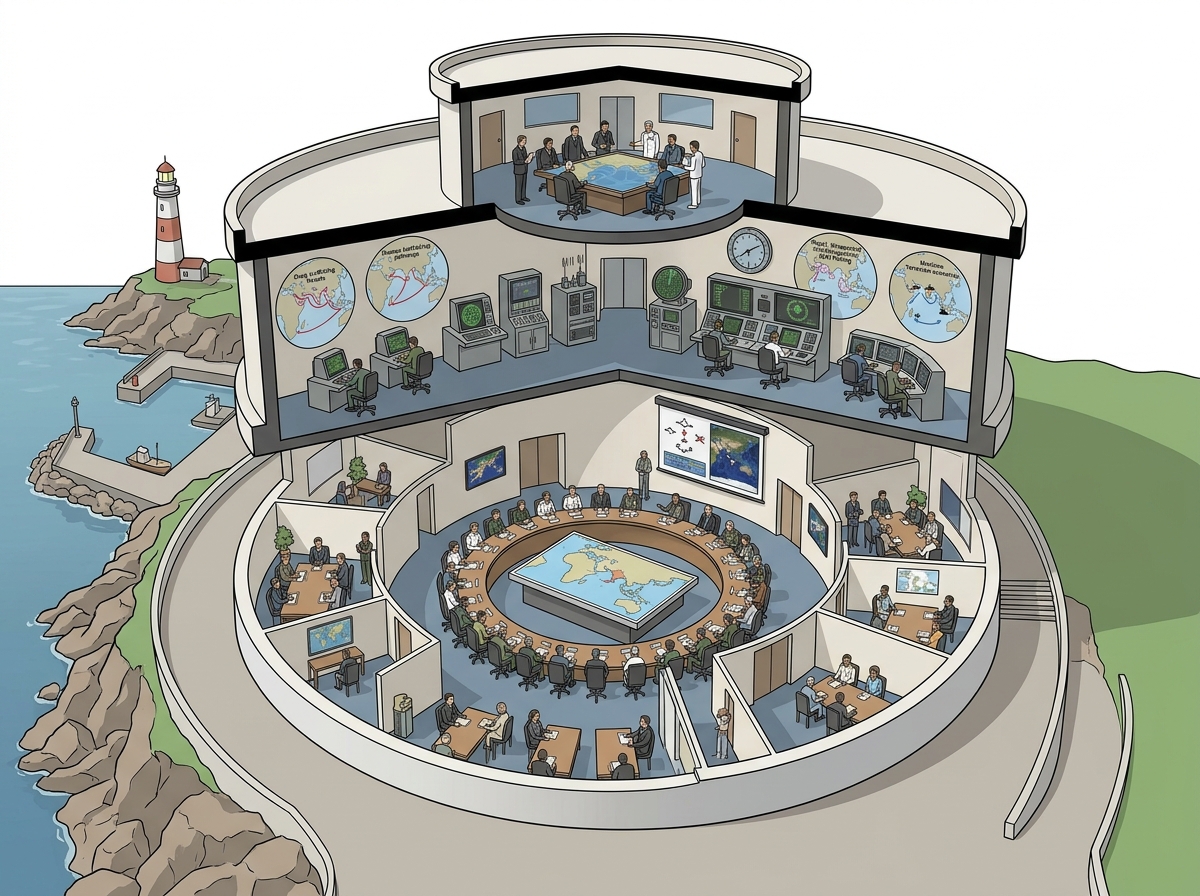
The successful completion of a three-day Table-Top Exercise (TTX) under the Colombo Security Conclave (CSC) framework in Visakhapatnam on 12 September 2026 underscores India’s commitment to enhancing maritime security cooperation in the Indian Ocean Region (IOR). The exercise, conducted by the Eastern Naval Command of the Indian Navy, focused on coordinated responses to non-traditional maritime threats, including maritime terrorism, drug trafficking, human trafficking, and Illegal, Unreported and Unregulated (IUU) fishing. This initiative aligns with the CSC’s vision of mutual and holistic advancement for security and growth across regions, as encapsulated in the MAHASAGAR framework.
Background
- The Colombo Security Conclave (CSC) was established in 2020 as a regional maritime security grouping, initially comprising India, Sri Lanka, and the Maldives, with Mauritius joining in 2021 and Seychelles and Bangladesh as observers.
- The CSC aims to address non-traditional security challenges in the Indian Ocean Region (IOR) through collaborative mechanisms, including information sharing, joint exercises, and capacity-building initiatives.
- The Indian Ocean Region (IOR) is a critical maritime domain, accounting for nearly 40% of global oil trade and hosting vital sea lanes of communication, making it strategically significant for global trade and security.
- Non-traditional security threats such as maritime terrorism, drug trafficking, human trafficking, and IUU fishing pose significant risks to regional stability, economic prosperity, and maritime security.
- The MAHASAGAR initiative, launched by the CSC, emphasizes mutual and holistic advancement for security and growth across regions, reflecting a shared commitment to addressing maritime security challenges through collective action.
What is the Colombo Security Conclave (CSC) Table-Top Exercise (TTX)?
- The Table-Top Exercise (TTX) is a simulation-based, discussion-driven military exercise designed to evaluate and refine existing Standard Operating Procedures (SOPs) for responding to non-traditional maritime threats.
- The exercise was conducted over three days (09–12 September 2026) in Visakhapatnam under the aegis of the Eastern Naval Command of the Indian Navy, with participation from CSC member states and observer countries.
- The primary objective was to develop a coordinated response mechanism for addressing non-traditional maritime threats such as maritime terrorism, drug trafficking, human trafficking, and IUU fishing in the IOR.
- The TTX involved in-depth discussions on simulated operational scenarios, including crisis management, information sharing, and joint decision-making processes among participating nations.
- The exercise focused on enhancing Maritime Domain Awareness (MDA) by streamlining information-sharing mechanisms and improving interoperability among CSC member states.
- The TTX also reviewed and refined existing SOPs to ensure their effectiveness in addressing emerging maritime security challenges, including cyber threats and environmental crimes.
- The exercise underscores the CSC’s commitment to promoting regional peace, stability, and prosperity through collective action and shared responsibility in the maritime domain.
- The outcomes of the TTX are expected to contribute to the implementation of the MAHASAGAR initiative, which seeks to foster mutual and holistic advancement for security and growth across regions.
Key Features
| Feature | Significance |
|---|---|
| Three-day Table-Top Exercise (TTX) | Enabled simulation of complex maritime security scenarios to test coordinated responses among member states. |
| Focus on Non-Traditional Threats | Addressed maritime terrorism, narcotics trafficking, human trafficking, and IUU fishing—key challenges in the Indian Ocean Region (IOR). |
| Standard Operating Procedure (SOP) Review | Facilitated evaluation and refinement of existing SOPs for combating illicit maritime activities. |
| Maritime Domain Awareness (MDA) Enhancement | Strengthened collective information-sharing mechanisms to improve real-time situational awareness. |
| Participation by CSC Member and Observer States | Ensured diverse perspectives and collaborative problem-solving in addressing regional security threats. |
Why it Matters
Strategic Security in IOR
- Demonstrates India’s proactive role in fostering regional maritime security cooperation under the Colombo Security Conclave (CSC).
- Reinforces the ‘MAHASAGAR’ vision for Mutual and Holistic Advancement for Security and Growth Across Regions, aligning with India’s Act East Policy.
- Highlights the importance of multilateral exercises in building trust and interoperability among littoral states of the Indian Ocean.
Operational Preparedness
- Validated the efficacy of existing SOPs for countering non-traditional maritime threats through simulated crisis management.
- Enhanced collective MDA by refining information-sharing protocols, critical for early detection and response to illicit activities.
- Provided a platform for naval and maritime security experts to exchange best practices and lessons learned.
Geopolitical Implications
- Underscores the CSC’s evolving role as a platform for addressing shared maritime security challenges in the IOR.
- Strengthens India’s leadership in shaping regional security architectures, complementing initiatives like the Indo-Pacific Oceans Initiative (IPOI).
- Promotes stability and economic prosperity by mitigating threats to maritime trade routes and coastal communities.
Challenges
1. Non-Traditional Maritime Threats
- Maritime terrorism and piracy pose direct risks to regional stability and global supply chains.
- Narcotics and human trafficking exploit porous maritime borders, necessitating robust interdiction capabilities.
- IUU fishing depletes marine resources, undermines food security, and disrupts legal fishing economies.
UPSC Link: GS Paper 3: Security challenges
2. Coordination Among Littoral States
- Divergent national priorities and capabilities hinder seamless cooperation in countering transnational threats.
- Limited maritime domain awareness and surveillance gaps reduce the effectiveness of joint operations.
- Institutional and legal frameworks for extradition and prosecution of maritime criminals remain underdeveloped in some regions.
UPSC Link: GS Paper 2: International relations
3. Technological and Resource Constraints
- Inadequate investment in maritime surveillance technologies (e.g., satellite tracking, AI-driven analytics) limits real-time threat detection.
- Shortages of trained personnel and specialized equipment (e.g., patrol vessels, drones) impede operational readiness.
- Climate change-induced factors (e.g., rising sea levels, extreme weather) exacerbate operational challenges for maritime forces.
UPSC Link: GS Paper 3: Science & Tech
Challenges — UPSC Perspective
| Issue | Concern |
|---|---|
| Maritime Terrorism | Direct threat to regional stability and global trade routes. |
| Narcotics Trafficking | Funds criminal networks and exacerbates societal harm. |
| Human Trafficking | Violates human rights and undermines social cohesion. |
| IUU Fishing | Depletes marine biodiversity and threatens food security. |
| Limited MDA | Reduces early warning capabilities for illicit activities. |
| Regulatory Gaps | Hampers prosecution and extradition of maritime criminals. |
Way Forward
- Enhance joint maritime exercises under CSC to include live drills and real-time simulations for operational readiness.
- Invest in advanced maritime surveillance technologies, including AI and satellite-based tracking systems.
- Strengthen information-sharing platforms among CSC member states to improve cross-border coordination.
- Develop standardized legal frameworks for addressing maritime crimes, including extradition and prosecution protocols.
- Promote capacity-building initiatives for littoral states to address resource and technological constraints.
- Integrate climate adaptation strategies into maritime security plans to mitigate climate-induced operational risks.
- Foster public-private partnerships to leverage private sector expertise in maritime domain awareness.
UPSC Value Addition
Keywords for Mains Answer-Writing
Colombo Security Conclave · Maritime Domain Awareness · Illegal Unreported and Unregulated (IUU) Fishing · Maritime terrorism · Human trafficking · Narcotics trafficking · Standard Operating Procedures (SOP) · Western Naval Command · Indian Ocean Region (IOR) · MAHASAGAR Vision · Non-traditional security challenges · Maritime security cooperation · Table Top Exercise (TTX) · Collective response mechanisms · Regional maritime governance
Concept Flow
Regional maritime security threats in IOR → Establishment of Colombo Security Conclave (CSC) → CSC Table-Top Exercise (TTX) → Simulation of non-traditional threats → Review and refinement of SOPs → Enhancement of Maritime Domain Awareness (MDA) → Strengthened inter-state cooperation → Regional stability and economic prosperity.
Prelims Practice Questions
Q1. Consider the following statements regarding the Colombo Security Conclave (CSC):
1. The CSC is a maritime security initiative involving only South Asian countries.
2. The CSC aims to address non-traditional security challenges such as maritime terrorism, narcotics trafficking, and illegal fishing.
3. The CSC’s vision, MAHASAGAR, stands for ‘Mutual and Holistic Advancement for Security and Growth Across Regions’.
4. The CSC includes India, Sri Lanka, Maldives, and Mauritius as member states.
How many of the above statements are correct?
- Only one
- Only two
- Only three
- All
Answer: All — Statements 1, 2, and 3 are correct. Statement 1 is accurate as the CSC primarily involves South Asian and Indian Ocean littoral states. Statement 2 aligns with the CSC’s focus on non-traditional maritime threats. Statement 3 correctly defines the MAHASAGAR vision. Statement 4 is incorrect as the CSC’s member states include India, Sri Lanka, Maldives, and Mauritius, but not all listed in the statement.
Q2. Assertion (A): Table Top Exercises (TTX) are simulation-based drills used to test operational readiness and coordination among stakeholders.
Reason (R): The recent TTX conducted by the Western Naval Command under the Colombo Security Conclave focused on developing coordinated responses to illegal maritime activities in the Indian Ocean Region.
Options:
A. Both A and R are true, and R is the correct explanation of A.
B. Both A and R are true, but R is not the correct explanation of A.
C. A is true, but R is false.
D. A is false, but R is true.
Answer: ? — Both Assertion (A) and Reason (R) are true. The TTX is indeed a simulation-based drill aimed at testing operational readiness and coordination. The Reason (R) correctly explains the purpose of the TTX conducted by the Western Naval Command under the CSC.
Q3. Match the following maritime security challenges with their respective descriptions:
Column I (Challenge)
A. Illegal, Unreported, and Unregulated (IUU) Fishing
B. Maritime Terrorism
C. Narcotics Trafficking
D. Human Trafficking
Column II (Description)
1. The smuggling of controlled substances across international waters.
2. The recruitment, transportation, or harbouring of persons through coercion for exploitative purposes.
3. Fishing activities conducted in violation of national or international regulations without proper reporting.
4. Deliberate use of violence or intimidation at sea to achieve political, ideological, or religious objectives.
Options:
A. A-3, B-4, C-1, D-2
B. A-1, B-2, C-3, D-4
C. A-4, B-3, C-2, D-1
D. A-2, B-1, C-4, D-3
Answer: ? — The correct matches are: A-3 (IUU fishing involves unregulated fishing activities), B-4 (Maritime terrorism involves violence or intimidation at sea), C-1 (Narcotics trafficking involves smuggling controlled substances), and D-2 (Human trafficking involves exploitative coercion).
Mains Practice Question
✍ The Colombo Security Conclave (CSC) represents a significant evolution in regional maritime governance through its focus on non-traditional security challenges. Critically examine the role of the CSC in addressing maritime security threats in the Indian Ocean Region (IOR), with reference to its institutional framework, operational mechanisms, and the MAHASAGAR vision. Also, analyse the challenges in achieving effective maritime domain awareness (MDA) in the IOR. (15 Marks)
Approach: MODEL-ANSWER SKELETON:
1. **Introduction (2 Marks)**
– Define the Colombo Security Conclave (CSC) and its origin as a regional maritime security initiative.
– Highlight the significance of the Indian Ocean Region (IOR) in global trade, energy security, and geopolitics.
– State the objective of the CSC: to foster collective responses to non-traditional maritime threats.
2. **Institutional Framework of the CSC (3 Marks)**
– Member states: India, Sri Lanka, Maldives, and Mauritius (with observer status for other countries like Bangladesh and Seychelles).
– Structure: Focus on four pillars—Maritime Safety and Security, Countering Terrorism, Countering Trafficking, and Maritime Law Enforcement.
– Governance: Regular meetings, joint exercises, and information-sharing mechanisms.
3. **Operational Mechanisms and Recent Initiatives (4 Marks)**
– Table Top Exercises (TTX): Purpose and outcomes, such as the recent exercise in Visakhapatnam (September 2026) focusing on IUU fishing, maritime terrorism, and narcotics trafficking.
– Standard Operating Procedures (SOPs): Review and standardization to enhance interoperability among member states.
– Information-sharing platforms: Role of Maritime Domain Awareness (MDA) in tracking illegal activities.
4. **MAHASAGAR Vision (2 Marks)**
– Definition: Mutual and Holistic Advancement for Security and Growth Across Regions.
– Objectives: Promote regional stability, economic growth, and collective security through mutual cooperation.
– Alignment with CSC’s goals: Emphasis on shared prosperity and security.
5. **Challenges in Achieving Effective Maritime Domain Awareness (MDA) (3 Marks)**
– Technological limitations: Inadequate surveillance infrastructure and data-sharing gaps.
– Geopolitical complexities: Divergent national interests and sovereignty concerns.
– Capacity-building: Need for training, joint patrols, and institutional strengthening.
– Legal and regulatory hurdles: Enforcement of international conventions like the UN Convention on the Law of the Sea (UNCLOS).
6. **Conclusion (1 Mark)**
– Reiterate the CSC’s role as a critical platform for regional maritime security.
– Emphasize the need for sustained cooperation, technological upgradation, and political will to address MDA challenges.
Source: PIB (Press Information Bureau)
Andhra Pradesh PCS (APPSC) — State PCS Practice
Prelims: Which of the following exercises was recently conducted at the Western Naval Command headquarters in Visakhapatnam under the Colombo Security Conclave?
- A. Exercise Milan
- B. Table Top Exercise (TTX)
- C. Exercise Malabar
- D. Exercise Varuna
Answer: B. Table Top Exercise (TTX) — The Colombo Security Conclave recently conducted a Table Top Exercise (TTX) at the Western Naval Command headquarters in Visakhapatnam.
Mains: Discuss the significance of the Colombo Security Conclave’s Table Top Exercise held in Visakhapatnam for India’s maritime security strategy in the Indian Ocean Region, with a focus on Andhra Pradesh’s strategic role.
Generated by AanyaAi for educational purpose.
Related guides on our sites
- Current affairs for upsc 2026
- How to prepare for GS paper 1 for UPSC CSE mains exam
- Best UPSC coaching for IFOS exam
- Best mentorship programme for upsc

- यूपीआई ने किया वित्तीय समावेशन का क्रांतिकारी बदलाव: पूर्व आरबीआई गवर्नर - September 12, 2026
- How UPI Revolutionized Financial Inclusion: Insights from Former RBI Governor - September 12, 2026
- आंध्र प्रदेश में 10 क्रिटिकल केयर ब्लॉक और 12 आईपीएचएल का उद्घाटन, जानिए कैसे बढ़ेगी स्वास्थ्य सुरक्षा - September 12, 2026

No Comments