


22 Sep DDWS Hosts Virtual Meet to Strengthen Rural Water Workforce Under JJM 2.0
✎ Jal Jeevan Mission 2.0 prioritizes the creation of a professionalized, skilled workforce through the Nal Jal Mitra initiative to ensure sustainable rural water supply systems, aligning skill development with the National Skill…
Subject Relevance — Where This Topic Fits
- GS Paper II — Governance, Human Resource Development | GS Paper III — Environment, Water Resources, Skill Development
- Prelims: Jal Jeevan Mission (JJM), Nal Jal Mitra, Sujalam Shakti, NSQF, NCVTE, PMKVY 4.0, Rural Water Supply Infrastructure, Water Quality Monitoring, Preventive Maintenance, RPL (Recognition of Prior Learning)
- Essay: Sustainable Development Goals and India’s Commitment to Universal Safe Water Access, Role of Skill Development in Achieving Inclusive and Sustainable Growth
Quick Revision: Jal Jeevan Mission 2.0 prioritizes the creation of a professionalized, skilled workforce through the Nal Jal Mitra initiative to ensure sustainable rural water supply systems, aligning skill development with the National Skill Qualification Framework (NSQF) and leveraging existing vocational training institutions.
Why is this in the news?
The Department of Drinking Water and Sanitation (DDWS), Ministry of Jal Shakti, convened a national virtual conference on 21 September 2026 to deliberate on strengthening the skilled workforce required for the sustainable operation, maintenance, and quality monitoring of rural water supply infrastructure under Jal Jeevan Mission (JJM) 2.0. This initiative follows the Departmental Summit held on 1–2 September 2026 and underscores the critical importance of professionalizing the rural water sector to ensure long-term functionality and service delivery.
Background
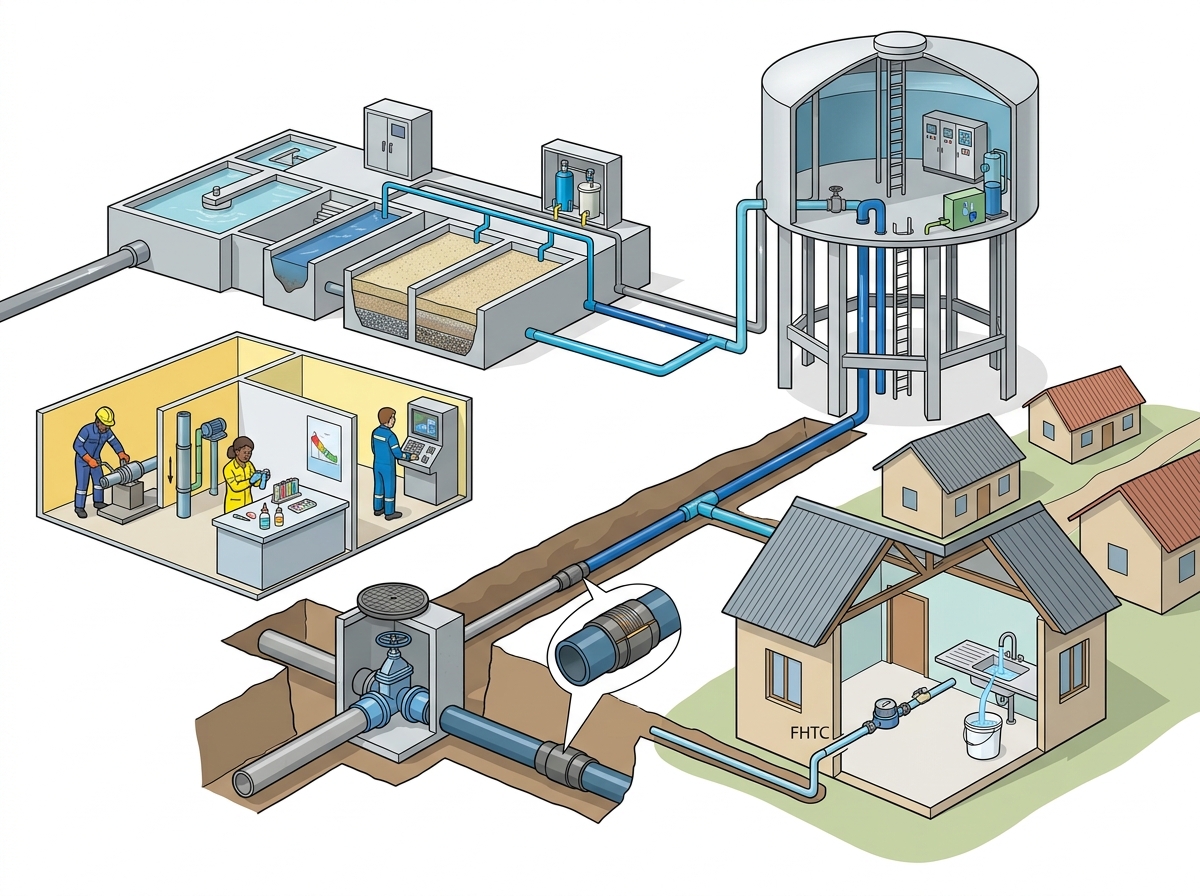
- Jal Jeevan Mission (JJM), launched in 2019, aims to provide Functional Household Tap Connection (FHTC) to every rural household by 2024, with a focus on sustainability through community participation and infrastructure maintenance.
- JJM 2.0 extends the mission’s scope by emphasizing the creation of a robust ecosystem for the operation and maintenance (O&M) of rural water supply systems, including the development of skilled human resources.
- The mission operates under the aegis of the Ministry of Jal Shakti, with the Department of Drinking Water and Sanitation (DDWS) as the nodal agency for implementation.
- Sustainable water supply in rural areas requires not only infrastructure but also a cadre of trained technicians capable of preventive maintenance, system monitoring, and emergency repairs.
- The National Skill Qualification Framework (NSQF) provides a structured approach to skill development, aligning vocational training with industry needs and national standards.
- The conference highlighted the role of state-level agencies such as State Water and Sanitation Missions, Public Health Engineering Departments, and Panchayati Raj Institutions in implementing skill development programs.
What is the Jal Jeevan Mission (JJM) 2.0 and the Nal Jal Mitra Initiative?
- Jal Jeevan Mission 2.0 is an extension of the original JJM, focusing on the sustainability of rural water supply systems through professionalized operation, maintenance, and water quality monitoring.
- The mission targets the creation of a skilled workforce at the grassroots level to ensure the long-term functionality of rural water infrastructure, including piped water supply, treatment systems, and electrical installations.
- Nal Jal Mitra (NJM) is a flagship skill development program under JJM 2.0 designed to train multi-skilled technicians capable of handling routine operations, preventive maintenance, and minor repairs of rural water supply systems.
- The NJM program aligns with the National Skill Qualification Framework (NSQF) and offers two pathways for skill development: a 510-hour short-term training course for new entrants and a 120-hour Recognition of Prior Learning (RPL) program for existing workers in the sector.
- The program covers technical skills related to pumps, pipelines, treatment systems, electrical installations, and water quality testing, ensuring a holistic approach to rural water infrastructure management.
- The initiative is implemented in collaboration with the Ministry of Skill Development and Entrepreneurship (MSDE) and the National Council for Vocational Education and Training (NCVET), leveraging existing vocational training infrastructure such as ITIs and Polytechnics.
- States and Union Territories are encouraged to prioritize local youth in training programs to foster employment opportunities and ensure the availability of skilled resources within rural communities.
Key Features
| Feature | Significance |
|---|---|
| National Virtual Conference by DDWS under JJM 2.0 | Institutionalizes multi-stakeholder dialogue for capacity-building in rural water supply systems, ensuring alignment between Centre, States, and local institutions. |
| ‘Nal Jal Mitra’ Skill Qualification under NSQF | Develops a structured, NSQF-compliant competency framework for multi-skilled rural technicians capable of operating, maintaining, and repairing rural water infrastructure. |
| Dual Training Pathways (510-hour & 120-hour) | Provides flexible upskilling routes: short-term training for new entrants and Recognition of Prior Learning (RPL) for existing workforce, enhancing inclusivity and scalability. |
| Integration with PMKVY 4.0 & NCVTE | Leverages national skill development frameworks and institutional networks (ITIs, Polytechnics) to ensure standardized training, assessment, and certification for rural water sector jobs. |
| Focus on Local Employment Generation | Targets rural youth for skill development, aligning with the broader objective of creating sustainable livelihoods within the rural water supply ecosystem. |
Why it Matters
Institutional & Governance
- Strengthens the operational sustainability of JJM 2.0 by addressing the critical gap in skilled human resources required for long-term maintenance of rural water infrastructure.
- Establishes a coordinated governance mechanism between DDWS, State Water Missions, Panchayati Raj Institutions, and Skill Development Ministries to ensure policy coherence and implementation efficiency.
- Promotes decentralized capacity-building through local institutions (ITIs, Polytechnics), reducing dependency on external expertise and fostering grassroots employment.
Economic & Livelihood
- Creates a pipeline of skilled technicians (estimated 13 lakh jobs) in rural water supply, addressing both service delivery gaps and unemployment in rural areas.
- Enhances the economic viability of rural water infrastructure by reducing downtime and repair costs through preventive maintenance and skilled workforce deployment.
- Stimulates local economies by prioritizing rural youth for training, thereby reducing migration pressures and promoting inclusive growth.
Technical & Infrastructure
- Ensures the technical robustness of rural water supply systems by standardizing skill sets for technicians across domains (pumps, pipelines, treatment systems, electrical installations).
- Facilitates the adoption of NSQF-aligned qualifications, ensuring global benchmarking and portability of skills within the water sector and allied industries.
- Supports the integration of digital tools (e.g., remote monitoring, IoT-based diagnostics) by training technicians in modern operational practices.
Social & Environmental
- Improves public health outcomes by ensuring reliable and safe drinking water supply through professionally maintained infrastructure, reducing waterborne diseases.
- Promotes gender-inclusive employment opportunities by encouraging participation of women in technical roles within the rural water sector.
- Supports climate resilience by training technicians in adaptive maintenance practices for water supply systems vulnerable to extreme weather events.
Challenges
1. Skill Mismatch & Training Infrastructure Gaps
- Limited availability of high-quality training institutions in rural areas capable of delivering NSQF-compliant courses in water sector skills.
- Inadequate industry linkages for apprenticeships and on-the-job training, leading to theoretical knowledge gaps among trainees.
- Variability in state-level implementation capacity, with some regions lacking robust State Skill Development Missions or ITI networks.
UPSC Link: GS-III: Skill Development & Employment
2. Retention & Career Progression of Rural Technicians
- Low remuneration and lack of career advancement opportunities may deter trained technicians from remaining in rural water sector roles.
- Absence of formal career pathways (e.g., progression from technician to supervisor or trainer) leading to high attrition rates.
- Competition from urban employment opportunities and migration trends may reduce the availability of skilled personnel in rural areas.
UPSC Link: GS-III: Human Resource Development
3. Sustainability of Training Programs
- Dependence on external funding (e.g., PMKVY allocations) for training programs may lead to discontinuity if budgetary priorities shift.
- Lack of standardized assessment mechanisms across states, risking inconsistent skill validation and certification.
- Limited awareness among rural youth about the career prospects and benefits of joining the rural water sector.
UPSC Link: GS-II: Centre-State Relations
4. Integration with Existing Water Supply Schemes
- Overlap and coordination challenges with other rural water schemes (e.g., AMRUT, Swachh Bharat Mission) may dilute the focus on JJM 2.0 implementation.
- Inadequate data on current workforce gaps and skill levels in rural water supply systems, hindering targeted capacity-building efforts.
- Resistance from traditional service providers (e.g., local plumbers, electricians) to adopt standardized training and certification.
UPSC Link: GS-II: Governance & Public Service Delivery
5. Technological & Digital Divide
- Limited access to digital tools (e.g., mobile apps for maintenance tracking, IoT devices) in remote rural areas may hinder the adoption of modern practices.
- Insufficient training on digital literacy and data-driven decision-making for technicians, reducing the effectiveness of skill programs.
- Cybersecurity risks associated with digital water management systems in rural areas due to inadequate infrastructure.
UPSC Link: GS-III: Science & Technology
Challenges — UPSC Perspective
| Issue | Concern |
|---|---|
| Training Infrastructure | Inadequate ITIs/Polytechnics in rural areas to deliver NSQF-compliant courses. |
| Career Incentives | Low remuneration and lack of career growth discouraging retention of skilled technicians. |
| Funding Sustainability | Dependence on external schemes (PMKVY) for training programs risks discontinuity. |
| Inter-Scheme Coordination | Overlap with other water schemes (AMRUT, SBM) may dilute JJM 2.0 focus. |
| Digital Adoption | Limited access to digital tools in remote areas hinders modern maintenance practices. |
Government Initiatives — Must-Memorise for Prelims
- Jal Jeevan Mission (JJM) 2.0
- Pradhan Mantri Kaushal Vikas Yojana (PMKVY) 4.0
Way Forward
- States must prioritize the establishment of dedicated rural water skill training centres in collaboration with ITIs/Polytechnics to ensure NSQF compliance.
- Develop district-level skill mapping exercises to identify workforce gaps and tailor training programs accordingly, leveraging Panchayati Raj Institutions for grassroots outreach.
- Incentivize private sector participation through Public-Private Partnerships (PPPs) to enhance apprenticeship opportunities and industry linkages for trainees.
- Introduce a structured career progression framework for rural water technicians, including certification upgrades and supervisory roles, to improve retention.
- Integrate digital literacy modules into training programs to equip technicians with skills in remote monitoring, IoT-based diagnostics, and data management.
- Establish a national-level monitoring mechanism to track the implementation of ‘Nal Jal Mitra’ and RPL programs, ensuring accountability and course correction.
- Promote gender-inclusive policies in training programs, such as reserved seats for women in skill development courses and stipends for female trainees.
- Strengthen coordination between DDWS, State Water Missions, and Skill Development Ministries to align training programs with the operational needs of rural water supply systems.
UPSC Value Addition
Keywords for Mains Answer-Writing
Jal Jeevan Mission 2.0 · DDWS (Department of Drinking Water and Sanitation) · Nal Jal Mitra Programme · NSQF-compliant rural water workforce · Skill India Mission (PMKVY 4.0) · RPL (Recognition of Prior Learning) · Sustainable rural water infrastructure · Operation and Maintenance (O&M) of water supply systems · National Council for Vocational Education and Training (NCVTE) · Decentralised governance of water resources
Concept Flow
JJM 2.0 identifies long-term sustainability of rural water supply as dependent on skilled human resources. → DDWS launches ‘Nal Jal Mitra’ under NSQF to standardize technician competencies across pumps, pipelines, and treatment systems. → Dual training pathways (510-hour & 120-hour) are designed to upskill new entrants and existing workforce via PMKVY 4.0 and NCVTE. → State-level implementation through Water Missions, Panchayati Raj, and Skill Development Missions ensures localized delivery. → Skilled technicians enable preventive maintenance, reducing downtime and ensuring reliable water supply. → Improved water supply infrastructure enhances public health, economic productivity, and rural livelihoods. → Sustainable employment generation in rural areas reduces migration pressures and fosters inclusive growth.
Prelims Practice Questions
Q1. Consider the following statements regarding the Jal Jeevan Mission (JJM) 2.0:
1. JJM 2.0 focuses exclusively on the construction of new rural water supply infrastructure.
2. The ‘Nal Jal Mitra’ programme aims to create a skilled workforce for the operation and maintenance of rural water supply systems.
3. The programme includes a 510-hour short-term training course and a 120-hour ‘Recognition of Prior Learning’ (RPL) programme for existing workers.
How many of the above statements are correct?
- Only one
- Only two
- All three
- None
Answer: All three — Statement 1 is incorrect as JJM 2.0 emphasizes sustainable operation and maintenance of existing infrastructure alongside new constructions. Statements 2 and 3 are correct as per the official framework of the ‘Nal Jal Mitra’ programme under JJM 2.0.
Q2. Assertion (A): The Department of Drinking Water and Sanitation (DDWS) has collaborated with the Ministry of Skill Development and Entrepreneurship to develop NSQF-compliant qualifications for rural water technicians.
Reason (R): The collaboration aims to ensure that the rural water workforce is professionally trained to maintain water quality and infrastructure sustainability under JJM 2.0.
In the context of the above two statements, which one of the following is correct?
- Both A and R are true, and R is the correct explanation of A
- Both A and R are true, but R is not the correct explanation of A
- A is true but R is false
- A is false but R is true
Answer: Both A and R are true, but R is not the correct explanation of A — The collaboration between DDWS and the Ministry of Skill Development and Entrepreneurship is explicitly aimed at developing NSQF-compliant qualifications to professionalise the rural water workforce, making both the assertion and reason true, with the reason correctly explaining the assertion.
Q3. Match the following initiatives under Jal Jeevan Mission 2.0 with their respective objectives:
Column I (Initiative) Column II (Objective)
A. Nal Jal Mitra Programme 1. Recognition of prior learning for existing rural water workers
B. PMKVY 4.0 2. Skill development for operation and maintenance of rural water supply systems
C. RPL Programme 3. Skill certification aligned with National Skill Qualification Framework (NSQF)
D. NSQF-Compliant Qualifications 4. Short-term training for new entrants in rural water sector
- {‘A-2, B-4, C-1, D-3’: False}
- {‘A-3, B-2, C-1, D-4’: False}
- {‘A-2, B-3, C-1, D-4’: True}
- {‘A-4, B-1, C-2, D-3’: False}
Answer: {‘A-2, B-3, C-1, D-4’: True} — The correct pairing is: A (Nal Jal Mitra Programme) aligns with Objective 2 (skill development for O&M), B (PMKVY 4.0) with Objective 3 (NSQF-aligned skill certification), C (RPL Programme) with Objective 1 (recognition of prior learning), and D (NSQF-Compliant Qualifications) with Objective 4 (short-term training for new entrants).
Mains Practice Question
✍ The sustainability of rural water supply systems under Jal Jeevan Mission (JJM) 2.0 hinges critically on the availability of a skilled and professional workforce. Critically examine this proposition with reference to the institutional mechanisms, skill development frameworks, and governance structures introduced by the Department of Drinking Water and Sanitation (DDWS). (15 Marks)
Approach: MODEL-ANSWER SKELETON:
1. **Context and Proposition**:
– Define JJM 2.0 and its objectives (sustainable rural water supply, O&M, water quality monitoring).
– State the proposition: sustainability is contingent on a skilled workforce, not merely infrastructure.
2. **Institutional Mechanisms**:
– Role of DDWS under the Ministry of Jal Shakti in policy formulation and implementation.
– Collaboration with Ministry of Skill Development and Entrepreneurship (PMKVY 4.0) and NCVTE for NSQF-compliant qualifications.
– Involvement of state agencies: State Water and Sanitation Missions, Panchayati Raj Institutions, and technical education departments.
3. **Skill Development Frameworks**:
– ‘Nal Jal Mitra’ programme: Multi-skill training (pumps, pipelines, electrical installations, water treatment) with two pathways:
a) 510-hour short-term course for new entrants.
b) 120-hour RPL programme for existing workers.
– Alignment with NSQF to ensure standardised, nationally recognised qualifications.
4. **Governance Structures**:
– Decentralised implementation: Role of PRIs in localising skill development and employment generation.
– Monitoring and certification through NCVTE-accredited institutions.
– Integration with state skill development missions and ITIs/polytechnics.
5. **Challenges and Critical Analysis**:
– **Implementation gaps**: Potential delays in state-level adoption of NSQF qualifications and RPL programmes.
– **Skill retention**: Risk of trained workforce migrating to urban areas or higher-paying sectors.
– **Quality assurance**: Ensuring consistency in training standards across diverse state institutions.
– **Data and MIS**: Need for robust monitoring systems to track trained personnel and system performance.
6. **Way Forward**:
– Strengthening state-level coordination between water and skill development departments.
– Leveraging digital platforms for remote training and certification.
– Incentivising local youth participation through employment guarantees or subsidies.
7. **Conclusion**:
– Reiterate that while infrastructure is foundational, the professionalisation of the workforce is the linchpin for JJM 2.0’s long-term success. Highlight the need for sustained investment in human capital alongside physical assets.
Source: PIB (Press Information Bureau)
Generated by AanyaAi for educational purpose.
Related guides on our sites
- Anthropology VS PSIR
- Best PSIR optional coaching
- Best PSIR optional coaching online
- Best PSIR optional teacher

- DDWS Hosts Virtual Meet to Strengthen Rural Water Workforce Under JJM 2.0 - September 22, 2026
- किशाऊ परियोजना विवाद: पंजाब सुप्रीम कोर्ट पहुंचेगा, जानें पूरा मामला - September 22, 2026
- Punjab to Challenge Kishau Project in Supreme Court: Key Polity & Governance Issue for UPSC - September 22, 2026

No Comments