


06 Oct India, Russia Relations: Strategic Depth, Cultural Connection, and Emerging Challenges
This article covers “Daily Current Affairs” and Topic details “India, Russia Relations: Strategic Depth, Cultural Connection, and Emerging Challenges”
SYLLABUS MAPPING
GS–2 – International Relations – Bilateral, Regional, and Global Groupings and Agreements Involving India and/or Affecting India’s Interests
FOR PRELIMS
What are the key areas of cooperation between India and Russia, and how do they strengthen bilateral ties?
FOR MAINS
What are the major constraints in the India-Russia bilateral relationship, and how can they be addressed?
Why in the News?
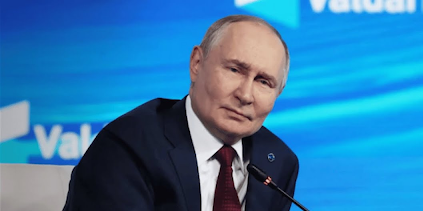
Speaking at the Valdai Discussion Group in Sochi, Russian President Vladimir Putin expressed his love for Indian films. He noted that Russia likely has the only TV channel in the world that focuses exclusively on Indian cinema. He also highlighted that India and Russia share cultural and humanitarian ties in addition to their political links. This underscores the ongoing soft power aspect of India-Russian relations, often overshadowed by defense and strategic discussions.
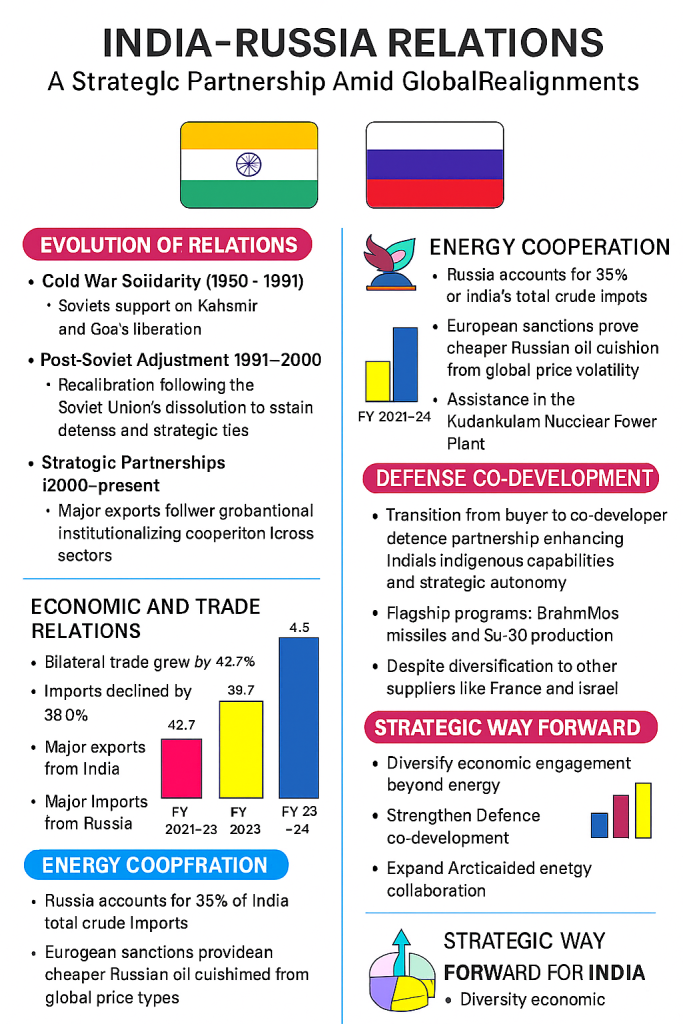
Areas of Cooperation Between India and Russia
| Area of Cooperation | Key Points |
|---|---|
| Defence & Security | – 60–70% of India’s legacy military equipment from Russia – Joint development of BrahMos supersonic cruise missile – Production of AK-203 rifles in Amethi, UP – Annual INDRA military exercises (Army, Navy, Air Force) – INS Chakra nuclear submarine leased under trust-based arrangement |
| Nuclear Energy | – Russia building Units 3–6 of Kudankulam NPP, Tamil Nadu – Cooperation on nuclear safety, reactor tech, and fuel supply – Collaboration on civil nuclear liability frameworks and long-term fuel agreements |
| Space Cooperation | – Gaganyaan mission: Roscosmos provides astronaut training & tech support – Historical cooperation since 1970s, including Indian satellites launched on Russian vehicles – Future prospects: satellite navigation, deep space exploration, space situational awareness |
| Trade & Energy | – Bilateral trade $65 billion in 2023–24 – Russia became India’s largest crude oil supplier in 2023 – INSTC corridor to reduce cargo travel time by 40% – Discussions on Rupee-Rouble trade, digital settlements, alternative payments to bypass Western sanctions |
| Health & Education | – Over 18,000 Indian students, mostly in medicine, enrolled in Russian universities (2024) – Collaboration on COVID-19 via Sputnik V trials, production, and distribution in India – Regular academic exchanges and scholarship programs strengthen people-to-people ties |
| Cultural & People-to-People Ties | – Bollywood icons like Raj Kapoor remain cultural symbols in Russia – Russia actively celebrates International Yoga Day – Dedicated Indian cinema TV channel airs Bollywood films – Tourism and language learning programs gradually increasing |
Constraints in the Bilateral Relationship
| Challenge | Details | Implications |
|---|---|---|
| Geopolitical Divergences | The Russia-China-Pakistan axis contrasts with the India-US Quad partnership. | Creates strategic discomfort |
| Sanctions and Strategic Pressures | Post-Ukraine Western sanctions complicate financial transactions and defense deals. | Leads to payment delays and supply chain issues |
| Economic Underperformance | Trade is heavily reliant on energy, showing low diversification. | Limits economic depth |
| Defense Diversification | India is purchasing more from the US, France, and Israel. | Leads to a gradual decline in Russian military supplies |
| Connectivity Bottlenecks | The INSTC is still underdeveloped with no direct land route. | Creates challenges in trade logistics |
| Private Sector Absence | There are few joint ventures outside defense. | Results in missed opportunities for innovation |
Way Forward
1. Maintain Strategic Autonomy: Engage responsibly with all major powers.
2. Diversify Cooperation: Explore options in green energy, digital economy, pharmaceuticals, AI, and agriculture.
3. Cultural Diplomacy as a Bridge: Use cinema, education, and tourism to strengthen people-to-people ties.
4. Enhance Connectivity: Fully operationalize INSTC and explore Arctic shipping routes.
5. Innovative Financial Channels: Develop Rupee-Rouble trade, local currency settlements, or digital payment platforms to avoid sanctions.
6. Capacity Building: Encourage Indian private sector involvement in Russian markets and vice versa.
Conclusion
India-Russia relations are well-established, multidimensional, and increasingly focused on people. Putin’s admiration for Indian cinema symbolizes the soft power bonds that complement strategic ties. As global power dynamics shift, both nations must modernize and diversify their partnership. Strategic trust, energy collaboration, and cultural connections can form a solid base to adapt to new geopolitical realities. A practical approach can ensure this historical friendship remains relevant and mutually beneficial in the years to come.
Prelims Question
Q. Consider the following statements:
1. India and Russia conduct the INDRA military exercise.
2. Russia is India’s largest trading partner in Asia.
3. India and Russia jointly developed the BrahMos missile system.
Select the correct answer using the code below:
(a) 1 and 2 only
(b) 1 and 3 only
(c) 2 and 3 only
(d) 1, 2, and 3
ANSWER: B
Mains Question
Q. “India-Russia ties have stood the test of time, but new geopolitical realities demand recalibration.” Discuss. (250 words)

- Elderly in India: Population, Challenges, and Government Initiatives - October 29, 2025
- Jal Jeevan Mission (JJM): Ensuring Tap Water to Every Rural Household - October 27, 2025
- National Blockchain Framework: Strengthening Governance through Blockchain Technology - October 25, 2025

No Comments