


07 Sep INS Sudarshini’s Barcelona Port Call Strengthens India-Spain Ties in Lokayan 2026
✎ Lokayan is the Indian Navy’s annual maritime diplomacy initiative to foster professional exchanges and cultural outreach, exemplified by INS Sudarshini’s port call in Barcelona under Lokayan 2026.
Subject Relevance — Where This Topic Fits
- GS Paper II — International Relations — India’s Maritime Diplomacy and Strategic Partnerships | GS Paper II — International Relations — Bilateral Relations with Spain and the European Union | GS Paper III — Security — Role of the Indian Navy in Maritime Security and Diplomacy
- Prelims: INS Sudarshini, Lokayan 2026, Port Call, Maritime Diplomacy, Barcelona, Indian Navy’s Training Vessel, Naval-to-Naval Professional Exchanges, Deck Reception Ceremony
- Essay: The Role of Soft Power in Strengthening International Relations, Maritime Diplomacy as a Tool for Global Peace and Cooperation
Quick Revision: Lokayan is the Indian Navy’s annual maritime diplomacy initiative to foster professional exchanges and cultural outreach, exemplified by INS Sudarshini’s port call in Barcelona under Lokayan 2026.
Why is this in the news?
The port call of INS Sudarshini in Barcelona on 6 September 2026 under the Lokayan 2026 initiative marks a significant event in India’s maritime diplomacy. This engagement underscores the growing strategic and cultural ties between India and Spain, particularly in the maritime domain, and highlights the Indian Navy’s role in fostering international cooperation through professional exchanges and cultural outreach.
Background
- The Indian Navy’s training vessels have historically been instrumental in projecting India’s maritime diplomacy, often participating in international port calls to strengthen bilateral relations.
- Lokayan, an annual initiative by the Indian Navy, is designed to foster goodwill, mutual understanding, and professional exchanges with friendly foreign navies and coastal communities.
- Spain, with its strategic location in the Mediterranean, serves as a key partner for India in enhancing maritime security and cooperation in the region.
- The Indian Navy’s engagement with Spain aligns with India’s broader ‘Act East’ and ‘SAGAR’ (Security and Growth for All in the Region) policies, aimed at deepening maritime partnerships.
- Port calls by naval vessels are a traditional and effective tool of soft diplomacy, enabling cultural exchanges, professional interactions, and mutual learning.
- The visit of INS Sudarshini to Barcelona follows a series of similar engagements, reflecting the Indian Navy’s commitment to global maritime outreach.
What is Lokayan 2026 and INS Sudarshini’s Role?
- Lokayan 2026 is an annual maritime outreach initiative by the Indian Navy, aimed at enhancing diplomatic ties, professional exchanges, and cultural understanding with friendly nations.
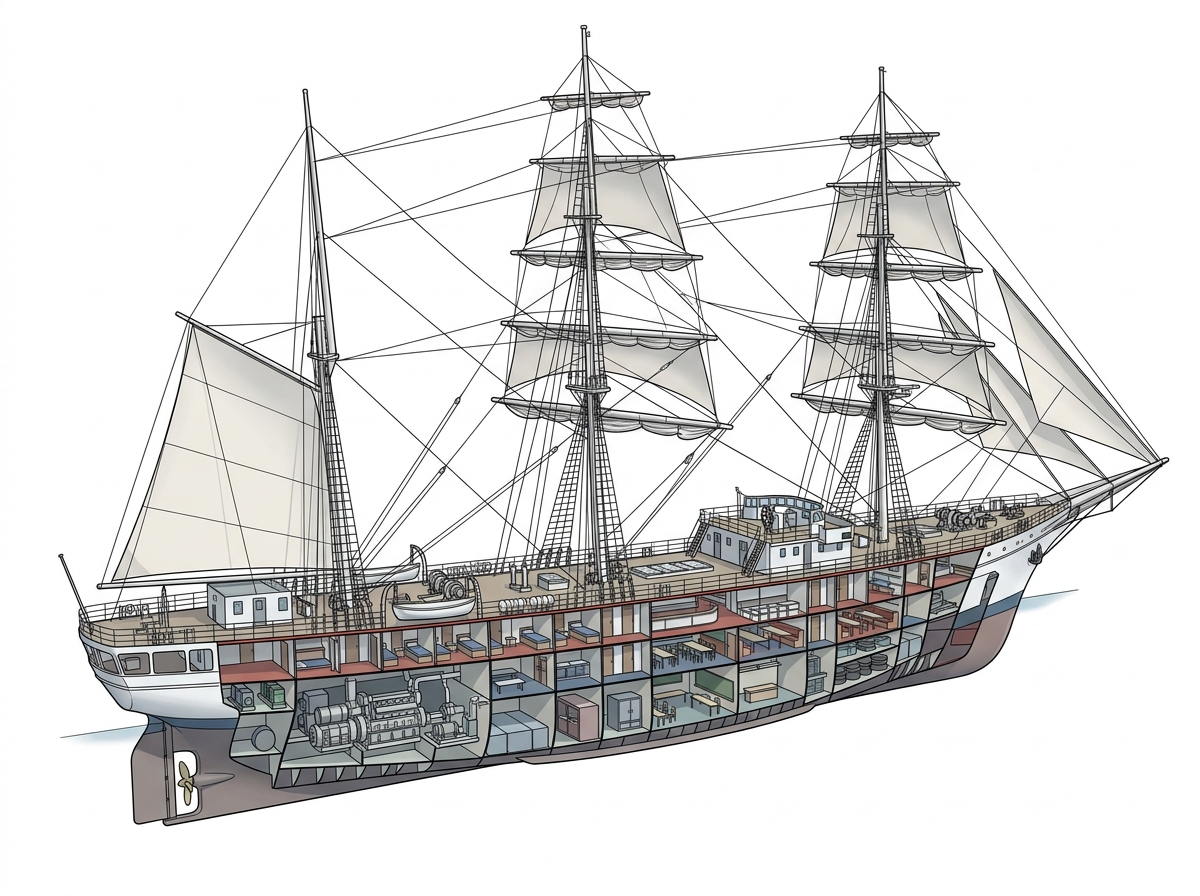
- INS Sudarshini is a sail training vessel of the Indian Navy, specifically designed for cadet training and maritime diplomacy, symbolizing India’s maritime heritage and outreach.
- The port call in Barcelona involved professional interactions between the Commanding Officer of INS Sudarshini and senior officers of the Spanish Navy, focusing on maritime security, training methodologies, and operational best practices.
- A deck reception ceremony was organized aboard INS Sudarshini, attended by naval officers, diplomatic representatives, civil administration officials, and distinguished guests, reinforcing bilateral ties.
- The vessel was opened to visitors, including the Indian diaspora and local residents, providing an opportunity for cultural exchange and firsthand exposure to naval operations and training.
- The engagement underscored the long-standing maritime relations between India and Spain, dating back to historical trade and cultural exchanges.
- Such initiatives contribute to the broader framework of India’s ‘Maritime Vision 2030’, which emphasizes the role of the Indian Navy in global maritime governance and cooperation.
- The visit also aligns with Spain’s strategic focus on strengthening ties with India, particularly in the Indo-Pacific region, where both nations share common interests in maritime security.
Key Features
| Feature | Significance |
|---|---|
| Port Call by INS Sudarshini under Lokayan 2026 | Demonstrates India’s commitment to maritime diplomacy and global naval engagement. |
| Professional Interactions with Spanish Naval Authorities | Facilitates exchange of best practices in naval operations, training, and maritime security. |
| Deck Reception Ceremony | Showcases naval prowess and fosters diplomatic goodwill among stakeholders. |
| Public Engagement and Visitor Access | Enhances people-to-people ties and promotes cultural understanding between India and Spain. |
| Strengthening of Bilateral Maritime Relations | Reinforces long-standing maritime cooperation and strategic partnerships. |
Why it Matters
Strategic Diplomacy
- Enhances India’s naval outreach under the SAGAR (Security and Growth for All in the Region) doctrine.
- Demonstrates India’s role as a net security provider in the Indo-Pacific region.
- Reinforces maritime partnerships with European nations, particularly Spain, a key player in the Mediterranean.
Maritime Security
- Promotes professional exchanges on anti-piracy, search-and-rescue, and naval training protocols.
- Supports India’s objectives in the Indian Ocean Region (IOR) through collaborative engagements.
Soft Power and Cultural Diplomacy
- Showcases India’s naval heritage and technological advancements to foreign audiences.
- Fosters cross-cultural understanding through public interactions and diplomatic engagements.
Operational Readiness
- Provides real-world exposure to naval trainees aboard INS Sudarshini, enhancing operational proficiency.
- Demonstrates India’s naval capabilities in long-range deployments and international port calls.
Challenges
1. Geopolitical Complexities in the Mediterranean
- Naval engagements in the Mediterranean require navigation of diverse geopolitical interests.
- Ensuring neutrality while participating in regional maritime security initiatives.
UPSC Link: GS Paper 2: Bilateral Relations
2. Logistical and Operational Constraints
- Maintaining operational readiness during extended deployments under Lokayan 2026.
- Ensuring seamless coordination with host nations for port visits and engagements.
UPSC Link: GS Paper 3: Security Challenges
3. Balancing Diplomacy and Security
- Aligning naval diplomacy with strategic security objectives without compromising sovereignty.
- Avoiding perceptions of alignment with specific blocs or alliances.
UPSC Link: GS Paper 2: International Relations
4. Public Diplomacy and Perception Management
- Ensuring that naval engagements are perceived as cooperative rather than coercive.
- Addressing misconceptions about India’s naval presence in foreign waters.
UPSC Link: GS Paper 2: Soft Power
5. Sustainability of Maritime Engagements
- Ensuring long-term viability of such initiatives amid fiscal and resource constraints.
- Balancing operational commitments with training and developmental priorities.
UPSC Link: GS Paper 3: Defence Management
Challenges — UPSC Perspective
| Issue | Concern |
|---|---|
| Geopolitical Neutrality | Navigating complex regional alliances without compromising strategic autonomy. |
| Operational Sustainability | Ensuring seamless logistics and resource allocation for extended deployments. |
| Diplomatic Messaging | Avoiding misinterpretation of naval engagements as strategic alignment. |
| Public Engagement | Managing expectations and perceptions among diverse audiences. |
| Resource Allocation | Balancing financial and human resources for sustained maritime diplomacy. |
| Regulatory Compliance | Adhering to international maritime laws and host nation protocols. |
Way Forward
- Institutionalise regular port calls under the Lokayan initiative to strengthen maritime partnerships.
- Expand professional exchanges with Spanish naval institutions to include joint exercises and training programs.
- Enhance public diplomacy efforts by leveraging social media and digital platforms to showcase naval engagements.
- Develop a long-term framework for maritime cooperation with Spain, focusing on technology transfer and capacity building.
- Strengthen India’s naval logistics and support infrastructure to sustain extended deployments.
- Promote academic and research collaborations between Indian and Spanish maritime institutions.
- Establish a dedicated cell within the Ministry of Defence to monitor and evaluate the outcomes of such engagements.
- Encourage participation of private sector entities in maritime diplomacy initiatives to foster economic ties.
UPSC Value Addition
Keywords for Mains Answer-Writing
Indian Navy’s Training Ship INS Sudarshini · Lokayan 2026 · Port Call Diplomacy · India-Spain Maritime Relations · Naval Diplomacy · Soft Power Projection · Professional Exchange · Cultural Exchange · Indian Diaspora Engagement · Maritime Security Cooperation · Defence Diplomacy · Port State Control
Concept Flow
India’s SAGAR doctrine → Strategic necessity for naval outreach → Lokayan 2026 initiative → INS Sudarshini’s port call in Barcelona → Professional interactions with Spanish naval authorities → Strengthening of bilateral maritime relations → Enhanced soft power and cultural diplomacy → Long-term strategic partnerships in the Mediterranean.
Prelims Practice Questions
Q1. Consider the following statements regarding the Indian Navy’s ‘Lokayan’ series of port calls:
1. INS Sudarshini is a training ship of the Indian Navy.
2. The ‘Lokayan’ series is exclusively conducted in the Indian Ocean Region.
3. Port calls under ‘Lokayan’ include professional exchanges with host navies.
4. Cultural exchanges with local communities are not a part of ‘Lokayan’ port calls.
How many of the above statements are correct?
- Only one
- Only two
- Only three
- All
Answer: Only three — Statements 1 and 3 are correct. Statement 1 is factually accurate as INS Sudarshini is a training ship. Statement 3 aligns with the purpose of ‘Lokayan’ port calls, which include professional exchanges. Statements 2 and 4 are incorrect; ‘Lokayan’ is not restricted to the Indian Ocean Region, and cultural exchanges with local communities are a key component.
Q2. Assertion (A): Port calls by naval ships serve primarily as a means of projecting hard power.
Reason (R): Port calls facilitate professional exchanges, cultural diplomacy, and maritime security cooperation between nations.
- Both A and R are true, and R is the correct explanation of A
- Both A and R are true, but R is not the correct explanation of A
- A is true but R is false
- A is false but R is true
Answer: ? — Assertion (A) is false because port calls are not solely for projecting hard power; they also serve as instruments of soft power and diplomacy. Reason (R) is true as port calls indeed facilitate professional exchanges, cultural diplomacy, and maritime security cooperation.
Q3. Match the following naval training ships with their respective navies:
Column I
1. INS Sudarshini
2. HMS Victory
3. USS Constitution
4. INS Tarangini
Column II
A. Indian Navy
B. Royal Navy (UK)
C. United States Navy
D. Indian Navy
- 1-A, 2-B, 3-C, 4-D; 1-A, 2-B, 3-D, 4-C; 1-B, 2-A, 3-C, 4-D; 1-D, 2-B, 3-C, 4-A
Answer: 1-A, 2-B, 3-C, 4-D; 1-A, 2-B, 3-D, 4-C; 1-B, 2-A, 3-C, 4-D; 1-D, 2-B, 3-C, 4-A — 1-A (INS Sudarshini is an Indian Navy training ship), 2-B (HMS Victory is a Royal Navy ship), 3-C (USS Constitution is a United States Navy ship), 4-D (INS Tarangini is an Indian Navy training ship).
Mains Practice Question
✍ Critically examine the significance of naval diplomacy in contemporary international relations, with particular reference to India’s ‘Lokayan’ initiative. (15 Marks)
Approach: MODEL-ANSWER SKELETON:
1. **Definition and Scope of Naval Diplomacy**:
– Naval diplomacy as a subset of defence diplomacy, encompassing port calls, joint exercises, and humanitarian assistance.
– Distinction between hard power (military presence) and soft power (cultural, professional exchanges).
2. **India’s ‘Lokayan’ Initiative**:
– Objectives: Strengthening maritime security cooperation, fostering goodwill, and projecting India’s maritime heritage.
– Components: Professional exchanges with host navies, cultural engagement with local communities, and diaspora outreach.
– Examples: INS Sudarshini’s port call to Barcelona under ‘Lokayan 2026’.
3. **Strategic Importance for India**:
– Enhancing India’s maritime presence in the Indo-Pacific region.
– Building strategic partnerships with like-minded nations (e.g., Spain, EU, and Latin American countries).
– Addressing non-traditional security threats (piracy, terrorism, climate change).
4. **Challenges and Limitations**:
– Logistical and operational constraints (fuel, maintenance, crew availability).
– Balancing diplomatic objectives with operational readiness.
– Addressing geopolitical sensitivities (e.g., China’s maritime assertiveness).
5. **Comparative Perspective**:
– Comparison with other naval powers (e.g., USA’s ‘Freedom of Navigation Operations’, China’s ‘String of Pearls’ strategy).
– India’s approach as a ‘net security provider’ in the region.
6. **Conclusion**:
– Naval diplomacy as a cost-effective tool for India to assert its maritime interests.
– Need for sustained engagement and institutionalisation of such initiatives.
Source: PIB (Press Information Bureau)
Generated by AanyaAi for educational purpose.
Related guides on our sites
- Anthropology VS PSIR
- Best PSIR optional coaching
- Best PSIR optional coaching online
- Best PSIR optional teacher

- INS Sudarshini’s Barcelona Port Call Strengthens India-Spain Ties in Lokayan 2026 - September 7, 2026
- विधानसभा नियमों के उल्लंघन पर पुलिस नहीं, अध्यक्ष ही कार्रवाई करेगा: उच्च न्यायालय - September 7, 2026
- High Court Rules: Speaker, Not Police, to Act on Assembly Rule Violations - September 7, 2026

No Comments