


02 Nov JPC on FCRA Bill: Foreign Funds to Churches & NGOs
✎ The FCRA, 2010, administered by the Ministry of Home Affairs, is the legislative framework regulating the acceptance and utilisation of foreign contributions in India to safeguard national interest.
Subject Relevance — Where This Topic Fits
- GS Paper II — Governance, Constitution, Polity, Social Justice | GS Paper III — Internal Security
- Prelims: Foreign Contribution (Regulation) Act (FCRA), Joint Parliamentary Committee (JPC), Foreign Contributions, Non-Governmental Organisations (NGOs), Ministry of Home Affairs, FCRA registration
- Essay: The role of civil society in national development and regulatory frameworks, Balancing national security with freedom of association and expression
Quick Revision: The FCRA, 2010, administered by the Ministry of Home Affairs, is the legislative framework regulating the acceptance and utilisation of foreign contributions in India to safeguard national interest.
Why is this in the news?
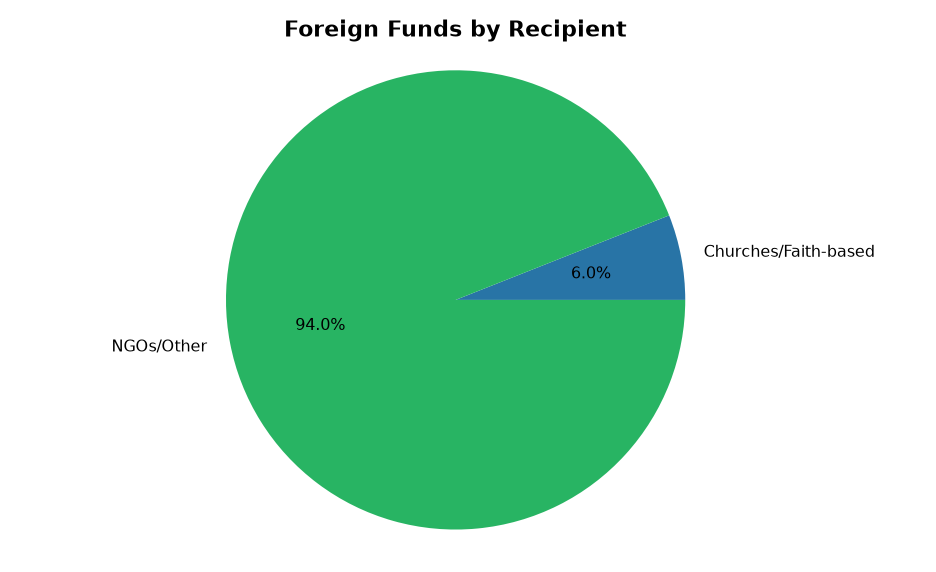
A Joint Parliamentary Committee (JPC) is currently examining the proposed amendments to the Foreign Contribution (Regulation) Act (FCRA). The JPC chairperson recently stated that a relatively small proportion, approximately six percent, of the total foreign contributions received in India, amounting to around INR 22,000 crore, is directed towards churches and other faith-based organisations. This statement emerged during consultations aimed at addressing practical concerns raised by various stakeholders regarding the implications of the proposed legislative changes.
Background
- The Foreign Contribution (Regulation) Act (FCRA) was originally enacted in 1976 and subsequently replaced by the FCRA, 2010, to regulate the acceptance and utilisation of foreign contributions or hospitality by individuals, associations, or companies.
- The primary objective of the FCRA is to prevent foreign contributions from being used for activities detrimental to national interest.
- The Ministry of Home Affairs (MHA) is the nodal ministry for the implementation of the FCRA.
- Organisations receiving foreign contributions are required to register under the FCRA and adhere to stringent compliance norms, including annual reporting of receipts and utilisation of funds.
- Amendments to the FCRA have been introduced periodically to strengthen regulatory oversight and address evolving challenges related to foreign funding.
- A Joint Parliamentary Committee (JPC) is a temporary committee constituted for a specific purpose, often to examine a Bill or investigate a matter of public importance, comprising members from both Houses of Parliament.
The Foreign Contribution (Regulation) Act (FCRA), 2010
- The FCRA, 2010, is a comprehensive law governing the receipt and utilisation of foreign contributions in India.
- It mandates that any association, individual, or company intending to accept foreign contributions must obtain prior registration or permission from the Central Government.
- Foreign contributions can only be received through designated bank accounts.
- The Act prohibits certain individuals and organisations from receiving foreign contributions, including candidates for election, judges, government servants, members of any legislature, political parties, and organisations of a political nature.
- It specifies that foreign contributions must be utilised for the purpose for which they were received and cannot be diverted for other activities.
- The Act empowers the Central Government to suspend or cancel the registration of organisations found to be in violation of its provisions.
- It also includes provisions for the inspection of accounts and records of recipient organisations to ensure compliance.
- Recent amendments have focused on enhancing transparency, accountability, and strengthening the regulatory framework for foreign funding.
Key Features
| Feature | Significance |
|---|---|
| Joint Parliamentary Committee (JPC) | A parliamentary committee comprising members from both Houses of Parliament, constituted for the detailed examination of a Bill or a specific subject matter of public importance. Its recommendations are persuasive but not binding. |
| Foreign Contribution (Regulation) Act (FCRA), 2010 | Legislation enacted to regulate the acceptance and utilisation of foreign contributions or hospitality by individuals, associations, or companies. Its primary objective is to prevent foreign funds from being used for activities detrimental to national interest. |
| Foreign Contribution | Any donation, delivery, or transfer of any currency, security, or article by a foreign source. This includes donations from foreign governments, international agencies, or foreign companies. |
| Stakeholder Consultations | The process by which a parliamentary committee or government body engages with various affected parties, including civil society organisations, religious bodies, and experts, to gather diverse perspectives and address practical concerns regarding proposed legislation. |
| National Interest | A broad concept encompassing the security, economic prosperity, and overall well-being of a nation. In the context of FCRA, it pertains to ensuring that foreign funds do not compromise India’s sovereignty, integrity, or public order. |
Why it Matters
Governance and Regulatory Framework
- The ongoing examination by the Joint Parliamentary Committee (JPC) underscores the parliamentary scrutiny process integral to legislative amendments, ensuring comprehensive deliberation on proposed changes to significant Acts like the FCRA.
- The government’s stated objective of regulating foreign contributions for national interest reflects a broader policy stance on ensuring transparency and accountability in the inflow and utilisation of foreign funds.
- The engagement with diverse stakeholders, including faith-based organisations and NGOs, highlights the consultative approach adopted in legislative reforms, aiming to balance regulatory imperatives with the operational realities of recipient organisations.
Socio-Economic Implications
- The distribution of foreign contributions, with a relatively small percentage directed towards faith-based organisations, indicates that a substantial portion supports other non-governmental organisations (NGOs) involved in various social welfare, educational, and developmental activities.
- Amendments to the FCRA can significantly impact the operational capabilities of numerous NGOs and social institutions reliant on foreign funding, potentially affecting their outreach and service delivery in critical sectors.
- The debate surrounding the FCRA amendments touches upon the delicate balance between facilitating legitimate charitable activities and preventing potential misuse of foreign funds, which has direct implications for civil society’s role in national development.
National Security and Sovereignty
- The regulation of foreign contributions is a critical aspect of national security, aimed at preventing external interference in domestic affairs and ensuring that foreign funds do not fuel activities detrimental to India’s strategic interests.
- The FCRA framework is designed to safeguard India’s sovereignty by monitoring financial inflows that could potentially be used to influence political processes, public discourse, or social harmony.
- Ensuring transparency in foreign funding mechanisms is vital for maintaining internal stability and preventing the financing of illicit activities, thereby contributing to overall national security.
Challenges
1. Balancing Regulation and Facilitation
- The primary challenge lies in formulating amendments that effectively regulate foreign contributions to prevent misuse while simultaneously ensuring that legitimate social welfare and developmental activities by NGOs are not unduly hampered.
- Overly stringent regulations could inadvertently restrict the flow of essential foreign aid to vulnerable communities and critical sectors, impacting humanitarian efforts and developmental projects.
UPSC Link: Governance: Role of NGOs; Welfare Schemes
2. Ensuring Transparency and Accountability
- A significant challenge involves enhancing the transparency of foreign fund utilisation by recipient organisations and strengthening accountability mechanisms to prevent diversion or misappropriation of funds.
- Developing robust monitoring and reporting frameworks without imposing excessive bureaucratic burdens on smaller organisations is a complex task.
UPSC Link: Governance: Transparency and Accountability
3. Defining ‘National Interest’
- The interpretation and application of ‘national interest’ in the context of foreign contributions can be subjective, leading to potential ambiguities in regulatory enforcement.
- Ensuring a clear, objective, and consistent definition of activities deemed detrimental to national interest is crucial for fair and predictable regulation.
UPSC Link: Polity: Government Policies and Interventions
4. Addressing Stakeholder Concerns
- Reconciling the diverse and sometimes conflicting concerns of various stakeholders, including religious organisations, secular NGOs, and government agencies, presents a significant challenge.
- The JPC’s role involves navigating these varied perspectives to arrive at a consensus that serves the broader public good while respecting fundamental rights.
UPSC Link: Polity: Parliament and State Legislatures
Challenges — UPSC Perspective
| Issue | Concern |
|---|---|
| Regulatory Burden on NGOs | Proposed amendments might increase compliance requirements, potentially overwhelming smaller NGOs with limited administrative capacities. |
| Impact on Social Welfare Activities | Stricter regulations could reduce foreign funding for essential services, affecting vulnerable populations reliant on NGO-led initiatives. |
| Potential for Subjectivity in Enforcement | Broad interpretations of ‘national interest’ or ‘public order’ could lead to inconsistent application of the law, creating uncertainty for recipient organisations. |
| Freedom of Association and Expression | Concerns exist regarding whether certain provisions could inadvertently impinge upon the constitutional rights of organisations to receive funding for legitimate activities. |
Way Forward
- Implement a clear, objective, and comprehensive definition of ‘national interest’ within the FCRA framework to reduce ambiguity and ensure consistent application.
- Streamline compliance procedures for NGOs, particularly smaller organisations, by leveraging technology for reporting and simplifying documentation requirements.
- Establish an independent oversight mechanism to review appeals and grievances related to FCRA decisions, ensuring fairness and due process.
- Conduct periodic impact assessments of FCRA amendments on the civil society sector to identify unintended consequences and inform future policy adjustments.
- Promote capacity building initiatives for NGOs to enhance their understanding of FCRA regulations and improve their internal governance and financial management practices.
- Foster continuous dialogue between the government and civil society organisations to build trust and ensure that regulatory frameworks are responsive to evolving needs and challenges.
UPSC Value Addition
Keywords for Mains Answer-Writing
Foreign Contribution (Regulation) Act (FCRA) · FCRA Amendment Bill · Joint Parliamentary Committee (JPC) · Foreign contributions · Non-Governmental Organisations (NGOs) · Regulation of foreign funding · National interest · Stakeholder consultation · Transparency in funding · Accountability of NGOs
Constitutional & Policy Linkages
- Article 19(1)(c): Freedom to form associations or unions.
- Article 25: Freedom of conscience and free profession, practice, and propagation of religion.
- Article 26: Freedom to manage religious affairs.
- Article 29: Protection of interests of minorities.
Concept Flow
Foreign contributions received by organisations. → Government’s objective to regulate these contributions. → Parliamentary scrutiny through a Joint Parliamentary Committee (JPC). → Stakeholder consultations to address practical concerns. → Proposed amendments to the Foreign Contribution (Regulation) Act (FCRA). → Impact on NGOs, faith-based organisations, and national interest.
Prelims Practice Questions
Q1. Consider the following statements regarding the Foreign Contribution (Regulation) Act (FCRA) in India:
1. The FCRA primarily regulates the acceptance and utilisation of foreign contributions by individuals, associations, and companies in India.
2. The Ministry of Home Affairs is the nodal ministry for the implementation of the FCRA.
3. The Act aims to prevent the use of foreign contributions for activities detrimental to national interest.
How many of the above statements are correct?
- Only one
- Only two
- All three
- None
Answer: All three — Statement 1 is correct: The FCRA indeed regulates the acceptance and utilisation of foreign contributions by various entities. Statement 2 is correct: The Ministry of Home Affairs is the nodal ministry responsible for the FCRA. Statement 3 is correct: A primary objective of the FCRA is to ensure that foreign funds do not adversely affect national interest.
Q2. Which of the following bodies is responsible for examining a Bill referred to it by Parliament and submitting a report?
- Standing Committee
- Ad Hoc Committee
- Joint Parliamentary Committee
- All of the above
Answer: All of the above — All the mentioned committees – Standing, Ad Hoc, and Joint Parliamentary Committees – are parliamentary committees that examine Bills and other matters referred to them, providing detailed reports to Parliament. A JPC is specifically constituted for a particular Bill or issue, comprising members from both Houses of Parliament.
Mains Practice Question
✍ Examine the objectives and key provisions of the Foreign Contribution (Regulation) Act (FCRA), 2010. Discuss the rationale behind recent amendments to the Act and the concerns raised by various stakeholders. (15 Marks)
Approach: MODEL-ANSWER SKELETON:
1. Introduction: Briefly define FCRA and its purpose.
2. Objectives of FCRA, 2010:
– Regulate foreign contributions.
– Ensure national security and public interest.
– Prevent diversion of funds for undesirable activities.
– Promote transparency and accountability.
3. Key Provisions of FCRA, 2010 (original Act):
– Registration/Prior Permission requirement for receiving foreign contributions.
– Restrictions on certain entities (e.g., political parties, judges, journalists).
– Mandatory reporting and annual returns.
– Designated bank accounts.
– Restrictions on transfer of foreign contributions.
4. Rationale behind recent amendments (e.g., FCRA Amendment Bill):
– Enhanced transparency and accountability.
– Strengthening regulatory framework to prevent misuse/diversion of funds.
– Addressing concerns related to funding of activities detrimental to national interest.
– Streamlining administrative processes.
5. Concerns raised by stakeholders:
– Impact on legitimate social welfare and educational activities.
– Increased compliance burden for NGOs.
– Potential for arbitrary application.
– Restrictions on re-granting of foreign contributions.
– Specific concerns from faith-based organisations regarding operational implications.
6. Conclusion: Summarise the balancing act between national security/regulatory oversight and facilitating legitimate civil society operations.
Source: orissapost.com
Generated by AanyaAi for educational purpose.
Related guides on our sites
- Best PSIR optional coaching for upsc
- Best PSIR optional teacher for upsc
- Best teacher of PSIR optional for upsc
- Best PSIR optional coaching in delhi for UPSC

- JPC on FCRA Bill: Foreign Funds to Churches & NGOs - November 2, 2026
- होर्मुज जलडमरूमध्य: ईरान की शर्तों पर अमेरिका का रुख - November 2, 2026
- Mines Ministry’s Special Campaign: E-Waste, Governance & Swachhta - November 2, 2026

No Comments