


12 Dec Mexico Imposes Up to 50% Tariffs on Indian & Asian Imports
This article covers “Daily Current Affairs” and From Mexico Imposes Up to 50% Tariffs on Indian & Asian Imports
SYLLABUS MAPPING
GS- 3 Indian Economy- Mexico Imposes Up to 50% Tariffs on Indian & Asian Imports
FOR PRELIMS
What problems will India face due to Mexico’s tariff hike?
FOR MAINS
Why are Mexico’s new tariffs a concern for India?
Why in the News?
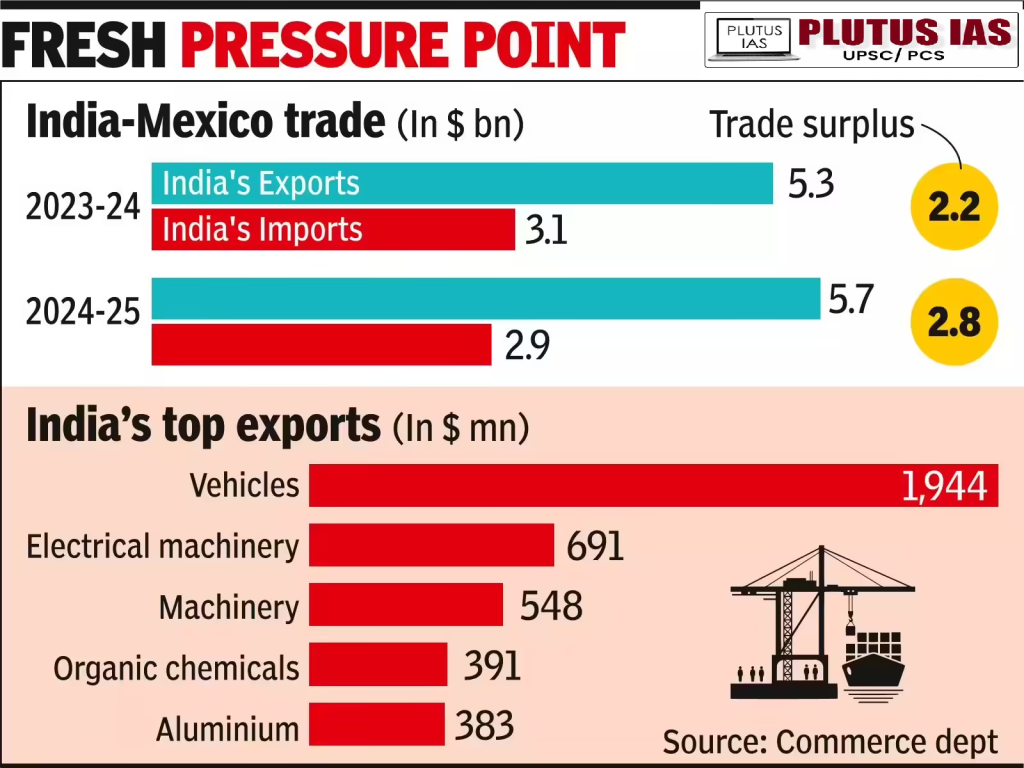
Mexico has approved new import tariffs of up to 50% on goods from countries without a free-trade agreement, including India. The tariffs, applicable from 1 January 2026, cover 1,400 product categories such as automobiles, textiles, steel, and plastics. India’s automobile exports (≈$1 billion) are expected to be the most affected as duties on vehicles rise sharply.
Mexico Imposes Up to 50% Tariffs on India
Mexico’s Senate has approved new import tariffs of up to 50% on a wide range of goods from countries that do not have a free-trade agreement with Mexico, including India, China, South Korea, Thailand, and Indonesia. The tariffs are scheduled to take effect from January 1, 2026. The policy covers around 1,400 product lines, including automobiles, auto parts, textiles, plastics, steel, and other manufactured goods.
Rationale Behind Mexico’s Tariffs
1. Protect Domestic Industry: Shield local manufacturers from cheaper Asian imports.
2. Revenue Generation: Expected to add ~USD 3–4 billion annually to Mexico’s fiscal resources.
3. Reduce Import Dependency: Encourage domestic production and local value chains.
4. Geopolitical Alignment: Aligning with the U.S.’s broader protectionist shift, given the integrated North American supply chains.
5. Trade Balance Concerns: Rising imports from Asia were seen as undercutting Mexican producers.
Impact on India
a. Sectoral Impact
Automobiles: Highest impact; tariff rise from ~20% to 50% threatens $1 billion export market.
Auto Components: Increased duties make Indian suppliers less competitive.
Textiles & Clothing: Higher tariffs reduce India’s cost advantage.
Engineering Goods, Steel, Plastics: Increased landed costs may lead to reduced market share.
b. Macroeconomic Impact
India’s Export Diversification Setback: Mexico is India’s top trade partner in Latin America after Brazil.
Potential Export Decline: Higher tariffs may shrink India’s footprint in a growing North American market.
Supply Chain Disruptions: Automakers using Mexico as a gateway to the U.S. may face complications.
Impact on Mexico
Higher Production Costs: Domestic industries depend on imported components.
Inflationary Pressure: Increased tariffs may raise consumer prices.
Risk to Trade Relations: Could strain ties with major Asian partners.
Mixed Industrial Reaction: Beneficial for local manufacturers, but industries relying on imported inputs may suffer.
Global & Geopolitical Dimensions
Rising Protectionism: Follows similar U.S. and EU tariff actions on Asian economies.
Shift in Global Supply Chains: Countries are increasingly prioritizing local manufacturing resilience.
USMCA Context: Mexico may be attempting to show compliance with U.S. expectations in North American trade architecture.
China Factor: Mexico’s move affects Chinese exports the most, drawing criticism from Beijing.
India’s Strategic Options
a. Diplomatic Measures: Engage Mexico bilaterally to seek tariff relaxations or product-specific carve-outs.
Leverage multilateral forums like WTO to express concerns.
b. Trade Strategy Adjustments: Explore a Preferential Trade Agreement (PTA) or FTA with Mexico or the broader Latin American region. Diversify export destinations to reduce concentration risks. Strengthen India’s global value chain integration in automobiles and manufacturing.
c. Domestic Policy Responses: Promote sectoral resilience by boosting competitiveness and reducing logistics costs. Encourage Indian firms to set up manufacturing bases in Mexico to bypass tariffs and tap the USMCA market.
Way Forward
1. Diplomatic Engagement with Mexico: India should initiate high-level talks to seek tariff relaxations, sector-specific exemptions, or phased implementation to reduce immediate export disruptions.
2. Strengthening Ties with Latin America: Broader engagement with Latin American economies can help India diversify markets and reduce dependence on individual partners like Mexico.
3. Accelerating FTA and PTA Negotiations: India should fast-track trade agreements with key regions (EU, UK, Latin America) to secure better market access and insulate exporters from sudden tariff shocks.
4. Enhancing Export Competitiveness: Improving logistics, reducing production costs, and boosting product quality will help Indian industries remain competitive even in high-tariff markets.
5. Integrating into Global Value Chains (GVCs): India should deepen participation in global supply chains, especially in automobiles and electronics, to make exports indispensable for partner economies.
6. Encouraging Overseas Manufacturing: Indian firms can consider setting up manufacturing units in Mexico or nearby USMCA countries to bypass tariffs and access the North American market more effectively.
Conclusion

- PRAGATI: A Decade of Cooperative, Outcome-Driven Governance - January 15, 2026
- Iran’s Large-Scale Protests: Political Stability, Public Dissent and Regional Implications - January 14, 2026
- India–Oman CEPA: A Strategic Trade Pact for Jobs, Exports and Regional Integration - January 10, 2026

No Comments