


03 Sep MP High Court Raps Over Mercury in Union Carbide Toxic Waste Ash
✎ The Madhya Pradesh High Court’s directive to the State Pollution Control Board to submit a report on mercury contamination in toxic waste ash underscores the judiciary’s role in enforcing the Precautionary Principle and Polluter…
Subject Relevance — Where This Topic Fits
- GS Paper II — Governance, Transparency and Accountability | GS Paper III — Environment and Disaster Management
- Prelims: Toxic Waste Management Rules, 2016, Hazardous and Other Wastes (Management and Transboundary Movement) Rules, 2016, National Green Tribunal (NGT), Public Interest Litigation (PIL), Mercury Pollution, Pollution Control Board, Treatment, Storage and Disposal Facility (TSDF), Union Carbide India Limited (UCIL), Bhopal Gas Tragedy, Environmental Impact Assessment (EIA), Precautionary Principle, Polluter Pays Principle
- Essay: Environmental Justice and Public Health: Balancing Industrial Progress and Human Rights, Judicial Activism in Environmental Governance: Strengthening Accountability
Quick Revision: The Madhya Pradesh High Court’s directive to the State Pollution Control Board to submit a report on mercury contamination in toxic waste ash underscores the judiciary’s role in enforcing the Precautionary Principle and Polluter Pays Principle in hazardous waste management.
Why is this in the news?
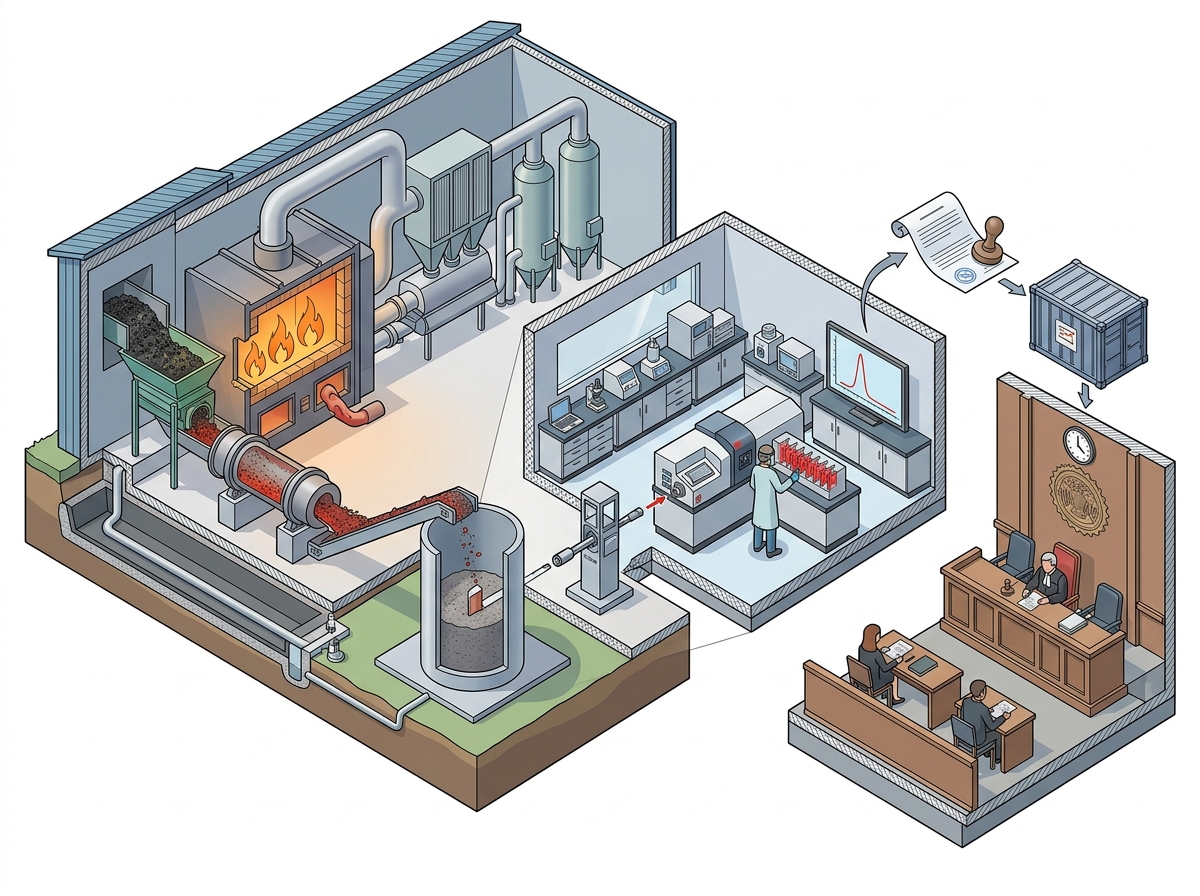
The Madhya Pradesh High Court has taken suo motu cognisance of allegations regarding the presence of mercury in the ash generated from the incineration of toxic waste originating from the Union Carbide India Limited (UCIL) facility in Bhopal. The Court has directed the State Pollution Control Board to submit a detailed report within seven days on the composition and disposal process of the ash, with a subsequent hearing scheduled for 15 October 2026. This development underscores the judiciary’s role in ensuring compliance with environmental safeguards and public health standards in hazardous waste management.
Background
- The Union Carbide India Limited (UCIL) facility in Bhopal was the site of the 1984 Bhopal Gas Tragedy, one of the world’s worst industrial disasters, resulting in thousands of deaths and long-term health impacts on survivors.
- Post-disaster, residual hazardous waste from the UCIL plant remained unaddressed for decades, posing ongoing environmental and health risks to local communities.
- In 2004, a Public Interest Litigation (PIL) was filed seeking the disposal of toxic waste from the UCIL site, leading to judicial intervention and subsequent directives for remediation.
- The toxic waste was eventually incinerated at a Treatment, Storage and Disposal Facility (TSDF) in Pithampur, District Dhar, Madhya Pradesh, raising concerns about the safety and environmental impact of the process.
- The present case emerged from concerns raised by intervenors regarding the potential contamination of local water supplies and the health risks to residents in nearby wards.
- The High Court’s intervention follows prior directives for independent testing of water samples and comprehensive environmental impact assessments.
What is the legal and environmental framework governing hazardous waste management in India?
- The Hazardous and Other Wastes (Management and Transboundary Movement) Rules, 2016, regulate the generation, storage, transport, treatment, and disposal of hazardous waste, including mercury-containing waste, under the Environment Protection Act, 1986.
- The National Green Tribunal (NGT), established under the National Green Tribunal Act, 2010, has jurisdiction over matters related to environmental protection, including hazardous waste disposal and pollution control.
- The Precautionary Principle, enshrined in Principle 15 of the Rio Declaration on Environment and Development, guides judicial and administrative actions to prevent environmental harm even in the absence of conclusive scientific evidence.
- The Polluter Pays Principle obligates industries responsible for pollution to bear the costs of remediation and compensation, ensuring accountability in environmental governance.
- Public Interest Litigations (PILs) serve as a mechanism for citizens to seek judicial intervention in cases of environmental degradation or public health threats, as demonstrated in the Union Carbide case.
- Mercury is a highly toxic heavy metal listed under Schedule I of the Hazardous Waste Rules, 2016, due to its persistence, bioaccumulation, and severe health impacts, including neurological and renal damage.
- The Environment Impact Assessment (EIA) Notification, 2006, requires prior environmental clearance for projects involving hazardous waste management, including incineration facilities.
Key Features
| Feature | Significance |
|---|---|
| Mercury contamination in incinerated Union Carbide waste ash | Presence of mercury in the residue of hazardous waste incineration raises concerns over environmental and public health risks, necessitating rigorous scientific validation and remediation. |
| Madhya Pradesh High Court’s suo motu cognisance | The Court’s proactive intervention in a long-pending PIL, even after the original petitioner’s demise, demonstrates judicial activism in environmental governance and public interest litigation. |
| Pollution Control Board’s investigative mandate | The Board’s obligation to submit a seven-day report on ash composition underscores the statutory duty of environmental regulators to ensure compliance with hazardous waste management rules. |
| Treatment, Storage and Disposal Facility (TSDF) proximity to human settlements | The location of the TSDF in Pithampur, Dhar district, raises issues of spatial planning, zoning regulations, and the principle of ‘polluter pays’ in industrial waste management. |
| Judicial direction for independent expert committee | The Court’s order for an independent committee to test water samples reflects the need for impartial scientific assessment in environmental disputes involving industrial pollution. |
Why it Matters
Environmental Governance
- This case exemplifies the intersection of judicial oversight and environmental regulation in managing legacy industrial pollution, a critical challenge in India’s industrialised states.
- It highlights the role of the judiciary in enforcing the ‘precautionary principle’ and ‘polluter pays principle’ under the Environment Protection Act, 1986.
- The case underscores the necessity of long-term monitoring and remediation of hazardous waste sites, particularly those inherited from past industrial activity.
Public Health Implications
- Mercury contamination in waste residues poses severe neurotoxic risks, particularly to vulnerable populations near industrial zones, necessitating health impact assessments.
- The alleged supply of contaminated water to local residents raises concerns about the efficacy of water quality monitoring and the enforcement of drinking water standards under the Water (Prevention and Control of Pollution) Act, 1974.
- This case serves as a reminder of the cumulative health impacts of industrial pollution, which often manifest decades after initial exposure.
Institutional Accountability
- The High Court’s suo motu cognisance of the matter, despite the original petitioner’s demise, reflects the judiciary’s commitment to environmental justice and the protection of fundamental rights under Article 21 of the Constitution.
- The Pollution Control Board’s dual role as investigator and regulator highlights the need for institutional independence to prevent conflicts of interest in environmental enforcement.
- The case demonstrates the importance of inter-agency coordination between judicial bodies, pollution control authorities, and local governments in addressing complex environmental disputes.
Challenges
1. Scientific Validation of Contamination
- Establishing the presence and concentration of mercury in incinerated waste ash requires robust sampling, testing protocols, and peer-reviewed analysis to avoid false positives or negatives.
- The challenge is compounded by the lack of standardised protocols for testing mercury in complex matrices such as incinerated hazardous waste residues.
UPSC Link: GS III: Environmental Pollution and Degradation
2. Spatial Planning and Zoning Regulations
- The proximity of the TSDF to human settlements in Pithampur raises questions about adherence to zoning laws, buffer zone requirements, and the siting criteria for hazardous waste facilities under the Hazardous Waste (Management, Handling and Transboundary Movement) Rules, 2008.
- Urban sprawl and industrial expansion often outpace regulatory updates, leading to conflicts between economic development and environmental safety.
UPSC Link: GS II: Government Policies and Interventions
3. Long-term Remediation and Monitoring
- Legacy industrial sites, such as the Union Carbide facility, require sustained remediation efforts, including soil and groundwater decontamination, which are resource-intensive and time-consuming.
- The absence of a national framework for long-term monitoring of remediated sites poses a systemic challenge in ensuring sustained environmental recovery.
UPSC Link: GS III: Conservation, Environmental Pollution and Degradation
4. Public Participation and Awareness
- Ensuring meaningful public participation in environmental decision-making processes remains a challenge, particularly in cases involving historical industrial pollution where affected communities may lack awareness or access to legal recourse.
- The case highlights the need for transparent communication between authorities, industries, and local communities to build trust and facilitate cooperative solutions.
UPSC Link: GS II: Development Processes and the Role of NGOs
5. Institutional Capacity and Independence
- Environmental regulators often face capacity constraints, including limited technical expertise, financial resources, and institutional autonomy, which can impede effective enforcement of environmental laws.
- The Pollution Control Board’s dual role as investigator and regulator may create conflicts of interest, necessitating structural reforms to ensure independence and accountability.
UPSC Link: GS II: Statutory, Regulatory and Various Quasi-judicial Bodies
Challenges — UPSC Perspective
| Issue | Concern |
|---|---|
| Mercury detection in incinerated ash | Risk of false or inconclusive test results due to lack of standardised protocols for mercury analysis in complex waste matrices. |
| Proximity of TSDF to human settlements | Potential exposure of local populations to residual contaminants, violating the principle of ‘safe distance’ in hazardous waste management. |
| Long-term health impacts on residents | Chronic exposure to mercury and other heavy metals may lead to irreversible neurological and renal damage, necessitating epidemiological studies. |
| Regulatory gaps in legacy site management | Absence of a national framework for monitoring and remediating historically contaminated industrial sites. |
| Judicial-Executive coordination | Need for seamless collaboration between courts, pollution control boards, and local governments to ensure timely and effective remediation. |
| Public trust in regulatory processes | Perception of regulatory capture or inefficacy may undermine community cooperation in environmental governance. |
Way Forward
- Direct the Pollution Control Board to constitute an independent expert committee comprising toxicologists, environmental engineers, and public health specialists to conduct a comprehensive analysis of the incinerated ash and surrounding water sources.
- Enforce the ‘polluter pays principle’ by mandating Union Carbide India Limited to bear the costs of remediation, including soil and groundwater decontamination, under the supervision of the National Green Tribunal (NGT).
- Review and update zoning regulations in Pithampur to ensure hazardous waste facilities are sited at safe distances from human settlements, in compliance with the Hazardous Waste (Management, Handling and Transboundary Movement) Rules, 2008.
- Conduct a health impact assessment of residents in the vicinity of the TSDF to identify and mitigate potential mercury exposure risks, in collaboration with the National Centre for Disease Control (NCDC).
- Establish a long-term monitoring framework for legacy industrial sites, including regular audits of soil, water, and air quality, to prevent future contamination and ensure remediation efficacy.
- Strengthen public participation mechanisms by organising community consultations and disseminating transparent reports on environmental monitoring and remediation progress.
- Develop a national policy for the management of legacy industrial pollution, incorporating lessons from cases like Union Carbide to guide future remediation efforts.
- Enhance the institutional capacity of state Pollution Control Boards through targeted training, financial resources, and structural reforms to ensure independence and accountability in environmental enforcement.
UPSC Value Addition
Keywords for Mains Answer-Writing
Union Carbide disaster · Toxic waste management · Mercury contamination · Environmental jurisprudence · Pollution Control Board · Judicial activism in environmental governance · Hazardous waste disposal · Right to clean environment · Precautionary principle · Environmental Impact Assessment · Public interest litigation · Union Carbide India Limited · Waste incineration ash analysis · Madhya Pradesh High Court · TSDF (Treatment, Storage and Disposal Facility)
Constitutional & Policy Linkages
- Article 21 (Right to Life and Personal Liberty) — Protection from environmental hazards and access to clean water and air as part of the right to life.
- Article 48A (Directive Principles of State Policy) — State’s duty to protect and improve the environment and safeguard forests and wildlife.
- Article 51A(g) (Fundamental Duties) — Duty of every citizen to protect and improve the natural environment.
Concept Flow
Industrial legacy pollution (Union Carbide facility) → Hazardous waste generation and disposal → Incineration of toxic waste → Mercury contamination in residual ash → Public interest litigation (PIL) → Judicial intervention (Madhya Pradesh High Court) → Scientific investigation by Pollution Control Board → Detection of mercury in ash and water samples → Judicial direction for remediation and monitoring → Long-term health and environmental impact assessment → Policy and regulatory reforms for legacy site management
Prelims Practice Questions
Q1. Consider the following statements regarding the Union Carbide disaster and its aftermath:
1. The Bhopal gas tragedy occurred in 1984 due to the release of methyl isocyanate (MIC) gas.
2. The Madhya Pradesh High Court has recently directed the Pollution Control Board to submit a report on mercury contamination in the ash generated from burning Union Carbide’s toxic waste.
3. The Union Carbide India Limited factory is currently operational in Bhopal.
4. The Precautionary Principle is a guiding framework in India’s environmental jurisprudence.
How many of the above statements are correct?
- Only one
- Only two
- Only three
- All
Answer: All — Statements 1, 2, and 4 are correct. Statement 3 is incorrect as the Union Carbide India Limited factory in Bhopal is no longer operational. The Precautionary Principle is enshrined in India’s environmental laws and judicial decisions.
Q2. Assertion (A): The Madhya Pradesh High Court has directed the Pollution Control Board to submit a report on mercury contamination in the ash generated from burning toxic waste within seven days.
Reason (R): The Court’s directive is based on the constitutional obligation to protect the right to a clean environment under Article 21 of the Constitution of India.
Options:
A. Both A and R are true, and R is the correct explanation of A.
B. Both A and R are true, but R is not the correct explanation of A.
C. A is true, but R is false.
D. A is false, but R is true.
Answer: ? — Both the assertion and reason are true. The Court’s directive is indeed grounded in the constitutional obligation to protect the right to a clean environment under Article 21, which includes the right to be free from hazardous pollution.
Q3. Match the following columns related to environmental governance in India:
Column I (Institutions/Principles)
A. National Green Tribunal
B. Precautionary Principle
C. Environmental Impact Assessment Notification
D. Right to Clean Environment
Column II (Descriptions)
1. A quasi-judicial body established to handle environmental disputes.
2. A principle that requires action to avoid environmental damage even in the absence of scientific certainty.
3. A constitutional right inferred by the Supreme Court to include a clean environment.
4. A regulatory framework mandating assessment of environmental impacts before project approval.
Options:
A – 1, B – 2, C – 4, D – 3
A – 2, B – 1, C – 3, D – 4
A – 3, B – 2, C – 1, D – 4
A – 1, B – 3, C – 2, D – 4
- A
- B
- C
- D
Answer: A — The correct match is: A – 1 (National Green Tribunal is a quasi-judicial body), B – 2 (Precautionary Principle requires preventive action), C – 4 (EIA Notification mandates environmental impact assessment), D – 3 (Right to Clean Environment is a constitutional right inferred by the Supreme Court).
Mains Practice Question
✍ The Madhya Pradesh High Court has recently directed the State Pollution Control Board to submit a report on mercury contamination in the ash generated from the incineration of toxic waste from the Union Carbide India Limited factory. Critically examine the legal and constitutional dimensions of hazardous waste management in India, with particular reference to the role of judicial activism and the Precautionary Principle. Also, discuss the challenges in enforcing environmental safeguards in industrial disaster zones. (15 Marks)
Approach: MODEL-ANSWER SKELETON:
1. **Constitutional and Legal Framework**:
– Article 21 (Right to Life and Personal Liberty) interpreted to include the right to a clean environment (Subhash Kumar v. State of Bihar, 1991).
– Environmental Protection Act, 1986; Hazardous Waste (Management, Handling and Transboundary Movement) Rules, 2008.
– National Green Tribunal Act, 2010: establishment, jurisdiction, and suo motu powers.
2. **Judicial Activism and Environmental Jurisprudence**:
– Role of the Supreme Court and High Courts in enforcing environmental safeguards (e.g., Oleum Gas Leak case, 1986; Vellore Citizens Welfare Forum v. Union of India, 1996).
– The present case: Madhya Pradesh High Court’s directive to the Pollution Control Board as an example of judicial oversight in environmental governance.
– Precautionary Principle: definition (Rio Declaration, 1992), application in Indian jurisprudence (M.C. Mehta v. Union of India, 1996; A.P. Pollution Control Board v. M.V. Nayudu, 1999).
3. **Challenges in Enforcement**:
– Institutional weaknesses: understaffing, lack of technical expertise in Pollution Control Boards.
– Political economy constraints: industrial lobbies, economic growth vs. environmental protection trade-offs.
– Legacy of industrial disasters: Bhopal gas tragedy (1984) and its unresolved environmental and health impacts.
– Public participation and awareness: role of civil society and media in holding authorities accountable.
4. **Way Forward**:
– Strengthening institutional capacity: capacity building for Pollution Control Boards, independent environmental audits.
– Strict adherence to the Polluter Pays Principle and Extended Producer Responsibility.
– Integration of environmental safeguards in industrial policies and disaster management plans.
– Leveraging technology: real-time monitoring of hazardous waste disposal sites (e.g., GIS-based tracking systems).
Balance of views: While judicial activism has been pivotal in advancing environmental justice, critics argue that it may lead to judicial overreach or delay in project clearances. The balance between economic development and environmental protection remains a contested terrain.
Source: amarujala.com
Generated by AanyaAi for educational purpose.
Related guides on our sites
- Current affairs for upsc 2026
- Best PSIR optional coaching for upsc
- Best economics optional coaching for upsc
- Best PSIR optional teacher for upsc

- DFPD extends Special Campaign 6 to achieve governance targets - October 24, 2026
- डीडीडब्ल्यूएस ने जल जीवन मिशन 2.0 के तहत सामुदायिक जल प्रबंधन को मजबूत किया - October 24, 2026
- J&K’s Drug-Free Model & Welfare Schemes: A Blueprint for UPSC Exam - October 24, 2026

No Comments