


19 Mar POSHAN Abhiyan: A Holistic Approach to Nutrition
This article covers “Daily Current Affairs” and topic details of POSHAN Abhiyan: A Holistic Approach to Nutrition
SYLLABUS MAPPING:
GS- 02 – Social Justice section and Government Scheme : POSHAN Abhiyan: A Holistic Approach to Nutrition
FOR PRELIMS
Key facts abouts National Nutrition Mission and its mains pillars.
FOR MAINS
Significance of National Nutrition Mission , there challenges and there way forwards.
Why in the News?
POSHAN Abhiyan remains a crucial national initiative as India continues its fight against malnutrition and anemia. Recently, the Ministry of Women and Child Development (MWCD) announced an expansion of the scheme, emphasizing data-driven nutrition monitoring, community engagement, and increased funding for Anganwadi services. Furthermore, recent NFHS-5 (2019-21) findings have highlighted both progress and areas that need urgent intervention, reinforcing the need for continued efforts.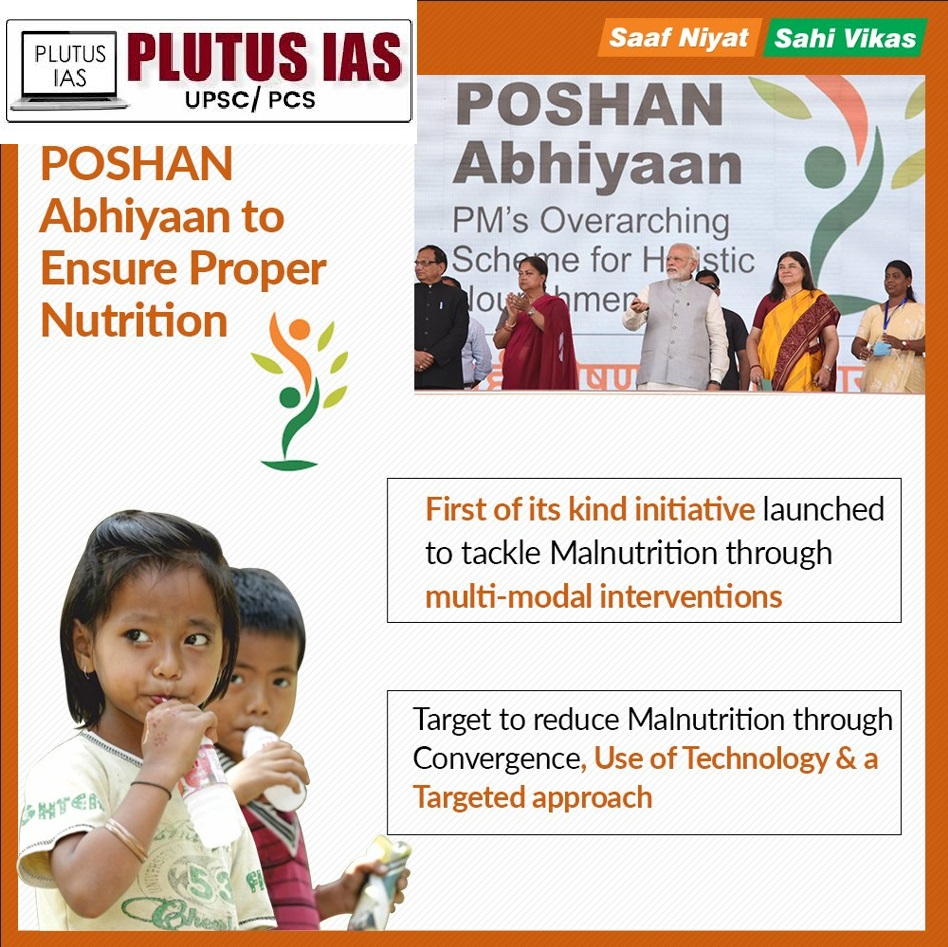
POSHAN Abhiyan – National Nutrition Mission (NNM)
POSHAN (Prime Minister’s Overarching Scheme for Holistic Nutrition) Abhiyan is the flagship program of the Ministry of Women and Child Development (MWCD), launched on March 8, 2018. It is designed to reduce malnutrition and stunting, address anemia, and promote overall nutritional well-being. The initiative adopts a convergent approach by integrating various ministries and leveraging technology for real-time monitoring.
Objectives of POSHAN Abhiyan
The primary objectives of the National Nutrition Mission (NNM) are:
1. Reduce stunting among children (0-6 years) to 25% by 2022, ensuring better physical and cognitive development.
2. Reduce undernutrition and low birth weight by 2% per annum, improving overall child and maternal health outcomes.
3. Reduce anemia among children (6–59 months), adolescent girls, and women by 3% per annum, thereby enhancing immunity and productivity.
4. Promote behavioral change through the Jan Andolan (People’s Movement) initiative, encouraging healthier dietary and hygiene practices.
5. Strengthen the Anganwadi system, ensuring better monitoring and service delivery while improving the quality of supplementary nutrition.
6. Leverage technology and real-time data to track malnutrition and improve intervention strategies, facilitating evidence-based policy decisions.
7. Ensure proper sanitation, safe drinking water, and hygiene as key components of nutrition, reducing the prevalence of waterborne diseases that contribute to malnutrition.
8. Integrate nutrition-focused schemes and policies to create a multi-sectoral approach, improving efficiency and outreach.
9. Encourage community participation and awareness campaigns to involve local stakeholders in sustaining nutritional improvements.
Operational Pillars of POSHAN Abhiyan
1. Technology-Based Monitoring: Use of ICDS-CAS (Common Application Software) for real-time data collection and tracking. Digital dashboards for better decision-making and policy implementation. Enhanced tracking of beneficiaries for better nutritional interventions. AI and machine learning tools for predictive analysis to identify malnutrition hotspots. Strengthening the supply chain management system to ensure the availability of essential nutrition supplies.
2. Convergence Across Ministries: Collaboration between MWCD, Health Ministry, Rural Development Ministry, and Education Ministry. Unified implementation of health and nutrition programs. Strengthening interdepartmental cooperation to avoid duplication of efforts.Integrating POSHAN Abhiyan with Ayushman Bharat, Mid-Day Meal Scheme, and Pradhan Mantri Matru Vandana Yojana for holistic coverage. Partnering with corporates and NGOs to mobilize resources and ensure effective service delivery.
3. Behavioral Change through Jan Andolan: Mass awareness campaigns, community engagement, and media outreach. Promoting dietary diversity, exclusive breastfeeding, and hygiene practices. Encouraging participation of local bodies and NGOs for better outreach. Involvement of self-help groups (SHGs) and Panchayati Raj Institutions to enhance community ownership. Use of school and community-based programs to promote healthy eating habits among children and adolescents.
4. Capacity Building of Frontline Workers: Training Anganwadi workers, ASHAs, and ANMs to enhance service delivery.Use of mobile applications to track children’s growth and nutritional status.Regular workshops and refresher courses to upgrade skills.Providing performance-based incentives to frontline health workers for effective implementation. Strengthening research and innovation to develop better training materials and nutritional interventions.
Key Achievements of POSHAN Abhiyan
Since its inception, POSHAN Abhiyan has made significant progress in tackling malnutrition:
1. Decline in Stunting and Wasting: According to NFHS-5 (2019-21), stunting has reduced from 38.4% (NFHS-4) to 35.5%, and wasting declined from 21% to 19.3%. Improvement in the availability of nutrient-rich supplementary food for children. Increased community participation in nutrition awareness campaigns.
2. Increase in Institutional Deliveries & Breastfeeding: The rate of exclusive breastfeeding increased to 64.9%, leading to improved infant health. Higher percentage of institutional deliveries ensuring better maternal care. Greater availability of maternal nutrition supplements during pregnancy.
3. Expansion of Nutrition Schemes: Strengthened implementation of Saksham Anganwadi and ICDS programs. Integration of POSHAN Abhiyan with Mid-Day Meal (PM POSHAN) and PDS for food security. Increased funding to expand outreach programs in rural and tribal areas.
4. Mass Public Awareness & Behavioral Changes: Campaigns like ‘POSHAN Maah’ and ‘Rashtriya POSHAN Pakhwada’ promoted community participation. Greater emphasis on nutritional literacy and food diversification. Enhanced participation of community health workers in nutrition counseling.
5. Use of Technology: Over 10 lakh Anganwadi workers trained on real-time growth monitoring through digital tools. AI-based predictive models being tested to identify malnutrition-prone areas.Digitalization of health records for better tracking and intervention.
Why is There a Persistent High Level of Nutritional Deficiency in India?
Despite government interventions, nutritional deficiencies remain widespread due to:
1. Poor Dietary Diversity: Heavy dependence on staple foods like rice and wheat, limiting the intake of essential vitamins and minerals. Lack of protein-rich foods such as pulses, eggs, and dairy, contributing to deficiencies in essential amino acids. Seasonal variations in food availability impact the nutritional intake of vulnerable populations.
2. Gender Inequality & Maternal Undernutrition: Women suffer from higher rates of anemia (57%), impacting both maternal and child health. Lack of access to adequate healthcare and nutrition for adolescent girls exacerbates long-term deficiencies. Traditional dietary practices often prioritize male members of the family, limiting women’s access to nutritious food.
3. Food Insecurity & Poverty: 38% of India’s population faces food insecurity due to economic instability and unemployment. High food prices and inflation limit access to diverse and nutritious food options for low-income groups. Social disparities further exacerbate inequality in food distribution, affecting marginalized communities the most.
4. Inadequate Health Infrastructure: Rural and tribal areas lack access to primary healthcare services, leading to delayed interventions for malnutrition. Limited availability of trained nutritionists and dietitians results in inadequate counseling for pregnant and lactating women. Shortages of essential micronutrient supplements, including iron and vitamin A, worsen malnutrition rates.
5. Poor Sanitation & Hygiene: High prevalence of open defecation and unsafe drinking water leads to recurrent infections, hampering nutrient absorption. Lack of proper sanitation in schools and public spaces contributes to the spread of waterborne diseases, affecting children’s health. Poor menstrual hygiene management among adolescent girls affects their nutritional well-being and school attendance.
6. Limited Awareness & Cultural Barriers: Myths surrounding nutrition and traditional food habits hinder dietary improvements, preventing people from adopting healthier alternatives. Socio-cultural taboos regarding certain foods, such as eggs and meat, limit their inclusion in daily diets. Resistance to adopting fortified foods and supplements due to misinformation affects the success of nutrition programs.
Ways to Address Nutritional Deficiency in India
To combat malnutrition effectively, a multi-dimensional approach is needed:
1. Strengthening Food Fortification Programs: Expand rice fortification, iron and folic acid supplementation, and milk fortification initiatives. Raise awareness about fortified foods through school programs and community workshops.
2. Enhancing Mid-Day Meal (PM POSHAN) & ICDS Programs: Introduce protein-rich meals, millets, and micro-nutrient supplementation.Ensure strict monitoring of food quality and caloric intake in schools and Anganwadi centers.
3. Boosting Agriculture-Nutrition Linkages: Promote nutrient-dense crops like millets, pulses, and bio-fortified cereals.Establish kitchen gardens in rural households to provide fresh vegetables and fruits.
4. Expanding Social Security Schemes: Strengthen PM Garib Kalyan Anna Yojana (PMGKAY) to ensure food access.Provide subsidized nutritious food items for low-income groups.
5. Improving Health Infrastructure & WASH (Water, Sanitation & Hygiene) Facilities: Scale-up Swachh Bharat Abhiyan and ensure clean drinking water supply.Increase the number of community health centers and nutrition rehabilitation centers.
6. Women Empowerment & Education: Promote girl child education, financial inclusion, and access to healthcare services.Conduct nutrition literacy programs targeting adolescent girls and new mothers.
7. Leveraging Technology for Nutrition Monitoring: Use of AI-driven nutrition tracking apps for better intervention.Strengthen real-time digital monitoring systems to track malnutrition trends.
Conclusion
POSHAN Abhiyan has laid a strong foundation for addressing malnutrition in India. While the initiative has yielded positive results, persistent challenges demand a holistic, intersectoral, and technology-driven approach. Strengthening public-private partnerships, integrating nutritional education into school curricula, and ensuring last-mile delivery of food security programs are critical for India to achieve SDG 2 (Zero Hunger). By prioritizing nutritional well-being, gender equity, and healthcare accessibility, India can transform its malnutrition crisis into an opportunity for sustainable growth, ultimately nourishing the nation and securing a healthier future.
Download Plutus IAS Current Affairs (Eng) 19th March 2025
PRELIMS Questions:
Q. Consider the following statements regarding POSHAN Abhiyan:
1. It was launched by the Ministry of Health and Family Welfare in 2018.
2. It aims to reduce stunting, anemia, and low birth weight among children and women.
3. The program emphasizes technology-based monitoring and behavioral change through Jan Andolan.
Which of the statements given above is/are correct?
(a) 1 and 2 only
(b) 2 and 3 only
(c) 1 and 3 only
(d) 1, 2, and 3
ANSWER: B
Mains Questions:
Q. Discuss the objectives and key operational strategies of POSHAN Abhiyan. How has the scheme contributed to addressing malnutrition in India?
(250 words, 15 marks)


No Comments