


31 Aug Tata-Raytheon-Lockheed Javelin Missile Deal Boosts India’s Defence Self-Reliance
✎ The Javelin ATGM co-production partnership with Tata Advanced Systems Limited exemplifies India’s strategic shift towards defence indigenisation under the Atmanirbhar Bharat initiative, leveraging the Strategic Partnership Model…
Subject Relevance — Where This Topic Fits
- GS Paper II — International Relations: Indo-US strategic partnership, defence technology transfer | GS Paper III — Economy: Defence indigenisation, Make in India, FDI in defence, defence industrial base | GS Paper III — Science and Technology: Defence manufacturing, technology absorption, R&D in defence
- Prelims: Javelin Anti-Tank Guided Missile (ATGM), Defence Procurement Procedure (DPP) 2020, Defence Acquisition Council (DAC), Foreign Direct Investment (FDI) in defence, Defence Industrial Base, Indo-Pacific Strategy, Strategic Partnership Model (SPM), Offsets in defence procurement, Transfer of Technology (ToT), Defence Research and Development Organisation (DRDO), Atmanirbhar Bharat
- Essay: The evolving architecture of global defence partnerships: Balancing strategic autonomy with international collaboration, Indigenous defence manufacturing as a catalyst for economic growth and national security
Quick Revision: The Javelin ATGM co-production partnership with Tata Advanced Systems Limited exemplifies India’s strategic shift towards defence indigenisation under the Atmanirbhar Bharat initiative, leveraging the Strategic Partnership Model to enhance domestic manufacturing capabilities while strengthening the Indo-US defence partnership.
Why is this in the news?
The partnership between Tata Advanced Systems Limited (TASL) and the Javelin Joint Venture (JJV)—comprising Raytheon and Lockheed Martin—for the co-production of the Javelin Anti-Tank Guided Missile (ATGM) in India marks a significant stride in India’s defence indigenisation efforts. Announced in August 2026, this collaboration aligns with India’s broader objectives under the Atmanirbhar Bharat initiative and the Strategic Partnership Model (SPM) for defence manufacturing. The agreement facilitates the establishment of a final assembly and integration facility in India, thereby enhancing domestic defence manufacturing capabilities while reinforcing the Indo-US defence partnership.
Background
- India’s defence manufacturing sector has historically relied on imports, with the Defence Procurement Procedure (DPP) 2020 and subsequent amendments emphasising indigenisation and self-reliance through the ‘Make in India’ initiative.
- The Strategic Partnership Model (SPM), introduced in 2016, aims to foster long-term partnerships with Indian private sector entities for the production of high-tech defence equipment, including aircraft, helicopters, submarines, and armoured vehicles.
- India’s defence procurement from the US has seen a marked increase over the past decade, reflecting the strengthening of the Indo-US strategic partnership, particularly in defence technology cooperation.
- The ‘Atmanirbhar Bharat’ initiative, launched in 2020, seeks to reduce India’s dependence on defence imports by promoting indigenous design, development, and manufacturing of defence equipment.
- The Defence Acquisition Council (DAC), chaired by the Defence Minister, oversees the procurement process and ensures alignment with national security objectives and industrial capacity-building.
What is the Javelin Anti-Tank Guided Missile (ATGM)?
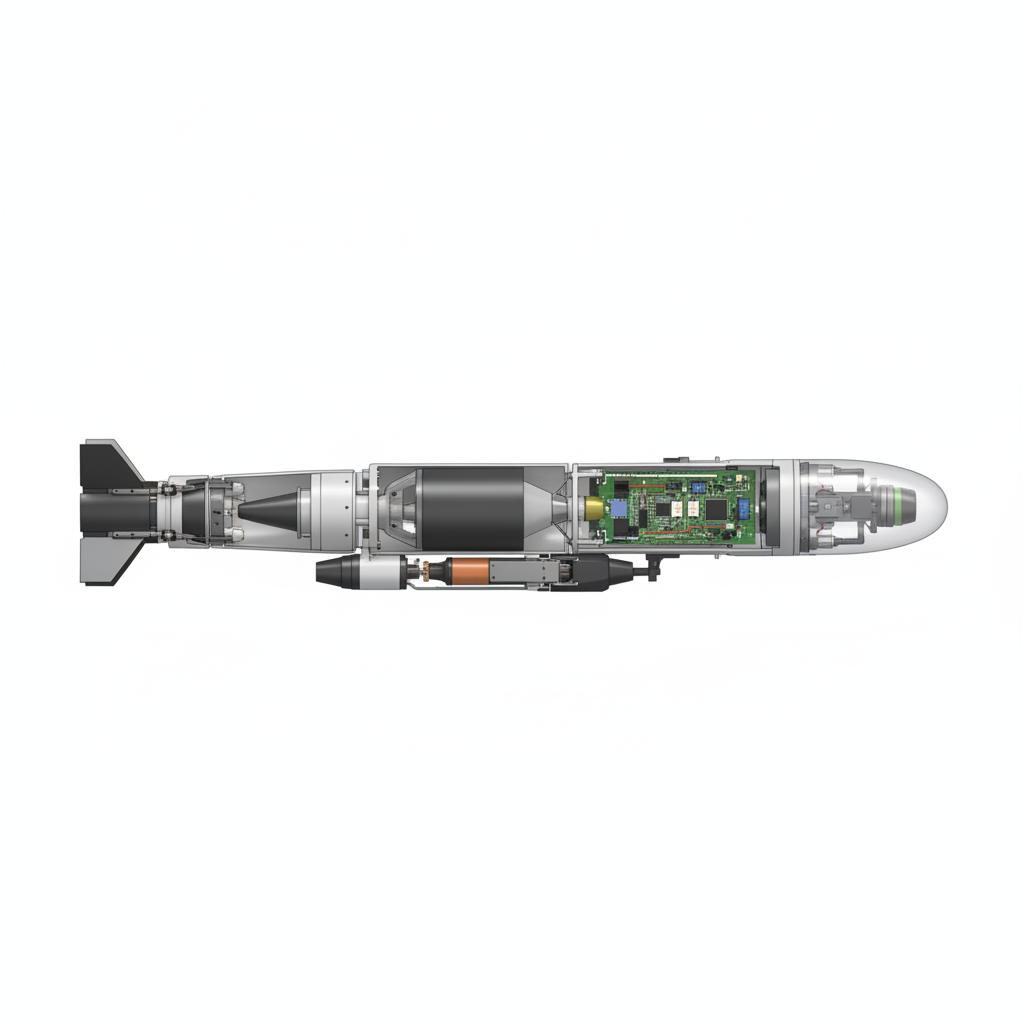
- The Javelin ATGM is a portable anti-tank missile system designed to engage and defeat armoured vehicles, including modern main battle tanks, from long ranges with high precision.
- The system operates on the ‘fire-and-forget’ principle, where the missile guides itself to the target after launch, eliminating the need for continuous operator input, thereby enhancing survivability in combat scenarios.
- The Javelin missile consists of a Command Launch Unit (CLU) for target acquisition and a missile round housed in a disposable launch tube, which is discarded after firing.
- The missile utilises a tandem warhead to penetrate reactive armour, making it highly effective against modern armoured threats, including those equipped with explosive reactive armour (ERA).
- The Javelin system is man-portable, allowing infantry units to deploy it rapidly in varied terrains, including urban and mountainous environments.
- The system’s modular design facilitates integration with various platforms, including vehicles and helicopters, enhancing its versatility in modern warfare.
Key Features
| Feature | Significance |
|---|---|
| Co-production MoU | Formalises joint venture between Tata Advanced Systems Ltd and Javelin Joint Venture (Raytheon-Lockheed Martin) for indigenous assembly and integration of Javelin missiles in India. |
| Final Assembly & Integration Facility | Establishment of a dedicated facility in India for assembling the Javelin All Up Round (AUR), including tactical launch containers, enhancing domestic defence manufacturing capacity. |
| Component Production Capabilities | Development of indigenous supply chains for missile components, reducing import dependence and strengthening India’s defence industrial base. |
| Sub-Assembly Kit Procurement | Import of pre-fabricated sub-assembly kits and guidance electronics units from US facilities for final integration in India, ensuring technology transfer and skill development. |
| Strategic Workforce Development | Creation of high-tech employment opportunities in India’s defence sector, aligning with the ‘Make in India’ initiative and Indo-Pacific security objectives. |
Why it Matters
Economic Implications
- Promotes indigenous defence manufacturing, reducing reliance on imports and contributing to India’s GDP through high-value production.
- Facilitates technology transfer, enhancing India’s defence R&D capabilities and fostering self-reliance in critical military technologies.
- Generates high-skilled employment in aerospace, electronics, and precision engineering sectors, aligning with the Skill India mission.
- Supports the US defence industrial base by sustaining American jobs through multi-year sub-assembly contracts, reinforcing bilateral economic ties.
Strategic & Security Dimensions
- Strengthens India’s defence preparedness by ensuring a reliable, locally produced supply of anti-tank guided missiles (ATGMs), critical for armoured warfare.
- Enhances Indo-Pacific security by providing a dependable source of Javelin systems to partner nations, reducing supply chain vulnerabilities.
- Supports India’s Act East Policy and QUAD initiatives by deepening defence-industrial collaboration with the US and regional allies.
- Improves interoperability with allied forces through standardised missile systems, facilitating joint military exercises and coalition operations.
Industrial & Supply Chain Resilience
- Bolsters India’s defence industrial ecosystem by integrating global supply chains with domestic manufacturing, ensuring resilience against geopolitical disruptions.
- Encourages private sector participation in defence production, diversifying the defence manufacturing base beyond public sector undertakings.
- Leverages India’s growing aerospace and electronics sectors to meet global demand, positioning the country as a hub for defence co-production.
- Supports the government’s ‘Aatmanirbhar Bharat’ vision by reducing import dependence in critical defence systems.
Challenges
1. Technology Transfer & IPR Concerns
- Ensuring equitable transfer of critical technologies while protecting India’s strategic interests and intellectual property rights.
- Balancing foreign ownership of sensitive defence technologies with the need for indigenous innovation and self-reliance.
- Addressing potential restrictions on technology sharing due to US export control regimes (e.g., ITAR/EAR).
UPSC Link: GS3: Defence Tech/Indigenisation
2. Supply Chain & Logistics Bottlenecks
- Managing the import of sub-assembly kits and components from US facilities, including customs clearance, transportation, and quality control.
- Ensuring uninterrupted supply of raw materials and precision components for indigenous production, particularly in high-tech sectors.
- Mitigating risks of global supply chain disruptions (e.g., geopolitical tensions, trade restrictions) affecting missile production timelines.
UPSC Link: GS3: Supply Chain Resilience
3. Regulatory & Compliance Hurdles
- Navigating India’s defence procurement policies (e.g., DPP 2020, Make-II/SP model) to ensure seamless integration of foreign and domestic components.
- Complying with export control laws of both India and the US, including end-use monitoring and re-export restrictions.
- Aligning with India’s Offset Policy to ensure reciprocal benefits in defence trade and technology transfer.
UPSC Link: GS2: Defence Procurement Policy
4. Human Resource & Skill Gaps
- Addressing the shortage of skilled labour in high-precision manufacturing, aerospace engineering, and missile systems integration.
- Developing specialised training programmes to upskill the workforce in advanced defence technologies and quality assurance.
- Retaining talent in India’s defence sector amid competition from global firms and private sector opportunities.
UPSC Link: GS3: Skill Development
5. Geopolitical & Strategic Risks
- Managing perceptions of India’s defence partnerships with the US, particularly in the context of regional security dynamics (e.g., China, Pakistan).
- Ensuring that co-production does not inadvertently fuel arms races or escalate tensions in the Indo-Pacific.
- Balancing strategic autonomy with alliance commitments, particularly in multilateral defence initiatives.
UPSC Link: GS2: Foreign Policy/Indo-Pacific
Challenges — UPSC Perspective
| Issue | Concern |
|---|---|
| Technology Transfer | Risk of incomplete or delayed transfer of critical defence technologies due to US export controls. |
| Supply Chain Dependence | Over-reliance on imported sub-assembly kits may create vulnerabilities in production timelines. |
| Regulatory Complexity | Navigating overlapping procurement policies of India and the US may delay project execution. |
| Skill Shortages | Limited availability of specialised labour in missile systems integration and precision engineering. |
| Geopolitical Sensitivity | Potential backlash from regional stakeholders over India-US defence collaboration. |
Way Forward
- Establish a dedicated task force under the Ministry of Defence to oversee technology transfer, regulatory compliance, and skill development for the Javelin co-production project.
- Accelerate the development of India’s defence industrial base by incentivising private sector investment in aerospace, electronics, and precision engineering through tax benefits and R&D grants.
- Strengthen India-US defence ties by finalising a Defence Technology and Trade Initiative (DTTI) agreement to streamline technology sharing and co-development projects.
- Invest in vocational training programmes in collaboration with Tata Advanced Systems Ltd and academic institutions to address skill gaps in missile systems integration and quality control.
- Enhance supply chain resilience by identifying and onboarding domestic suppliers for critical components, reducing import dependence over time.
- Conduct periodic reviews of the project’s progress in alignment with the ‘Aatmanirbhar Bharat’ vision, ensuring measurable outcomes in technology absorption and indigenisation.
- Promote transparency and public-private partnerships to build trust among stakeholders, including allied nations, regarding India’s defence manufacturing capabilities.
- Integrate the Javelin co-production facility into India’s broader defence export strategy, positioning the country as a reliable supplier of ATGMs to friendly nations.
UPSC Value Addition
Keywords for Mains Answer-Writing
Defence Industrialisation · Make in India in Defence · Strategic Partnership Model · Defence Technology Absorption · Indo-US Defence Cooperation · Defence Procurement Procedure 2020 · Defence Production and Export Promotion Policy · Offset Obligations in Defence Contracts · Defence Industrial Base · Atmanirbhar Bharat in Defence · Transfer of Technology in Defence · Defence Public Sector Undertakings
Concept Flow
India’s defence procurement policies (e.g., DPP 2020) encourage indigenous production and private sector participation. → The Javelin MoU aligns with these policies by facilitating technology transfer and co-production in India. → Tata Advanced Systems Ltd is selected as the prime partner, leveraging its industrial capacity for missile assembly. → Sub-assembly kits and components are imported from US facilities, ensuring adherence to global quality standards. → Final assembly and integration occur in India, creating high-tech jobs and advancing domestic defence manufacturing. → The co-produced Javelin systems enhance India’s defence preparedness and strengthen Indo-Pacific security partnerships. → Long-term benefits include reduced import dependence, technology absorption, and export potential for India’s defence sector.
Prelims Practice Questions
Q1. Consider the following statements regarding the Defence Procurement Procedure (DPP) 2020 of India:
1. It introduces a new category called ‘Buy (Global – Manufacture in India)’ to encourage indigenous production.
2. The DPP 2020 mandates 100% FDI in defence manufacturing through the automatic route.
3. It provides for a simplified ‘Make-II’ procedure to promote indigenous design and development.
How many of the above statements are correct?
- Only one
- Only two
- All three
- None
Answer: All three — Statement 1 is correct as DPP 2020 introduces ‘Buy (Global – Manufacture in India)’ to promote domestic manufacturing. Statement 2 is incorrect because the automatic route allows up to 74% FDI, not 100%. Statement 3 is correct as the ‘Make-II’ procedure is simplified to encourage indigenous design and development.
Q2. Assertion (A): The Strategic Partnership Model (SPM) under the Defence Procurement Procedure aims to enhance the participation of Indian private sector in defence manufacturing.
Reason (R): The SPM requires the selected Indian private sector entity to collaborate with a foreign Original Equipment Manufacturer (OEM) for technology transfer and indigenous production.
Options:
A. Both A and R are true, and R is the correct explanation of A.
B. Both A and R are true, but R is not the correct explanation of A.
C. A is true, but R is false.
D. A is false, but R is true.
Answer: ? — The Strategic Partnership Model (SPM) is designed to promote indigenous defence manufacturing by involving Indian private sector entities in collaboration with foreign OEMs for technology transfer and production. Hence, both A and R are true, and R correctly explains A.
Q3. Which of the following policies or frameworks directly supports the co-production of defence equipment in India under the ‘Make in India’ initiative?
1. Defence Production and Export Promotion Policy (DPEPP) 2020
2. Defence Offset Guidelines 2020
3. Defence Acquisition Procedure (DAP) 2020
4. Public Procurement (Preference to Make in India) Order 2017
Select the correct answer using the code below:
- 1, 2 and 3 only
- 2, 3 and 4 only
- 1, 3 and 4 only
- 1, 2, 3 and 4
Answer: 1, 2, 3 and 4 — The Defence Production and Export Promotion Policy (DPEPP) 2020, Defence Acquisition Procedure (DAP) 2020, and Public Procurement (Preference to Make in India) Order 2017 all support co-production and indigenous manufacturing. The Defence Offset Guidelines 2020 primarily address offset obligations in defence contracts, not co-production.
Mains Practice Question
✍ The co-production of the Javelin anti-tank guided missile system in India under a joint venture between Tata Advanced Systems Ltd and the Javelin Joint Venture (Raytheon-Lockheed Martin) exemplifies the convergence of India’s defence industrialisation strategy and its strategic partnerships. Critically examine the significance of such co-production arrangements for India’s defence preparedness and industrial base. (15 Marks)
Approach: MODEL-ANSWER SKELETON:
1. **Introduction (2 marks)**
– Define co-production in defence: collaborative manufacturing involving domestic and foreign entities to produce defence equipment.
– Context: India’s defence industrialisation goals under ‘Atmanirbhar Bharat’ and the Defence Production and Export Promotion Policy (DPEPP) 2020.
2. **Significance for Defence Preparedness (5 marks)**
– **Indigenisation and Self-Reliance**: Reduces dependence on imports, enhances strategic autonomy (e.g., compare with past import-dependent policies like Bofors scandal).
– **Technology Absorption**: Facilitates transfer of critical technologies (e.g., guidance electronics, propulsion systems) under the Strategic Partnership Model (SPM) and Defence Acquisition Procedure (DAP) 2020.
– **Operational Readiness**: Ensures faster availability of critical systems (e.g., anti-tank missiles) for the Indian Armed Forces, reducing lead times.
– **Interoperability**: Strengthens joint defence initiatives with allied nations (e.g., Quad partners, Indo-US defence cooperation), aligning with Indo-Pacific security objectives.
3. **Impact on Industrial Base (5 marks)**
– **Defence Industrial Ecosystem**: Creation of high-tech jobs, development of ancillary industries, and enhancement of India’s defence manufacturing capabilities (e.g., compare with the role of Defence Public Sector Undertakings like HAL and private sector entities like Tata Advanced Systems Ltd).
– **Supply Chain Resilience**: Diversifies global supply chains, reducing vulnerabilities (e.g., lessons from the Russia-Ukraine war on supply chain disruptions).
– **Export Potential**: Enables India to emerge as a defence exporter (e.g., reference to India’s defence exports reaching USD 1.5 billion in 2023-24).
– **Policy Alignment**: Compliance with offset obligations under DPP 2020, which mandates technology transfer and indigenous production for foreign defence contracts.
4. **Challenges and Criticisms (3 marks)**
– **Over-Reliance on Foreign Technology**: Risk of perpetual dependence on foreign OEMs for critical components (e.g., debate on ‘Make in India’ vs. ‘Make for India’).
– **Cost Implications**: Initial capital expenditure for setting up co-production facilities may be high, though long-term cost savings are expected.
– **Regulatory Hurdles**: Complexities in technology transfer agreements, intellectual property rights, and compliance with export control regimes (e.g., ITAR/EAR regulations).
5. **Conclusion (1 mark)**
– Summarise the dual benefits: enhancing defence preparedness while building a robust industrial base. Emphasise the need for sustained policy support, R&D investment, and skill development to realise the full potential of such arrangements.
Source: orissapost.com
Generated by AanyaAi for educational purpose.

- UPSC Alert: India Launches National Action Plan for Inland Small Fisheries - October 24, 2026
- विशेष अभियान 6: कपड़ा आयुक्त कार्यालय ने सफाई और दक्षता में बढ़ाया योगदान - October 24, 2026
- Inter-Caste Marriage Scheme: UPSC Exam Polity & Governance Insight - October 24, 2026

No Comments