


17 Mar India’s Vaccination Triumph: From Pulse Polio to HPV – A Journey Towards Health for All
This article covers “Daily Current Affairs” and From India’s Vaccination Triumph: From Pulse Polio to HPV – A Journey Towards Health for All
SYLLABUS MAPPING
GS- 2 – Health – India’s Vaccination Triumph: From Pulse Polio to HPV – A Journey Towards Health for All
FOR PRELIMS
What is the main objective of Mission Indradhanush, and how many phases had been conducted
FOR MAINS
Explain briefly the role of ASHAs and Anganwadi Workers in the implementation of UIP
Why in the news ?
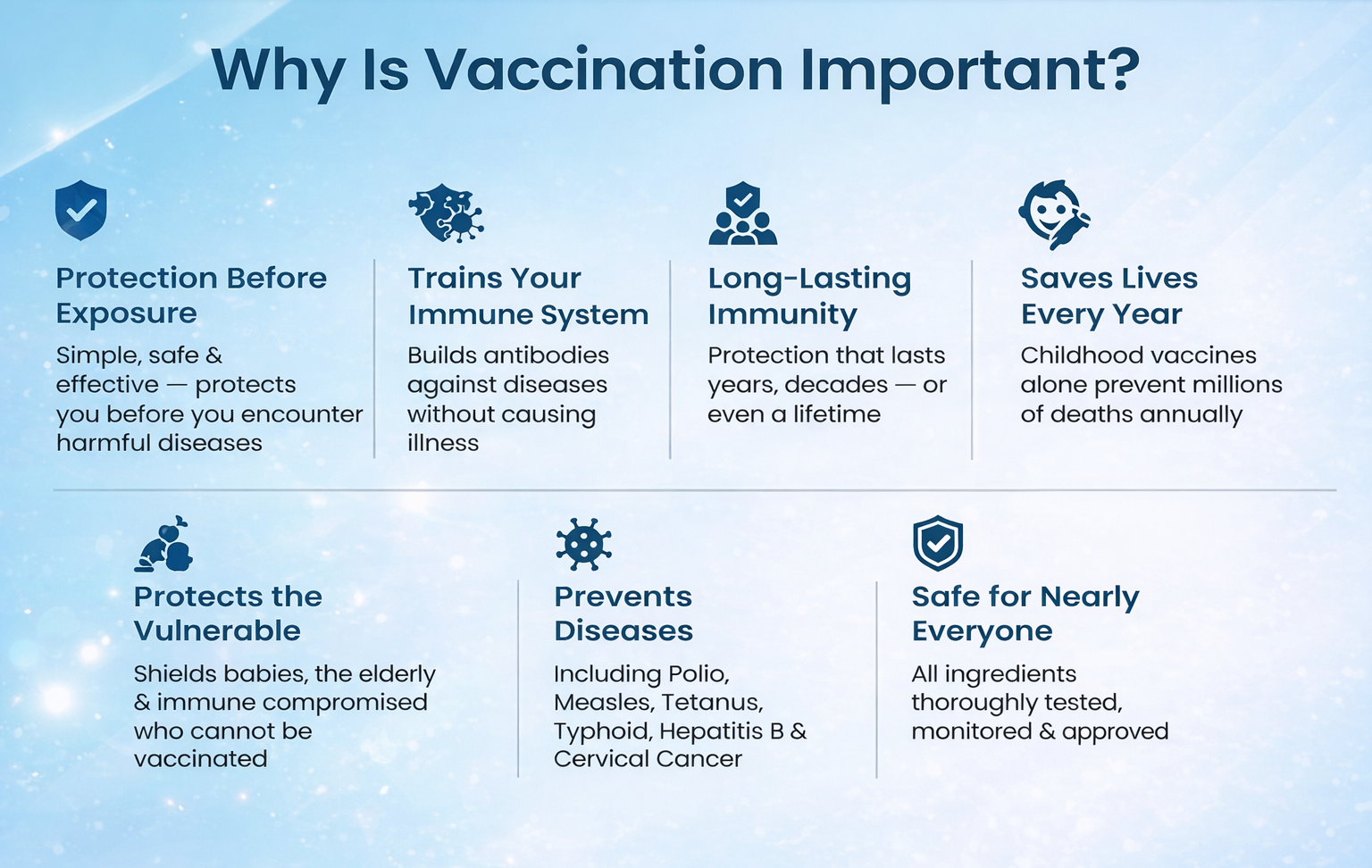
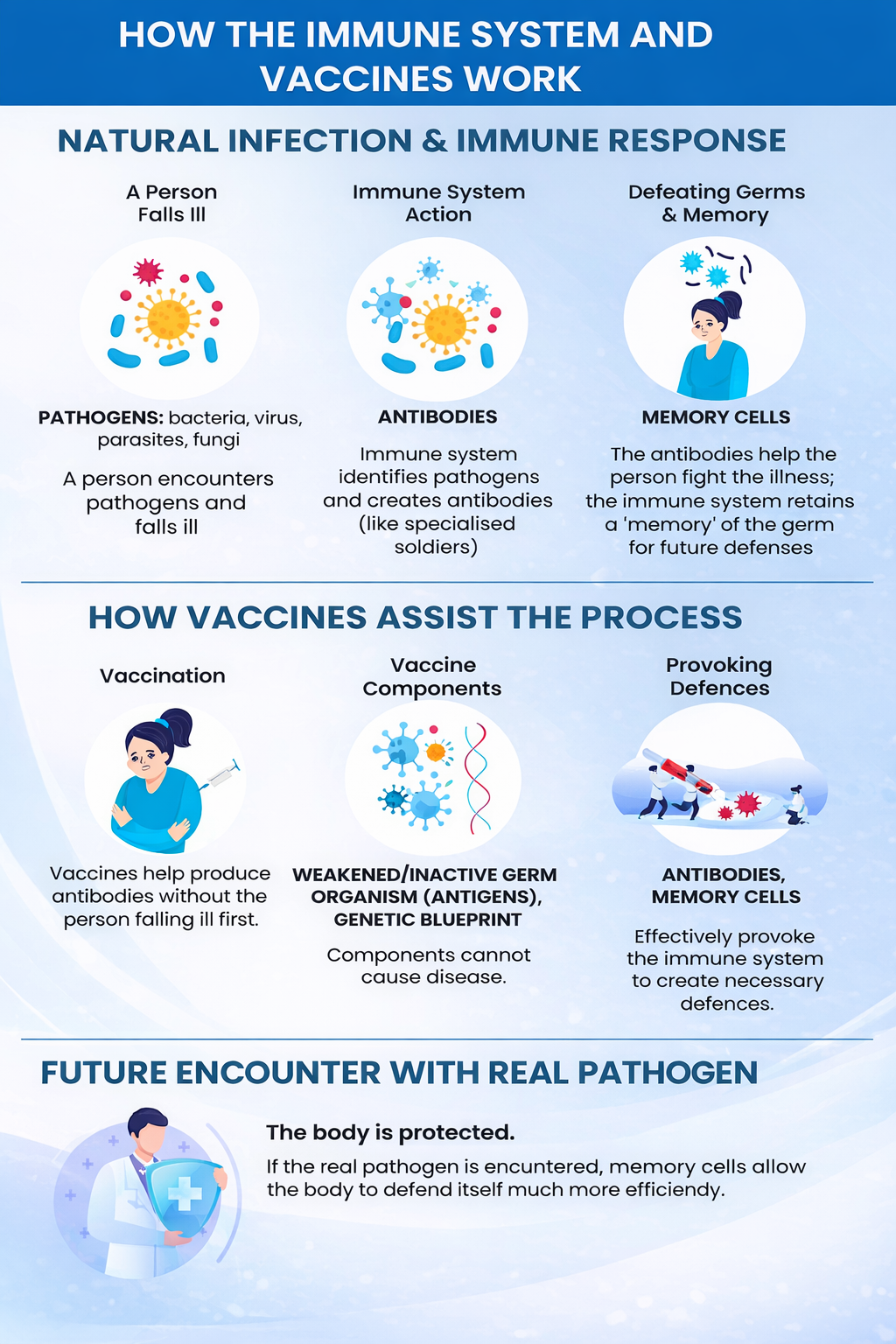
Every year on 16 March, India observes National Vaccination Day to honour a landmark moment in its public-health history the administration of the first dose of Oral Polio Vaccine under the Pulse Polio Programme in 1995. The day is more than a commemoration; it is a powerful reminder of how immunisation builds the body’s natural defences and saves crores of lives annually by preventing deadly diseases. Vaccines do not merely protect individuals; they shield entire communities, reduce child mortality, cut healthcare costs and lay the foundation for a healthier, more productive population. In India, this simple intervention has transformed public health, eradicating or eliminating some of the most feared diseases and enabling the country to supply life-saving vaccines to the world during the COVID-19 pandemic. As the nation celebrates yet another National Vaccination Day in 2026, it stands as a global exemplar of what sustained political will, scientific innovation and grassroots outreach can achieve.
Evolution of Immunisation in India – Smallpox, Polio, Maternal & Neonatal Tetanus elimination
India’s immunisation journey is a story of milestone victories. Smallpox, once a global scourge, was eradicated from the country in 1977 a decade ahead of the worldwide declaration. The Pulse Polio Programme, launched in 1995, turned the tide against poliomyelitis; the last case was reported on 13 January 2011 in Howrah, West Bengal, paving the way for India’s polio-free certification in 2014. Maternal and neonatal tetanus, yaws and polio have also been eliminated, while measles-rubella incidence has plummeted and tuberculosis-related child deaths have declined sharply. During the COVID-19 crisis, India lived up to its title of “pharmacy of the world” by supplying over 200 crore vaccine doses, including indigenously developed ones. These successes were not accidental; they resulted from decades of prioritising vaccination as a core public-health strategy, demonstrating that timely immunisation before exposure to pathogens is the most effective shield for infants and pregnant women.
Universal Immunisation Programme (UIP)
Launched in 1985 and implemented by the Ministry of Health and Family Welfare, the Universal Immunisation Programme (UIP) is one of the world’s largest public-health initiatives. It aims to provide free vaccines to every child and pregnant woman against 12 vaccine-preventable diseases.
Its core objectives are clear and ambitious:
• Increase immunisation coverage to protect every eligible beneficiary
• Improve the quality of services through trained workers and standardised protocols
• Establish a reliable cold-chain system right down to the health-facility level
• Monitor performance rigorously using digital tools
• Achieve self-sufficiency in vaccine production
The programme reaches approximately 2.9 crore pregnant women and 2.54 crore newborns every year through a vast network of Primary Health Centres, Community Health Centres, sub-centres, Anganwadi centres and outreach sessions. Under the National Rural Health Mission since 2005, UIP also extends to urban slums.
The UIP currently protects against 12 diseases: tuberculosis (severe childhood form), diphtheria, pertussis (whooping cough), tetanus, polio, measles, rubella, hepatitis B, Hib-related meningitis and pneumonia, rotavirus diarrhoea, pneumococcal pneumonia and Japanese Encephalitis (in endemic districts). The vaccines administered include BCG, DPT, Td, bOPV, MR, Hep B, Pentavalent, RVV, PCV and JE vaccine.
A well-defined National Immunisation Schedule ensures protection at the right time. Pregnant women receive Td doses starting from the first antenatal visit. Newborns get Hep B, bOPV and BCG at birth. By the first birthday, infants complete three doses each of bOPV, rotavirus, pentavalent, fractional IPV and PCV, plus the first MR and JE doses (where applicable). Boosters follow by the second and fifth birthdays, with Td doses at 10 and 16 years for adolescents. This structured approach guarantees that protection begins before exposure and lasts through childhood.
Key Achievements
The results speak for themselves. Full immunisation coverage has surged from 62 % in 2015 to an impressive 98.4 % as of January 2026. The percentage of zero-dose children in the total population has halved from 0.11 % in 2023 to 0.06 % in 2024 – an achievement highlighted by the UN Inter-Agency Group for Child Mortality Estimation. These gains have directly contributed to lower child and maternal mortality rates.
India’s COVID-19 vaccination drive, managed through the CoWIN platform, administered more than 220 crore doses, with the country manufacturing and exporting a significant share globally. The newer vaccines – rotavirus, PCV and Measles-Rubella have specifically targeted the leading infectious killers of children, reinforcing UIP’s role in saving lives and reducing the economic burden of illness on families.
Recent Developments
The year 2026 has witnessed two landmark expansions that underscore India’s commitment to self-reliance and innovation. On 21 February 2026, the indigenously manufactured TetanusDiphtheria (Td) vaccine was launched. Produced at the Central Research Institute, Kasauli, nearly 55 lakh doses are being supplied to UIP by April 2026. This move strengthens domestic manufacturing capacity India already supplies 60 % of the world’s vaccines – and reduces dependence on imports.
Just a week later, on 28 February 2026, Prime Minister Narendra Modi launched the nationwide HPV vaccination campaign from Ajmer, Rajasthan. Targeting 14-year-old girls, the programme aims to protect around 1.15 crore girls from cervical cancer. The vaccine is provided free of cost at all government health facilities, marking a major step towards preventing a major cause of cancer among Indian women. These twin initiatives expand UIP’s reach to adolescents and reinforce the programme’s evolution from childhood protection to lifelong health security.
Supporting Mechanisms
Several robust mechanisms sustain UIP’s success. Mission Indradhanush, launched in 2015 and followed by Intensified versions, has conducted 12 phases until 2023, vaccinating 5.46 crore infants and 1.32 crore pregnant women across 765 districts. The campaign focuses on hard-to-reach and urban populations through inter-ministerial convergence.
The cold-chain network is among the largest globally, with nearly 30,000 storage points, 1.06 lakh ice-lined refrigerators, deep freezers and 432 walk-in coolers. The Electronic Vaccine Intelligence Network (e-VIN) provides real-time stock and temperature monitoring across all states and UTs, ensuring potency is never compromised.
Digital innovation has further strengthened delivery. U-Win, launched in October 2024, allows citizens to locate nearby vaccination centres, book appointments and maintain records for up to 10 family members in 12 languages. CoWIN, originally built for COVID-19, continues to support efficient rollout. Together, these platforms, combined with the dedication of ASHAs, Anganwadi Workers and link workers, ensure no child or pregnant woman is left behind.
Challenges
Despite extraordinary progress, challenges remain. Vaccine hesitancy, driven by misinformation, cultural beliefs or lack of awareness in certain communities, still affects uptake in pockets across the country. Reaching urban slums and remote tribal areas continues to demand intensive efforts, even as Mission Indradhanush targets these populations. Logistical hurdles maintaining the cold chain in difficult terrains, ensuring uninterrupted electricity in remote facilities and deploying sufficient trained manpower for outreach sessions test the system’s resilience. Manpower shortages and occasional stock-management gaps also surface during peak seasons. The government addresses these through continuous training, infrastructure upgrades and targeted communication campaigns, yet sustained vigilance is essential to convert 98.4 % coverage into 100 %.
Impact on Society & Economy
Vaccination’s benefits extend far beyond disease prevention. Healthier children miss fewer school days, perform better academically and grow into productive adults. Families save on medical expenses, reducing poverty traps caused by illness. Maternal immunisation lowers risks during pregnancy and childbirth, complementing improvements in nutrition, sanitation and skilled birth attendance. The newer vaccines have directly reduced the leading infectious causes of child death. A healthier population contributes more effectively to the workforce, driving economic growth and enabling India to reap its demographic dividend. In short, every rupee invested in immunisation yields manifold returns in human capital and national productivity.
Way Forward
The road ahead is clear. India must accelerate the introduction of new vaccines, pursue Measles-Rubella elimination and explore next-generation formulations such as heat-stable vaccines for remote areas. Awareness campaigns must leverage social media, community leaders and school programmes to counter hesitancy. Deeper integration of digital platforms – expanding U-Win to every corner and linking it with Ayushman Bharat will further streamline delivery. Strengthening research and manufacturing will cement India’s global leadership; the country already supplies 60 % of world vaccines and can now export HPV and Td doses to low-income nations. Public-private partnerships, continued investment in cold-chain modernisation and capacity building of frontline workers will ensure that “Health for All” becomes reality.
Conclusion
From the eradication of smallpox in 1977 to the elimination of polio and neonatal tetanus, from supplying 200 crore COVID-19 doses to launching nationwide HPV and indigenous Td vaccines in 2026, India’s immunisation journey is a verified saga of milestone achievements. National Vaccination Day is not merely a date on the calendar; it symbolises the nation’s unwavering resolve to protect every citizen. By sustaining high coverage, overcoming remaining challenges and embracing innovation, India is well on its way to “Health for All”. A healthy, immunised population is the strongest foundation for the demographic dividend turning 1.4 billion citizens into a global force of productive, resilient and prosperous individuals. The success of UIP today will define the strength of India tomorrow.
Best ias coaching in delhi Best ias coaching in chandigar
Prelims question:
Q. With reference to National Vaccination Day in India and recent developments in the Universal Immunisation Programme (UIP), consider the following statements:
1.National Vaccination Day is observed annually on 16 March to commemorate the launch of the Pulse Polio Immunisation Programme in 1995.
2.In 2026, the Government of India launched a nationwide HPV vaccination campaign targeting girls aged 14 years to prevent cervical cancer, with the campaign inaugurated in Ajmer, Rajasthan.
3.An indigenously manufactured Tetanus–Diphtheria (Td) vaccine was launched in February 2026 at the Central Research Institute (CRI), Kasauli, with plans to supply about 55 lakh doses to UIP by April 2026.
4.As per recent data, India’s full immunisation coverage under UIP has increased from 62% in 2015 to 98.4% as of January 2026.
Which of the statements given above are correct?
(a) 1, 2 and 3 only
(b) 1, 3 and 4 only
(c) 2 and 4 only
(d) 1, 2, 3 and 4
Answer: (d) 1, 2, 3 and 4
Mains Question:
Q. “Examine the progress of India’s Universal Immunisation Programme (UIP), including recent 2026 developments (HPV campaign & indigenous Td vaccine). Analyse the contributions of Mission Indradhanush and digital tools, while identifying persisting challenges and suggesting ways forward.” (250 words / 15 marks)

- Artemis II: Humanity’s Return to Lunar Space and India’s Place in the New Moon Race - April 2, 2026
- A Missed Opportunity to Guarantee Minimum Wages - March 31, 2026
- ‘India’s Growth Claims, A Clash with Data Reality’. - March 30, 2026

No Comments