


21 Mar Iran Oil Relief: How Iran Oil Relief Could Benefit India’s Energy Security
This article covers “Daily Current Affairs” and From Iran Oil Relief: How Iran Oil Relief Could Benefit India’s Energy Security
SYLLABUS MAPPING
GS- 2 – International Relation – Iran Oil Relief: How Iran Oil Relief Could Benefit India’s Energy Security
FOR PRELIMS
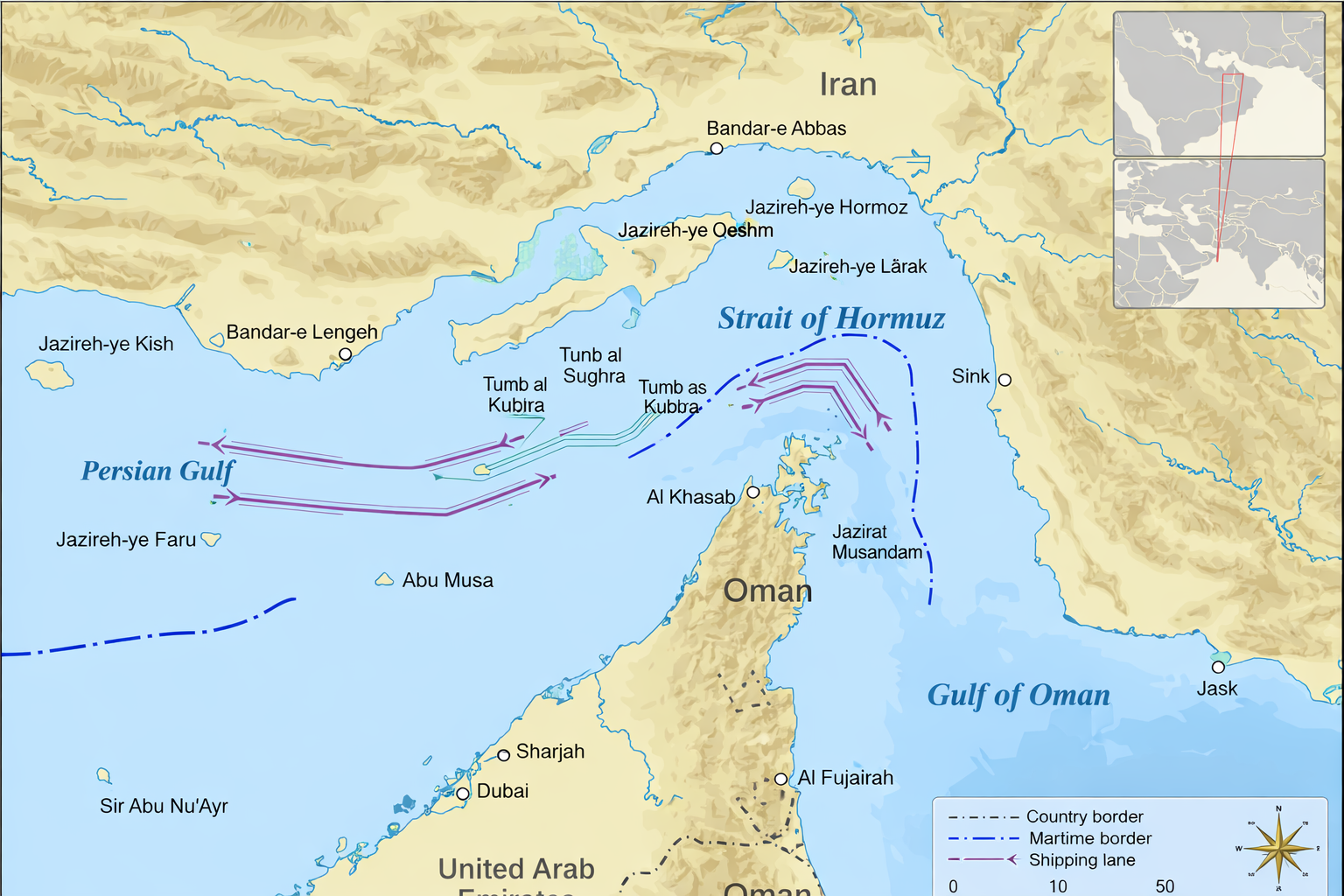
The strategic importance of the Strait of Hormuz for global energy security
FOR MAINS
Examine the historical role of Iranian crude in India’s oil import basket before and after the 2015 JCPOA nuclear deal.
Why in the news ?
Escalating conflict in West Asia has disrupted global oil supplies, pushing crude prices higher and worsening energy security risks. Since the February 28 US-Israel offensive, Iran has effectively constrained traffic through the Strait of Hormuz a key route for about one-fifth of global oil and LNG trade — while attacks on regional energy infrastructure have further tightened supplies and increased market volatility. In response, the US is reportedly considering a temporary suspension of sanctions on Iranian crude already at sea. For India, which imports over 88% of its crude and has historically benefited from Iranian oil’s refinery suitability and favourable terms, this could be important. The move may release unsold Iranian barrels into global markets, ease price pressures, improve access to discounted crude, and strengthen India’s short-term energy security amid continuing regional instability.
Background
The Strait of Hormuz remains the world’s most vital energy artery. Situated between Iran and Oman, it serves as the primary exit route for oil and liquefied natural gas exports from the Persian Gulf. Nearly 20 percent of global seaborne oil trade and a substantial share of LNG pass through this narrow waterway daily. Any disruption here sends immediate ripples across international markets, inflating freight costs, insurance premiums, and benchmark crude prices such as Brent and WTI.
The ongoing West Asia conflict has turned this vulnerability into reality. Following the US-Israel offensive starting February 28, Iran responded by restricting vessel movements, effectively taking a large volume of supply offline. While some cargoes are being rerouted via alternative passages such as the Cape of Good Hope, the bulk remains disrupted. Attacks on energy infrastructure across the region have compounded the issue, leading to a sharp surge in global oil prices and exposing importers like India to acute supply insecurity. The situation underscores how regional conflicts can rapidly translate into global economic shocks, particularly for energy-dependent economies.
Why Iranian Oil Matters for India
India’s energy security rests on a fragile foundation: the country depends on imports for more than 88 per cent of its crude oil needs. In recent months, 2.5–2.7 million barrels per day roughly half of total imports have transited the Strait of Hormuz, with longer-term averages hovering around 40 per cent. This heavy reliance on a single chokepoint makes diversification not just desirable but essential during periods of volatility.
Iranian crude historically occupied a prized position in India’s import basket precisely because of its unique advantages. Indian refiners, particularly those with complex configurations, found excellent compatibility with both Iranian Light and Heavy grades. Beyond technical fit, commercial terms were highly attractive: discounted pricing, subsidised shipping costs, and extended credit periods that eased working-capital pressures. These factors allowed Indian buyers to secure reliable volumes at competitive rates, helping stabilise domestic fuel prices and refinery margins even during earlier periods of global uncertainty.
History of India-Iran Oil Trade
The trajectory of India-Iran oil trade reflects the interplay of geopolitics, sanctions, and pragmatic diplomacy. In the pre-sanctions era, Iran was a cornerstone supplier. During 2009-10, India imported 22.1 million tonnes of Iranian crude — accounting for 14.4 per cent of total imports of 153.6 million tonnes. Even under milder sanctions, volumes remained significant.
When international sanctions intensified between 2010 and 2015, India and Iran innovated a workaround through the Rupee Payment Mechanism. Indian refiners paid 45 per cent of dues in rupees into accounts held by Iranian banks in India; Iran used these funds to purchase Indian goods, effectively creating a barter-linked arrangement. The remaining 55 per cent was deferred until sanctions eased. Major buyers during this phase included Essar Oil (now Nayara Energy) and Mangalore Refinery and Petrochemicals Ltd (MRPL).
The 2015 JCPOA nuclear deal brought a dramatic revival. Sanctions were lifted, and imports surged: 13.6 million tonnes in 2015-16 and a peak of 27.1 million tonnes in 2016-17, when Iran became India’s third-largest supplier after Saudi Arabia and Iraq (12.6 per cent of total imports of ~215 million tonnes). Tehran sweetened deals with further discounts on shipping and credit.
The decline began in 2017-18 (22.6 million tonnes) due to multiple factors: bilateral tensions over a gas field, India’s deliberate supply diversification, and — most critically — the US withdrawal from the JCPOA under President Trump and the reimposition of sanctions. A temporary US waiver allowed some imports, but it expired in May 2019. Volumes crashed to just 2 million tonnes in 2019-20 and then fell to zero. India complied fully to avoid secondary sanctions, replacing Iranian barrels with Middle Eastern, US, and other grades.
Potential Benefits of Iran Oil Relief for India
A temporary easing of sanctions on the estimated 170 million barrels of Iranian crude currently afloat (including floating storage and in-transit cargoes, per Kpler data) could deliver multiple gains. First, increased global supply would exert downward pressure on crude prices, providing immediate relief to India’s import bill. Second, it would enable diversification away from the conflict-disrupted Strait of Hormuz route, reducing vulnerability.
Third, Indian refiners could secure discounted Iranian grades once more, improving bargaining power vis-à-vis other suppliers. Fourth, the relief would strengthen short-term energy security by offering an alternative contracting channel during instability. Finally, redirecting barrels previously heading to China would inject incremental supply into open markets, benefiting price-sensitive importers like India without requiring long-term policy shifts.
Operational Feasibility
Indian refiners are exceptionally well-positioned to absorb Iranian crude quickly. Past experience in processing both Light and Heavy Iranian grades means minimal operational adjustments are needed. Established trading desks, long-standing relationships with Iranian suppliers, and proven logistics expertise further smooth the transition.
The precedent is clear: after Western sanctions on Russia created market opportunities, India rapidly scaled up Russian crude imports from negligible levels to become the largest buyer within months. Analysts note that a similar swift pivot is feasible with Iranian oil if sanctions enforcement is relaxed, underscoring the operational agility of Indian refineries and trading firms.
Strategic and Geopolitical Dimensions
The US decision to consider temporary sanctions relief highlights the flexible use of sanctions as a geopolitical tool — mirroring the earlier month-long waiver granted for Russian crude. By allowing Iranian oil already at sea to reach global markets, Washington can stabilise supply without committing to permanent policy change.
For India, the move offers a chance to balance energy needs with diplomacy. While China might lose some volumes, Gulf producers could face marginal competition, and India’s foreign-policy balancing act between the US, Israel, and Iran would require careful navigation. New Delhi must seize the window for imports while maintaining diplomatic caution to avoid future secondary-sanction risks.
Challenges and Limitations
Any relief would be temporary and partial, not a structural reopening of trade. Renewed enforcement could abruptly halt flows, exposing buyers to renewed secondary sanctions. Practical hurdles persist: shipping and insurance constraints in a conflict zone, the absence of a reliable payment mechanism post-2019, and the broader risk of over-dependence on West Asian supplies amid recurring instability.
Moreover, while Iranian crude offers short-term relief, it does not address India’s underlying structural vulnerabilities high import dependence and exposure to a single volatile region.
Way Forward
India should treat the potential Iran oil relief as a tactical opportunity rather than a long-term solution. Key measures include accelerating diversification of crude sources beyond West Asia, rapidly expanding strategic petroleum reserves to buffer shocks, and deepening energy diplomacy with stable producers. Simultaneously, accelerating the shift to renewables, developing resilient rupee-based or alternative payment systems, and investing in domestic refining flexibility will build enduring resilience. Long-term contracts with diversified suppliers and enhanced maritime security cooperation can further insulate the economy from future chokepoint disruptions.
Conclusion
The prospective Iran oil relief offers India a timely window for short-term price relief, supply diversification, and enhanced energy security amid the West Asia conflict. By leveraging historical refinery compatibility and operational readiness much like the successful Russian crude pivot Indian refiners can quickly integrate these barrels, easing the burden of elevated global prices and Strait of Hormuz disruptions.
Yet this relief is inherently temporary and geopolitically contingent. True long-term energy security demands structural reforms: aggressive source diversification, strategic reserve build-up, renewable energy expansion, and innovative financing mechanisms. As India navigates the complex interplay of sanctions, conflict, and global supply dynamics, a balanced approach seizing immediate opportunities while pursuing deeper resilience will determine its ability to safeguard energy security in an increasingly volatile world.
Best ias coaching in delhi Best ias coaching in chandigar
Prelims question:
Q. With reference to the Strait of Hormuz and India’s energy security, consider the following statements:
1.The Strait of Hormuz carries about one-fifth of global oil and a significant share of LNG trade.
2.About half of India’s crude oil imports pass through the Strait of Hormuz.
3.India stopped importing Iranian crude in 2019 due to renewed US sanctions.
4.The US is considering temporary relief for Iranian crude already at sea, which may ease supplies in global markets.
Which of the statements given above are correct?
(a) 1, 2 and 3 only
(b) 1, 3 and 4 only
(c) 1, 2, 3 and 4
(d) 2 and 4 only
Answer : C
Mains Question:
Q. Discuss the history of India-Iran oil trade, the strategic importance of the Strait of Hormuz, and the likely gains and limits of renewed Iranian oil access for India. Suggest measures for long-term energy resilience. ( 250 Words)

- Artemis II: Humanity’s Return to Lunar Space and India’s Place in the New Moon Race - April 2, 2026
- A Missed Opportunity to Guarantee Minimum Wages - March 31, 2026
- ‘India’s Growth Claims, A Clash with Data Reality’. - March 30, 2026

No Comments