


14 Sep Karnataka HC Slashes Compensation by 30% for Drunk Driver: Key Polity Insight for UPSC
✎ The Karnataka High Court’s verdict reinforces that drunk driving is a punishable offence under Section 185 of the Motor Vehicles Act, 1988, and that contributory negligence (up to 30%) can be attributed to intoxicated claimants…
Subject Relevance — Where This Topic Fits
- GS Paper II — Governance, Constitution and Polity (Fundamental Duties, Judicial Review) | GS Paper III — Infrastructure (Road Safety and Transport)
- Prelims: Motor Vehicles Act, 1988, Contributory Negligence, Motor Accidents Claims Tribunal (MACT), Road Safety (Amendment) Act, 2019, National Road Safety Policy, Section 185 of the Indian Penal Code (IPC), Blood Alcohol Concentration (BAC) limits, Insurance Regulatory and Development Authority of India (IRDAI), Public Safety (Road Transport) Rules
- Essay: The interplay between individual liberty and societal safety in public policy, Balancing judicial benevolence with legal accountability in traffic jurisprudence
Quick Revision: The Karnataka High Court’s verdict reinforces that drunk driving is a punishable offence under Section 185 of the Motor Vehicles Act, 1988, and that contributory negligence (up to 30%) can be attributed to intoxicated claimants, reducing insurance liability under the Motor Vehicles Act, 1988.
Why is this in the news?
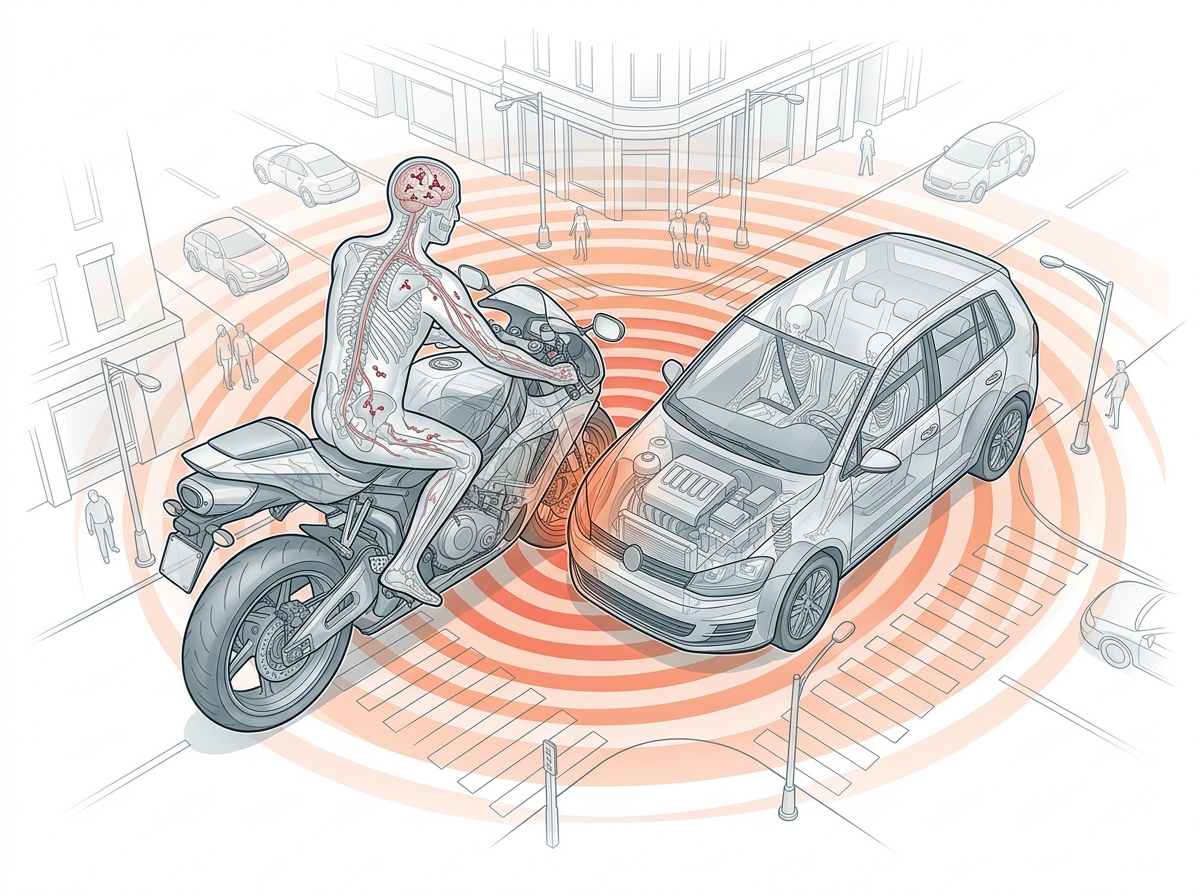
The Karnataka High Court’s judgment in *National Insurance Co Ltd v. Vishwanath* (2026) marks a significant judicial intervention in traffic jurisprudence by attributing 30% contributory negligence to a motorcyclist found driving under the influence of alcohol. The verdict underscores the judiciary’s evolving stance on balancing benevolent interpretations of traffic laws with the imperative of road discipline and public safety, particularly in the context of rising vehicular density and accident rates in India.
Background
- The Motor Vehicles Act, 1988, is the primary legislation governing road transport in India, with subsequent amendments introducing stricter penalties for drunk driving, including higher fines, licence suspension, and imprisonment.
- The Motor Accidents Claims Tribunal (MACT) was established under Section 165 of the Motor Vehicles Act to adjudicate claims for compensation arising from road accidents, with a mandate to provide expeditious and equitable relief to victims.
- The National Road Safety Policy (2010) and the National Road Safety Action Plan (2021–2030) prioritise multi-stakeholder interventions, including stricter enforcement of traffic laws, public awareness campaigns, and technological solutions like Intelligent Transport Systems (ITS).
- The Insurance Regulatory and Development Authority of India (IRDAI) regulates motor insurance policies, including the terms and conditions for compensation in cases of drunk driving, often excluding liability for injuries sustained while under the influence.
- India’s road accident statistics highlight the disproportionate burden of drunk driving, with the Ministry of Road Transport and Highways reporting over 40,000 fatalities annually due to alcohol-related crashes.
What is the legal and institutional framework governing drunk driving and insurance claims in India?
- **Motor Vehicles Act, 1988 (and Amendments):** The Act mandates penalties, including licence suspension and imprisonment.
- **Contributory Negligence:** A legal doctrine where a claimant’s own negligence reduces their entitlement to compensation. In the Karnataka High Court case, the claimant’s intoxication was deemed to have contributed 30% to the accident, reducing the insurer’s liability accordingly.
- **Motor Accidents Claims Tribunal (MACT):** A quasi-judicial body established under Section 165 of the Motor Vehicles Act to adjudicate compensation claims. MACTs operate with a benevolent approach but are not bound to grant full compensation if the claimant’s negligence is established.
- **Insurance Regulatory Framework:** IRDAI’s regulations (e.g., Motor Insurance Regulations, 2016) allow insurers to deny liability for injuries sustained while the insured is under the influence of alcohol or drugs, aligning with the principle of contributory negligence.
- **Judicial Interpretation of Benevolent Enactments:** Courts have historically adopted a liberal interpretation of traffic laws to protect victims. However, the Karnataka High Court’s verdict signals a shift, emphasising that such benevolence cannot extend to claimants who violate fundamental safety norms, such as drunk driving.
- **Public Safety Imperatives:** The judiciary’s stance reflects broader policy objectives under the National Road Safety Policy, which prioritises road discipline, enforcement of traffic laws, and reduction of preventable fatalities.
- **Role of Medical Evidence:** The court relied on hospital records confirming the claimant’s blood alcohol concentration (BAC) to establish contributory negligence, highlighting the importance of objective medical evidence in traffic accident litigation.
Key Features
| Feature | Significance |
|---|---|
| Judicial recognition of contributory negligence in drunk driving | Establishes legal precedent that intoxication during driving reduces compensation claims, reinforcing road safety norms. |
| Principle of liberal interpretation in Motor Vehicles Act | Highlights the limits of benevolent interpretation when claimants violate statutory mandates, ensuring proportional justice. |
| Medical evidence in accident claims | Underscores the role of objective clinical data in determining liability, beyond initial incident narratives. |
| Insurance liability adjudication | Demonstrates how insurers can contest claims based on contributory negligence, impacting premium structures. |
| Public safety emphasis in judicial reasoning | Reinforces the constitutional duty of citizens to uphold road discipline under Article 51A(g). |
Why it Matters
Legal/Constitutional
- The judgment aligns with Article 21 (Right to Life and Personal Liberty) by prioritising public safety over compensatory benevolence in cases of gross negligence.
- It reinforces the doctrine of contributory negligence under civil liability, ensuring proportional accountability in motor accident claims.
- The ruling sets a precedent for future cases involving intoxicated drivers, deterring reckless behaviour through legal consequences.
Policy/Governance
- The verdict underscores the need for stricter enforcement of Section 185 of the Motor Vehicles Act (1988), which penalises driving under the influence.
- It highlights the role of insurers in mitigating risk through adjusted premiums for high-risk drivers, aligning with actuarial fairness.
- The judgment may influence state transport authorities to enhance roadside sobriety testing infrastructure and data recording mechanisms.
Societal
- The decision sends a strong message against drunk driving, potentially reducing road fatalities by deterring high-risk behaviour.
- It reinforces societal responsibility in road safety, where individual actions have collective consequences.
- The ruling may encourage public awareness campaigns on the dangers of intoxicated driving and the legal repercussions.
Challenges
1. Enforcement of Drunk Driving Laws
- Inadequate policing and forensic infrastructure to detect and prosecute intoxicated driving cases effectively.
- Delays in judicial proceedings dilute the deterrent effect of penalties and compensation adjustments.
- Public apathy and social normalisation of drunk driving in certain regions undermine legal strictures.
UPSC Link: GS2: Governance, GS3: Infrastructure
2. Balancing Compensation and Deterrence
- Ensuring compensation remains accessible to victims while imposing proportional penalties on negligent drivers.
- Avoiding over-penalisation that could discourage accident reporting or insurance claims.
- Harmonising judicial interpretations across high courts to maintain consistency in liability assessments.
UPSC Link: GS2: Judiciary, GS4: Ethics
3. Insurance Sector Challenges
- Rising premiums for high-risk drivers may lead to underinsurance or non-compliance with mandatory cover.
- Disputes over contributory negligence could increase litigation, burdening tribunals and claimants.
- Need for actuarial models that accurately reflect risk profiles without penalising marginalised groups.
UPSC Link: GS3: Economy
4. Data Reliability in Accident Claims
- Dependence on medical records and initial police reports may lead to inaccuracies in establishing intoxication levels.
- Lack of standardised protocols for documenting accident scenes and collecting evidence.
- Potential for false claims or misrepresentation in cases involving alcohol consumption.
UPSC Link: GS2: Governance
Challenges — UPSC Perspective
| Issue | Concern |
|---|---|
| Policing gaps | Insufficient roadside checks and forensic testing capacity to deter drunk driving. |
| Judicial delays | Protracted legal proceedings reduce the deterrent impact of compensation adjustments. |
| Insurance affordability | Higher premiums for high-risk drivers may lead to non-compliance with mandatory insurance. |
| Medical evidence reliability | Variability in hospital records and initial incident narratives complicates liability assessment. |
| Public awareness deficits | Normalisation of drunk driving in social settings undermines legal and moral deterrents. |
Way Forward
- Strengthen enforcement of Section 185 (MV Act) through increased deployment of breathalysers and mobile sobriety checkpoints.
- Establish fast-track tribunals for motor accident claims to reduce judicial delays and ensure timely justice.
- Mandate standardised accident investigation protocols, including blood alcohol concentration testing at the scene.
- Launch public awareness campaigns highlighting the legal and social consequences of drunk driving, in collaboration with NGOs and transport departments.
- Encourage insurers to adopt risk-based premium models that incentivise safe driving behaviour without penalising vulnerable groups.
- Integrate AI-driven traffic monitoring systems to detect erratic driving patterns and flag potential intoxicated drivers.
- Promote research on road safety interventions, such as sobriety checkpoints’ optimal placement and timing.
- Develop a national database of drunk driving convictions to track repeat offenders and inform policy adjustments.
UPSC Value Addition
Keywords for Mains Answer-Writing
Motor Vehicles Act, 1988 · contributory negligence · Motor Accidents Claims Tribunal (MACT) · drunken driving · liberal interpretation of benevolent legislation · road safety jurisprudence · insurance claims adjudication · Karnataka High Court judgment · public safety doctrine · traffic law violations
Constitutional & Policy Linkages
- [‘Article 51A(g): Fundamental Duty to safeguard public property and uphold road discipline.’]
- [‘Article 21: Right to Life and Personal Liberty, interpreted to include safe road conditions.’]
Concept Flow
Drunk driving → Violation of Section 185 (MV Act) → Increased risk of accidents → Contributory negligence in compensation claims → Judicial recognition of proportional liability → Deterrent effect on future behaviour → Reinforcement of public safety norms → Alignment with constitutional duties.
Prelims Practice Questions
Q1. Consider the following statements regarding the Motor Vehicles Act, 1988:
1. The Act mandates that insurance companies must compensate victims of road accidents without any conditions.
2. The Act empowers tribunals to determine contributory negligence in motor accident cases.
3. The Act explicitly prohibits driving under the influence of alcohol.
4. The Act requires mandatory installation of breathalysers in all vehicles.
How many of the above statements are correct?
- Only one
- Only two
- Only three
- All
Answer: Only three — Statement 1 is incorrect: The Act does not mandate unconditional compensation; tribunals assess negligence and contributory factors. Statement 2 is correct: Section 166 of the Act empowers MACT to determine contributory negligence. Statement 3 is correct: Section 185 of the Act explicitly prohibits driving under the influence of alcohol. Statement 4 is incorrect: The Act does not mandate breathalysers in all vehicles.
Q2. Assertion (A): The principle of liberal interpretation is applied to benevolent enactments like the Motor Vehicles Act, 1988.
Reason (R): Such interpretation aims to ensure that victims of road accidents receive full compensation without any deductions.
In the context of the above statements, which of the following is correct?
- Both A and R are true, and R is the correct explanation of A
- Both A and R are true, but R is not the correct explanation of A
- A is true, but R is false
- A is false, but R is true
Answer: A is true, but R is false — Assertion (A) is true: Courts often apply liberal interpretation to benevolent enactments to ensure justice for victims. However, Reason (R) is false: The principle does not imply unconditional compensation; tribunals may apportion liability based on contributory negligence, as seen in the Karnataka High Court’s recent judgment.
Q3. Match the following legal provisions with their respective functions under the Motor Vehicles Act, 1988:
Column I (Provision) | Column II (Function)
1. Section 166 | A. Prohibits driving under the influence of alcohol
2. Section 185 | B. Empowers tribunals to adjudicate motor accident claims
3. Section 149 | C. Mandates third-party insurance for motor vehicles
4. Section 173 | D. Provides for appeals against tribunal orders
Select the correct match:
- 1-B, 2-A, 3-C, 4-D
- 1-A, 2-B, 3-D, 4-C
- 1-D, 2-C, 3-A, 4-B
- 1-C, 2-D, 3-B, 4-A
Answer: 1-B, 2-A, 3-C, 4-D — Section 166 empowers tribunals to adjudicate motor accident claims (1-B). Section 185 prohibits driving under the influence of alcohol (2-A). Section 149 mandates third-party insurance for motor vehicles (3-C). Section 173 provides for appeals against tribunal orders (4-D).
Mains Practice Question
✍ The Karnataka High Court, in a recent judgment, held that driving under the influence of alcohol constitutes a violation of road discipline and public safety, thereby reducing compensation claims by 30% due to contributory negligence. Critically examine the legal and policy implications of this ruling in the context of the Motor Vehicles Act, 1988 and road safety jurisprudence in India. (15 Marks)
Approach: MODEL-ANSWER SKELETON:
1. **Legal Framework**:
– Briefly outline the Motor Vehicles Act, 1988, highlighting Sections 166 (tribunal powers), 185 (prohibition of drunken driving), and 149 (third-party insurance).
– Explain the principle of contributory negligence as applied in motor accident cases (Section 166(2)).
2. **Judicial Reasoning**:
– Summarise the Karnataka High Court’s observations: violation of law, public safety doctrine, and rejection of liberal interpretation in cases of negligence.
– Reference the court’s stance on the breakdown of road discipline and law and order if violations are not penalised.
3. **Policy Implications**:
– Discuss the role of the ruling in reinforcing deterrence against drunken driving.
– Analyse the balance between victim compensation and accountability for negligent acts.
– Examine the impact on insurance adjudication and premium structures.
4. **Comparative Perspective**:
– Compare with other High Court/Supreme Court judgments on drunken driving (e.g., *National Insurance Co. Ltd. v. Swaran Singh*, 2004; *Mukund Dewangan v. Oriental Insurance Co. Ltd.*, 2017).
– Contrast with international practices (e.g., zero-tolerance laws in Scandinavian countries).
5. **Critique and Way Forward**:
– Critically assess whether the ruling aligns with the benevolent intent of the Motor Vehicles Act.
– Suggest measures such as mandatory breathalyser checks, stricter enforcement, and victim compensation funds.
– Conclude with a balanced view on the ruling’s contribution to road safety and justice.
Source: The Indian Express
Karnataka PCS (KPSC) — State PCS Practice
Prelims: As per the Karnataka High Court’s recent ruling on compensation for road accidents caused by drunk drivers, by what percentage was the compensation amount reduced?
- 10%
- 20%
- 30%
- 40%
Answer: 30% — The Karnataka High Court reduced the compensation amount by 30% in cases involving drunk drivers, citing contributory negligence.
Mains: Analyze the socio-legal implications of the Karnataka High Court’s decision to reduce compensation for victims of road accidents caused by drunk drivers. Discuss how this ruling aligns with the state’s road safety policies and the need for stricter enforcement of drunk driving laws in Karnataka.
Generated by AanyaAi for educational purpose.
Related guides on our sites
- Current affairs for upsc 2026
- Best PSIR optional coaching for upsc
- Best PSIR optional teacher for upsc
- Best teacher of PSIR optional for upsc

- यूपीएससी तैयारी: गुजरात में हुआर संरक्षण के लिए नया एक्शन प्लान, जानिए डिटेल्स - September 14, 2026
- Gujarat Action Plan for Great Indian Bustard Conservation: Key UPSC Focus - September 14, 2026
- अगस्त 2026 में खुदरा मुद्रास्फीति 4.82%: सीपीआई एवं खाद्य मुद्रास्फीति के प्रमुख आँकड़े - September 14, 2026

No Comments