


13 Mar Removal of the Chief Election Commissioner and Independence of the Election Commission
This article covers “Daily Current Affairs” and From Removal of the Chief Election Commissioner and Independence of the Election Commission
SYLLABUS MAPPING
GS-2 -Indian polity and constitution – Removal of the Chief Election Commissioner and Independence of the Election Commission
FOR PRELIMS
Explain the role and functions of the Election Commission of India in ensuring free and fair elections in India.
FOR MAINS
Discuss the significance of Article 324 of the Constitution of India in establishing the authority of the Election Commission of India.
Why in the news?
The Opposition is preparing to move a motion to impeach Chief Election Commissioner (CEC) Gyanesh Kumar, alleging biased conduct. The removal process will follow the same procedure as that for removing a Supreme Court judge, as provided under the law.
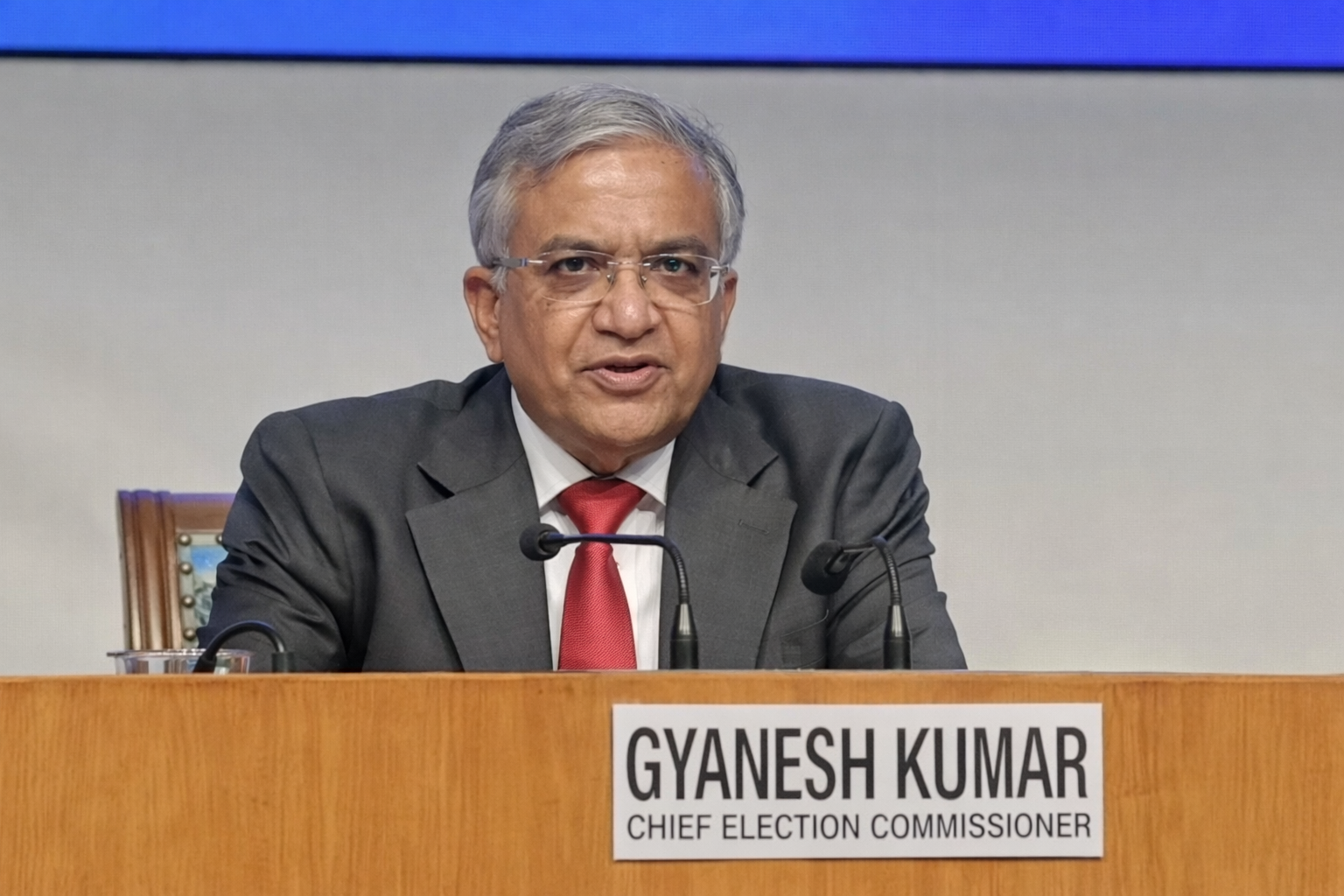
Constitutional Safeguards and the Role of the Chief Election Commissioner
The Election Commission of India (ECI) stands as the cornerstone of the world’s largest democracy, overseeing free, fair, and impartial elections across a nation of over 1.4 billion people. Established under Article 324 of the Constitution, the ECI ensures the conduct of elections to Parliament, state legislatures, and the offices of the President and Vice-President. The Chief Election Commissioner (CEC) heads this multi-member body, wielding significant authority over electoral processes, voter rolls, model code enforcement, and dispute resolution.
The credibility of India’s elections hinges on the independence and neutrality of the ECI. Any perception of executive influence or bias could undermine public trust in democratic outcomes. To safeguard this autonomy, the Constitution provides robust protections for the CEC’s tenure. Article 324(5) stipulates that the CEC can be removed only in the same manner and on the same grounds as a Supreme Court judge—through a rigorous parliamentary process involving proved misbehaviour or incapacity. This high threshold prevents arbitrary dismissal and shields the office from political pressures, reinforcing the ECI’s role as an impartial guardian of democracy.
Constitutional Provisions Governing Removal of the CEC
Article 324 of the Indian Constitution vests the superintendence, direction, and control of elections in the Election Commission, making it a powerful, independent constitutional body. Clause (5) of Article 324 specifically addresses security of tenure for the CEC and other commissioners.
The provision states that the CEC shall not be removed from office except in like manner and on like grounds as a judge of the Supreme Court (under Article 124(4)). This equates the removal process to impeachment-like proceedings for judges, limited to proved misbehaviour or incapacity. Service conditions cannot be altered to the CEC’s disadvantage post-appointment, further entrenching independence.
In contrast, other Election Commissioners (ECs) and Regional Commissioners can be removed only on the recommendation of the CEC. This hierarchical distinction—affirmed by the Supreme Court in cases like T.N. Seshan vs Union of India (1995)—prevents subordinate members from being politically targeted while preserving the CEC’s primacy.
The purpose of these safeguards is clear: to insulate the ECI from executive or legislative interference, prevent politicization, and sustain public confidence in electoral integrity. Without such protections, governments could manipulate elections by removing inconvenient commissioners, eroding democratic fairness. The constitutional design reflects the framers’ intent to make the ECI a bulwark against majoritarian or partisan control, ensuring elections remain the authentic voice of the people.
Legal Framework Governing the Removal Process
The Chief Election Commissioner and Other Election Commissioners (Appointment, Conditions of Service and Term of Office) Act, 2023 provides the statutory backbone for the CEC’s appointment, conditions, and removal, supplementing constitutional provisions.
Section 11 of the 2023 Act explicitly reiterates that the CEC can be removed only in the manner and on the grounds prescribed for Supreme Court judges. It maintains the constitutional parity, ensuring no dilution of safeguards through ordinary legislation.
The procedural details draw from the Judges (Inquiry) Act, 1968, which outlines the framework for investigating allegations against judges—and by extension, the CEC. This Act mandates a structured inquiry before parliamentary action, preventing hasty or politically motivated proceedings.
The legal framework’s significance lies in its emphasis on due process and fairness. It creates procedural clarity, requires evidence-based allegations, and mandates judicial involvement in investigations. This multi-layered approach protects constitutional offices from arbitrary executive or legislative decisions, upholding the rule of law.
By linking the CEC’s removal to judicial impeachment standards, the framework deters misuse while allowing accountability for genuine misconduct. It balances independence with responsibility, ensuring the ECI remains credible and effective.
Parliamentary Procedure for Removal of the CEC
The removal of the CEC follows a stringent parliamentary process akin to impeaching a Supreme Court judge, designed to prevent casual or partisan action.
Initiation of the Motion: The process starts with a removal motion alleging proved misbehaviour or incapacity. It requires signatures from at least 100 members of the Lok Sabha or 50 members of the Rajya Sabha. This high threshold ensures broad support and deters frivolous attempts.
Admission of the Motion: The signed motion is submitted to the Speaker of the Lok Sabha or the Chairman of the Rajya Sabha (as the case may be). The presiding officer examines its admissibility, potentially consulting legal experts, before deciding to admit or reject it.
Investigation by Inquiry Committee: Upon admission, a three-member committee investigates the charges. Comprising a Supreme Court judge (as presiding officer), a Chief Justice of a High Court, and a distinguished jurist, the committee examines evidence, hears witnesses, and submits a report to the presiding officer. This judicial-led probe ensures objectivity and fairness.
Parliamentary Debate and Voting: If the committee finds charges proved, the motion proceeds to debate and voting in the originating House, then the other House. Passage requires a special majority—a majority of the total membership of the House and two-thirds of members present and voting—in both Houses during the same session.
Final Removal by the President: Upon approval by both Houses, an address is presented to the President, who issues the removal order.
Significance of the Removal Mechanism
The stringent removal process for the CEC is vital for preserving the ECI’s independence. By mirroring Supreme Court judge impeachment, it prevents arbitrary executive dismissal, allowing the CEC to make unbiased decisions without fear of reprisal.
It protects democratic institutions by reinforcing electoral credibility. Voters trust the process when they know the overseer cannot be easily removed for unfavourable rulings.
The mechanism promotes institutional neutrality, encouraging impartial enforcement of the model code, voter list management, and result declarations.
The high threshold—special majority in both Houses after judicial inquiry—prevents political misuse. It demands consensus across party lines, deterring vendettas and ensuring only grave misconduct triggers action.
Overall, this safeguard upholds constitutional morality, making the ECI a resilient pillar of India’s democracy.
Challenges and Concerns
Despite robust safeguards, challenges persist. Political polarisation can turn removal motions into partisan tools, as seen in recent opposition considerations against the CEC amid electoral roll controversies.
Allegations of institutional bias—such as perceived leniency in model code enforcement or voter deletions—erode trust, even if unsubstantiated.
The process’s extreme difficulty may limit accountability, shielding potential misconduct while the executive influences appointments via the 2023 Act’s committee (Prime Minister, LoP, Cabinet nominee).
Debates over the appointment process highlight executive dominance post the 2023 Act, which replaced the CJI with a Cabinet member, raising concerns about long-term neutrality.
These issues underscore the need for balanced reforms.
Reforms to Strengthen Election Commission Independence
To enhance ECI autonomy, a transparent appointment process is essential. A collegium including the Prime Minister, Leader of Opposition, and Chief Justice of India—aligned with the 2023 Supreme Court directive in Anoop Baranwal could insulate selections from executive bias.
Fixed and protected tenure (e.g., non-extendable six years) would reduce political pressure.
Granting institutional autonomy through an independent secretariat, separate budget, and enhanced enforcement powers would bolster operational freedom.
Greater transparency in decisions, voter roll processes, and funding would rebuild trust via public disclosures and audits.
These reforms would fortify the ECI against evolving threats.
Conclusion
The removal process for the Chief Election Commissioner embodies India’s constitutional commitment to shielding electoral institutions from undue influence. By aligning it with Supreme Court judge impeachment—requiring proved misbehaviour or incapacity, judicial inquiry, and special majorities in Parliament—the framers ensured arbitrary removal is nearly impossible.
Yet, contemporary challenges like polarisation, appointment controversies, and bias allegations highlight vulnerabilities. Strengthening safeguards through transparent appointments, fixed tenures, autonomy, and transparency is crucial.
Ultimately, a strong, impartial ECI remains indispensable for sustaining India’s vibrant democracy and public faith in electoral outcomes.
Best ias coaching in delhi Best ias coaching in chandigar
Prelims question:
Q. With reference to the Election Commission of India, consider the following statements:
1.It is a constitutional body established under Article 324 of the Constitution of India.
2.It conducts elections to Parliament, State Legislatures, and Panchayats.
3.It advises the President on matters relating to the disqualification of Members of Parliament.
Which of the statements given above is/are correct?
A. 1 and 2 only
B. 1 and 3 only
C. 2 and 3 only
D. 1, 2 and 3
Mains Question:
Examine the challenges and reforms required to strengthen the institutional autonomy of the Election Commission of India. ( 250 words )

- Artemis II: Humanity’s Return to Lunar Space and India’s Place in the New Moon Race - April 2, 2026
- A Missed Opportunity to Guarantee Minimum Wages - March 31, 2026
- ‘India’s Growth Claims, A Clash with Data Reality’. - March 30, 2026

No Comments